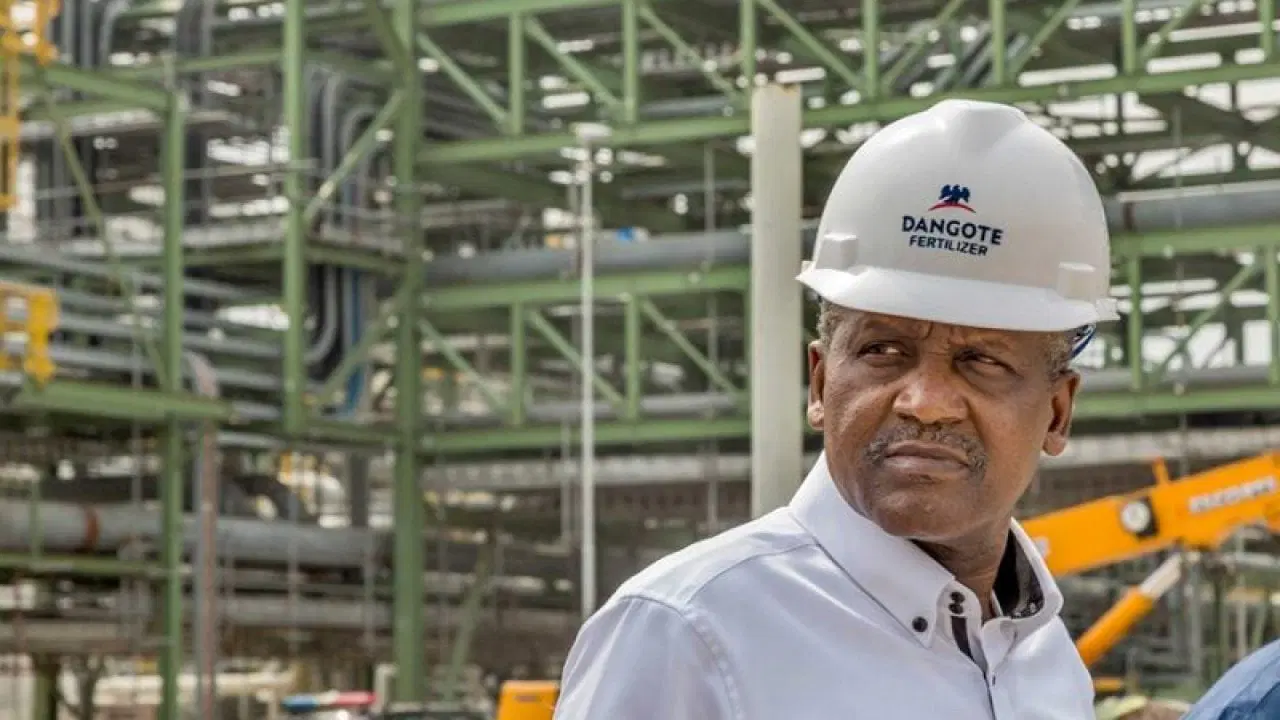

Nigeria’s industrial magnate Aliko Dangote has unveiled ambitious plans to more than double the capacity of his Lagos refinery to 1.4 million barrels per day (bpd) by 2028, a move that could redefine both the domestic and regional energy landscape. The £45 billion expansion will make the Dangote Refinery the largest single-site oil processing facility in the world, surpassing major complexes in Asia and the Middle East. Announced on 27 October 2025, this development reflects renewed confidence in Nigeria’s ongoing economic reforms, especially the government’s decision to phase out fuel subsidies and encourage private investment in energy infrastructure.
The refinery, which began operations in 2024, currently processes 650,000 bpd, already making it the biggest in Africa. By doubling this capacity, the Dangote Group aims not only to meet Nigeria’s domestic fuel demand but also to export refined products across West and Central Africa, a region still heavily dependent on imported petroleum. With Nigeria consuming over 500,000 bpd of refined products but importing nearly 80% of its needs as of 2023, the expansion marks a pivotal step toward reversing decades of structural inefficiencies in the energy sector.
Economically, the move represents a strategic shift in Nigeria’s value chain. Instead of exporting crude oil and importing refined fuels, a costly imbalance that has drained foreign exchange reserves, the refinery’s expansion could save the country billions annually in import costs while generating significant export revenue. The Central Bank of Nigeria (CBN) has long identified the petroleum import bill as a major driver of currency instability. A fully operational and expanded Dangote Refinery could strengthen the naira by reducing dollar demand, while also improving the country’s balance of trade and current account position.
The timing of the expansion also aligns with broader economic reforms under President Bola Tinubu’s administration. Since the removal of fuel subsidies in 2023, the government has sought to reposition Nigeria’s oil and gas sector for self-sufficiency and private-led growth. Dangote’s announcement thus reinforces policy momentum, signalling that large-scale industrial investment can thrive under the new regulatory framework shaped by the Petroleum Industry Act (PIA). The expansion could also catalyse ancillary industries, from petrochemicals to logistics, while spurring employment and local content development.
Yet, the economic implications extend beyond Nigeria’s borders. A 1.4 million bpd refinery in Lagos could dramatically alter regional trade dynamics. West African nations such as Ghana, Côte d’Ivoire, and Senegal, all net importers of refined fuels, stand to benefit from cheaper, closer supplies. This could reduce the continent’s reliance on European refineries, especially as the EU tightens environmental standards and phases out fossil fuel exports. By positioning Nigeria as a refining hub, Dangote could capture a sizable share of the $50 billion annual West African fuel import market.
Still, challenges persist. The refinery’s initial rollout faced delays due to technical bottlenecks, currency volatility, and regulatory disputes over crude supply. Questions also remain about feedstock security, given that the Nigerian National Petroleum Company (NNPC) and Dangote have yet to finalise long-term crude supply contracts under market-based pricing. Moreover, sustaining profitability amid global energy transition pressures will require operational efficiency and diversification into cleaner fuels such as liquefied petroleum gas (LPG) and low-sulphur diesel.
From an investment standpoint, the project’s scale underscores Nigeria’s push to attract foreign capital into energy and infrastructure. Analysts note that the refinery’s expansion could improve investor sentiment toward Nigerian equities and bonds, signalling policy stability and industrial resilience despite inflationary and exchange rate challenges. It may also encourage further private participation in midstream and downstream ventures, bridging the gap between Nigeria’s abundant crude reserves and its underdeveloped refining capacity.
Ultimately, Dangote’s expansion plan is not just an industrial milestone; it is a statement of economic confidence. In an era where global energy markets are rebalancing, Nigeria’s bid to become self-reliant, and even dominant, in refined products could reshape its fiscal outlook. The refinery’s success would mean more than just fuel sufficiency; it could symbolise the country’s transition from a rent-seeking oil economy to a producer-driven industrial power in Africa.
By 2028, if all goes according to plan, the Lagos refinery could stand as a tangible embodiment of Nigeria’s long-elusive quest for energy independence, a project that fuses private ambition with national purpose, and economic pragmatism with continental leadership.