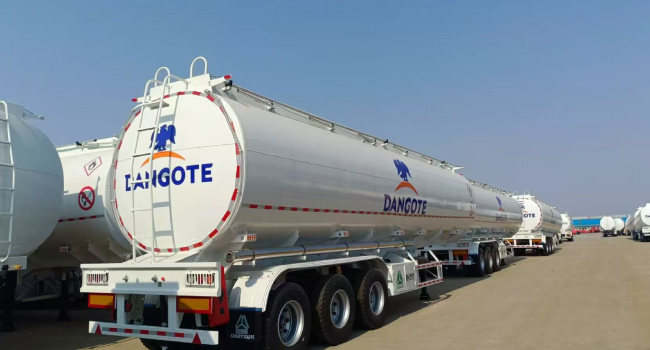

Nigeria’s aviation fuel market is showing early signs of stabilisation after the Nigerian Midstream and Downstream Petroleum Regulatory Authority (NMDPRA) endorsed the latest indicative pricing by the Dangote Petroleum Refinery, a move aimed at curbing persistent price distortions and easing pressure on airlines.
The refinery recently fixed its gantry price for Aviation Turbine Kerosene (ATK), commonly known as Jet A1 fuel, at N1,820 per litre. The announcement comes amid mounting concern from airline operators over spiralling fuel costs, which account for up to 40 per cent of operating expenses in Nigeria’s aviation sector.
Speaking in Abuja, NMDPRA spokesperson George Ene-Ita said the refinery’s decision to publish daily indicative prices would strengthen regulatory oversight and improve compliance among fuel marketers. While Nigeria operates a deregulated petroleum pricing regime, where prices are largely set by market forces, the regulator retains a monitoring role to prevent exploitative pricing.
Despite earlier guidance from the NMDPRA placing Jet A1 prices within a range of N1,760 to N1,988 per litre in Lagos and slightly higher in Abuja, many marketers have continued to sell above N2,200 per litre. This gap has intensified cost pressures on airlines, forcing fare increases and raising concerns about the long-term viability of some operators.
The Dangote refinery’s pricing intervention is therefore being viewed as a quasi-benchmark for the market. By offering a transparent reference point, it could narrow arbitrage opportunities and reduce pricing volatility, particularly in a market still adjusting to full deregulation.
Ene-Ita described the move as a “concession” that aligns with broader efforts to sustain airline operations and protect consumers from escalating travel costs. He added that the regulator would intensify surveillance nationwide to ensure that marketers adhere more closely to fair pricing practices.
The NMDPRA’s pricing framework is based on international benchmarks, including Platts averages, which track global refined product prices. These benchmarks reflect underlying crude oil costs, freight, and supply-demand dynamics. However, actual domestic prices can deviate due to currency fluctuations, logistics costs, and supply constraints.
Recent volatility in global energy markets driven in part by geopolitical tensions such as the U.S.–Iran standoff has contributed to upward pressure on aviation fuel prices. For Nigeria, which relies heavily on imported refined products despite growing domestic capacity, these external shocks quickly translate into higher local costs.
Analysts say the Dangote refinery’s entry into the jet fuel market could be a turning point. By boosting local refining capacity and reducing reliance on imports, it has the potential to stabilise supply chains and dampen exposure to global price swings.
For airlines, the immediate impact will depend on whether marketers align with the new pricing structure. If compliance improves, operators could see some relief in operating margins, potentially slowing the pace of fare increases.
More broadly, the development underscores a critical transition in Nigeria’s downstream petroleum sector from price controls to market-driven dynamics anchored by domestic supply. The success of this transition will hinge on transparency, competition, and consistent regulatory enforcement.