


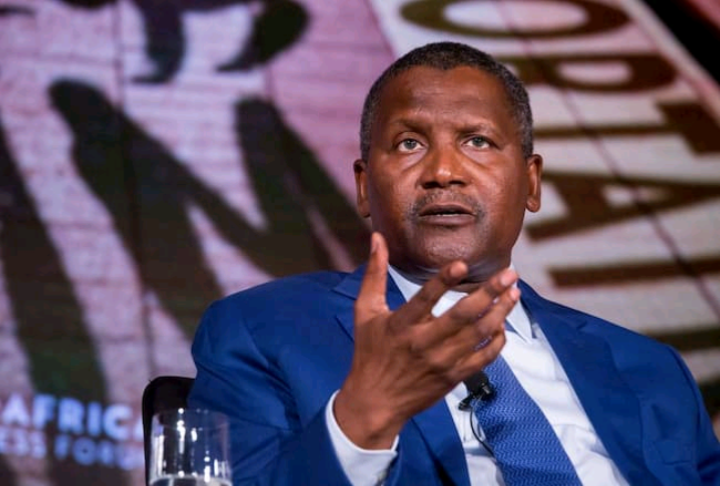

Africa’s richest businessman, Aliko Dangote, has taken a bold step in Nigeria’s ongoing regulatory battles by formally petitioning the Independent Corrupt Practices and Other Related Offences Commission (ICPC) to open a full investigation into alleged corruption involving Farouk Ahmed, the Chief Executive Officer of the Nigerian Midstream and Downstream Petroleum Regulatory Authority (NMDPRA).
Through his senior lawyer, Ogwu Onoja, SAN, Dangote submitted the petition on December 16, 2025, urging the anti-graft agency to arrest, investigate, and prosecute the NMDPRA boss on multiple counts of corruption, abuse of office, and financial impropriety.
Dangote alleges that Ahmed has been living far above his legitimate means as a public servant, claiming that the NMDPRA CEO spent more than $7 million, drawn from public funds on the overseas education of his four children in Switzerland. According to the petition, these fees were reportedly paid in full for a six-year period, even though Ahmed’s entire professional career has been within the public sector, making such spending inexplicable based on lawful income.
The detailed submission identifies each of the four children and the Swiss schools they attended, along with the amounts paid, to help the ICPC verify the claims. Dangote’s legal team argues that such expenditure is incompatible with the NMDPRA CEO’s earnings over the years and constitutes grave misconduct.
In the petition, Dangote accuses Ahmed of using his official position at the NMDPRA to embezzle and divert public funds for personal gain and private interests. These actions, he says, have sparked public outcry and protests by different groups demanding accountability and transparency.
Dangote’s move is grounded in the provisions of the ICPC Act, which empower the commission to investigate abuse of office, corrupt enrichment, and embezzlement. According to the petition, anyone found guilty under this statute faces up to five years imprisonment without the option of a fine.
“It is without doubt that the above facts in relation to abuse of office, breach of the Code of Conduct for public officers, corrupt enrichment, and embezzlement constitute gross acts of corruption,” Dangote’s submission states, urging the ICPC to act decisively and uphold justice.
The industrialist also pledged his readiness to provide additional documentation or evidence to support his claims if required. Dangote emphasized the importance of a transparent probe, not only to secure justice but also to protect the image and integrity of the current administration led by President Bola Ahmed Tinubu.
Dangote first brought these allegations into the public sphere during a press briefing in Lagos, where he criticized regulatory failures within the downstream petroleum sector and linked them to broader economic issues affecting Nigeria’s energy industry.
In response to the petition, the ICPC has confirmed receipt and stated that the matter will be thoroughly investigated to determine whether the allegations have merit and should be prosecuted.
The case has attracted significant public and media attention, partly because it involves one of Nigeria’s most high-profile businessmen challenging a senior government regulator. It has also fueled discussions about corruption in public office and its impact on investor confidence and policy implementation in critical economic sectors.
The House of Representatives is said to be monitoring the situation closely, with lawmakers calling for transparency and clarity from both Dangote and the NMDPRA leadership as tensions escalate.
Whether the ICPC will find sufficient evidence to charge the NMDPRA CEO remains to be seen, but the petition underscores growing dissatisfaction among private sector leaders with regulatory practices in Nigeria’s oil and gas industry.
Dangote’s petition arrives amid growing investor concerns over Nigeria’s energy sector governance. Allegations of corruption at the NMDPRA could deter foreign investment and complicate efforts to stabilize fuel supply and boost local refining, potentially impacting economic growth, job creation, and foreign exchange savings tied to reduced fuel imports.


