
In a transformative move for Nigeria’s industrial and energy landscape, the Nigerian National Petroleum Company (NNPC) Limited and Dangote Industries Limited have finalized two landmark agreements to supply natural gas to the colossal Dangote Refinery and fuel a major expansion of its cement operations. These 20-year strategic offtake agreements secure a dedicated energy supply for Africa’s largest industrial conglomerate while providing the state oil company with a stable, long-term revenue stream from the domestic market. The deals represent a critical step in actualizing Nigeria’s gas utilization policy, reducing costly fuel imports, and anchoring the nation’s ambitious industrialisation agenda on its vast domestic hydrocarbon resources.
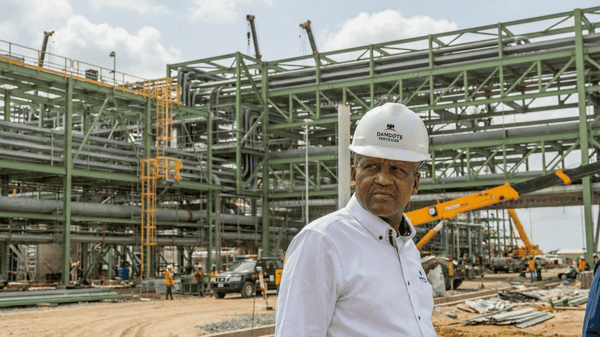
Under the agreements, NNPC will supply approximately 100 million standard cubic feet of gas per day (MMscf/d) to the Dangote Petroleum Refinery and Fertiliser plant in Lekki, Lagos. A separate, substantial volume will be allocated to Dangote Cement for a significant expansion of its production lines. This partnership directly supports the refinery’s journey toward reaching its full capacity of 650,000 barrels per day, a milestone that would fundamentally alter Nigeria’s petroleum products market by ending decades of dependence on imported fuel. For the cement arm, reliable gas access underpins plans to increase production, consolidate its pan-African market leadership, and reduce dependence on more expensive and polluting alternative fuels.
From a macroeconomic perspective, these contracts are a masterclass in vertical integration and domestic value capture. For decades, Nigeria has exported its raw natural gas as liquefied natural gas (LNG) while simultaneously suffering a domestic supply deficit that cripples power generation and constrains manufacturers. By channelling gas to Dangote’s industrial behemoths, the country effectively converts a raw export commodity into vastly more valuable finished products—refined petroleum, urea fertiliser, and cement—for both domestic consumption and export. This “resource-based industrialisation” model boosts GDP, creates high-value jobs, saves and earns foreign exchange, and stimulates ancillary industries across logistics, services, and maintenance.
The economic implications extend beyond Dangote’s balance sheet. A fully operational refinery complex, reliably powered by domestic gas, is projected to save Nigeria an estimated $10-12 billion annually in imported fuel costs. This will dramatically ease pressure on the national foreign exchange reserves and strengthen the naira. Furthermore, the fertiliser plant’s output is poised to revolutionise the agricultural sector, a cornerstone of the government’s economic diversification plan. Affordable, locally produced urea can increase crop yields, reduce food imports, and catalyse the entire agro-allied value chain, from farming to food processing.
The structure of the deal also models a new paradigm for NNPC’s commercial strategy. Moving beyond its traditional role as a resource custodian, the company is now acting as a strategic partner to anchor domestic industries. The guaranteed long-term offtake provides a predictable revenue baseline, de-risking further investments in gas infrastructure and upstream development. This commercial certainty is vital for attracting the billions of dollars needed to develop Nigeria’s immense gas reserves and build the pipeline networks required to supply other industrial clusters and power plants across the country.
Successful execution will nonetheless require navigating significant challenges. Ensuring uninterrupted gas supply demands robust infrastructure and security for pipelines, which have historically been vulnerable to vandalism in the Niger Delta. The pricing framework within the agreements must balance commercial viability for Dangote with fair value for the national resource, avoiding subsidies that distort the market. Moreover, the concentration of such critical national assets and gas supply in one corporate entity necessitates robust regulatory oversight to ensure competitive markets and national energy security.
These agreements mark a pivotal convergence of national policy and private sector execution. They demonstrate a tangible path to harnessing Nigeria’s gas wealth for structural economic transformation. If successfully implemented, the model can be replicated for other industrial parks and gas-based industries, creating a virtuous cycle of investment, job creation, and export diversification. For Nigeria’s economy, turning gas into industrial growth is no longer just a strategic aspiration; with these deals, it has become a concrete commercial reality.