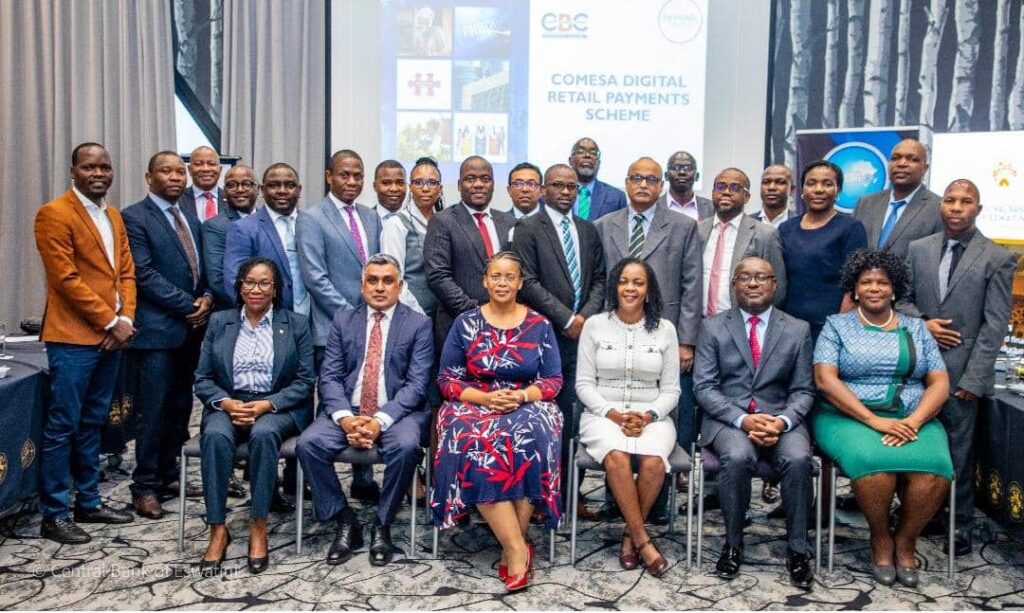

The Common Market for Eastern and Southern Africa (COMESA) has unveiled a new digital payments platform designed to reduce transaction costs and enable cross-border trade in local currencies — a move widely seen as a key step towards reducing Africa’s dependence on the US dollar. The initiative, announced on Thursday, marks a significant stride in the region’s efforts to strengthen intra-African trade and promote financial integration.
The Digital Retail Payments Platform, as it is known, will allow traders across member states to settle transactions directly in their local currencies, bypassing the need for costly and time-consuming dollar conversions. The system is being launched on a pilot basis between Malawi and Zambia in collaboration with two digital financial service providers and a foreign exchange operator. If successful, the pilot will be scaled across COMESA’s 21 member states.
“For the first time, cross-border trade within COMESA can be settled directly in local currencies. This is a game-changer,” said Kenya’s Trade Minister, Lee Kinyanjui, during the launch event. “It will improve liquidity, ease currency pressures, and make regional trade more accessible for small businesses.”
The platform specifically targets small and medium enterprises (SMEs), which make up about 80% of businesses across COMESA states but often face significant barriers when trading across borders. High foreign exchange costs, limited access to international banking services, and long settlement times have long been cited as major obstacles to cross-border commerce in Africa.
By enabling payments in local currencies, COMESA hopes to tackle these challenges and keep transaction costs below 3% of trade value — a target that aligns with global efforts under the UN’s Sustainable Development Goal 10.c to make remittances and financial transactions cheaper and more efficient.
Analysts say the move could have far-reaching implications for Africa’s economic sovereignty and regional trade architecture. Many African economies remain highly dollarised, relying on the US currency for the majority of cross-border trade settlements. This dependency has exposed them to exchange rate volatility and foreign currency shortages, particularly in times of global financial stress.
The launch comes at a time when several African regional blocs are taking steps to promote the use of local currencies in trade. The African Export-Import Bank (Afreximbank) has rolled out the Pan-African Payment and Settlement System (PAPSS), a similar initiative aimed at facilitating instant cross-border payments in local currencies across the continent. The COMESA platform complements such continental efforts by tailoring its system to the specific needs and digital capabilities of Eastern and Southern African states.
Experts note that digital infrastructure and interoperability will be crucial to the platform’s success. Harmonising financial regulations, building trust among participating banks, and ensuring secure currency conversion mechanisms will be key steps in scaling the initiative beyond the pilot stage. There are also calls for closer coordination with central banks across the bloc to maintain exchange rate stability and avoid speculative currency risks.
If fully operationalised, the Digital Retail Payments Platform could significantly boost intra-regional trade, which currently accounts for less than 10% of total trade in COMESA countries. By simplifying transactions and enhancing liquidity, the system is expected to help small traders and emerging businesses integrate more easily into regional supply chains, strengthening the bloc’s collective economic resilience.
The initiative also supports COMESA’s broader digital transformation agenda, which seeks to modernise trade logistics, financial services, and customs systems through technology. It forms part of the bloc’s long-term strategy to deepen economic integration, enhance competitiveness, and create a more self-sustaining regional market.
While challenges such as regulatory harmonisation, cybersecurity, and infrastructure gaps remain, the new payments platform signals a decisive shift towards financial innovation in African trade. If implemented effectively, it could serve as a model for other regional blocs seeking to localise trade financing and build stronger, more independent economies.