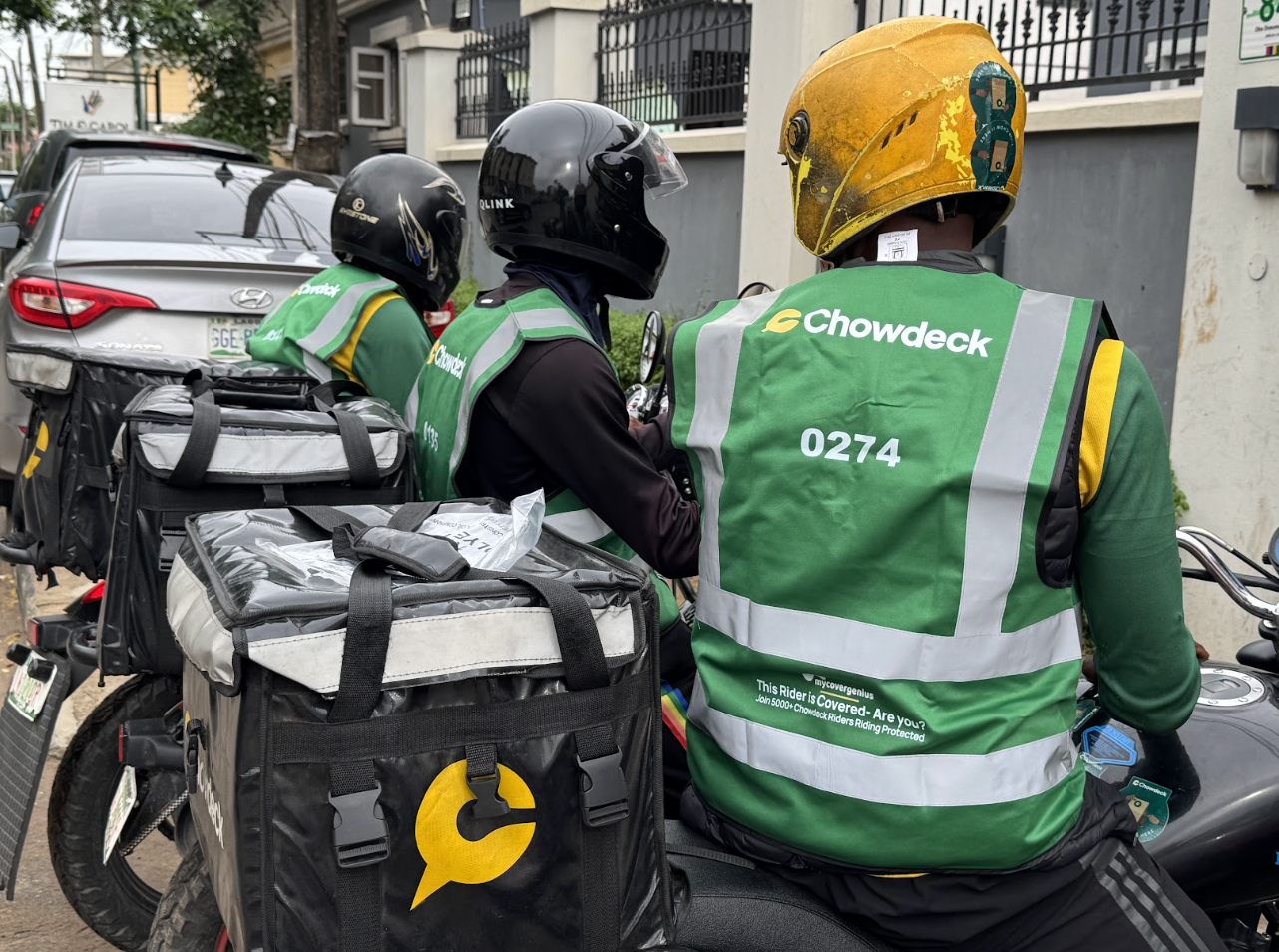

Africa’s growing digital delivery economy is witnessing a shift toward structured worker protection as companies begin embedding insurance coverage into platform operations. A new partnership between delivery platform Chowdeck and insurance provider MyCoverGenius seeks to strengthen welfare standards for thousands of riders operating across Nigeria.
The collaboration introduces personal accident insurance coverage for more than 20,000 riders working on the Chowdeck platform, marking one of the most extensive safety initiatives within Nigeria’s on demand logistics sector. The agreement, which began in November 2025, automatically enrolls every active rider into an insurance plan designed to reduce financial vulnerability linked to workplace risks.
Under the arrangement, riders gain access to protection covering accidental medical expenses, temporary disability, and other incident related risks common within delivery operations. The initiative reflects a broader recognition that gig economy workers face exposure to physical hazards without the institutional protections traditionally available in formal employment structures.
Speaking on the significance of the initiative, the Head of Operations at Chowdeck, Umar Nasir, described the collaboration as one that establishes a stronger welfare benchmark within Nigeria’s delivery ecosystem. He noted that the programme provides riders serving millions of customers with a dependable safety framework.
He said the partnership represents a step toward improving operational sustainability while reinforcing rider confidence. According to him, “the landmark collaboration had set a new benchmark for rider welfare in Nigeria,” emphasizing that safety support is now becoming central to platform competitiveness rather than an optional benefit.
Since launching operations in October 2021, Chowdeck has expanded rapidly, positioning itself as a technology driven logistics platform supporting food and hospitality businesses. The company’s growth strategy increasingly combines service efficiency with workforce welfare policies aimed at strengthening long term ecosystem stability.
Nasir added that the company’s broader objective is to create a delivery environment where safety, dignity, and sustainability remain priorities. He explained that investment in rider welfare aligns with the platform’s mission to build trust among both service providers and customers.
From the insurance provider’s perspective, the partnership demonstrates how digital platforms can extend financial protection to underserved workers. Chief Executive Officer of MyCoverGenius, Adebowale Banjo, stated that expanding insurance accessibility remains central to the company’s strategy across African markets.
He said the organisation aims to make insurance solutions practical for everyday users rather than limited to corporate clients. According to him, “our mission has always been to make insurance accessible, relevant, and impactful for everyday Africans.”
Banjo further explained that integrating insurance directly into digital platforms allows coverage to reach workers seamlessly, eliminating traditional enrollment barriers that often discourage participation. He added that the collaboration illustrates how technology companies can incorporate financial protection into operational models while improving livelihoods.
Analysts view the partnership as part of a wider evolution within Nigeria’s gig economy, where platforms are gradually assuming greater responsibility for worker welfare amid increasing competition and regulatory attention. As delivery services expand alongside urban consumption patterns, structured protection mechanisms may become an industry expectation rather than a differentiator.
Ultimately, the initiative signals a transition from informal rider arrangements toward more institutionalised employment safeguards. By embedding insurance into platform operations, both firms aim to reduce risk exposure while strengthening trust across Nigeria’s fast growing digital delivery ecosystem.