


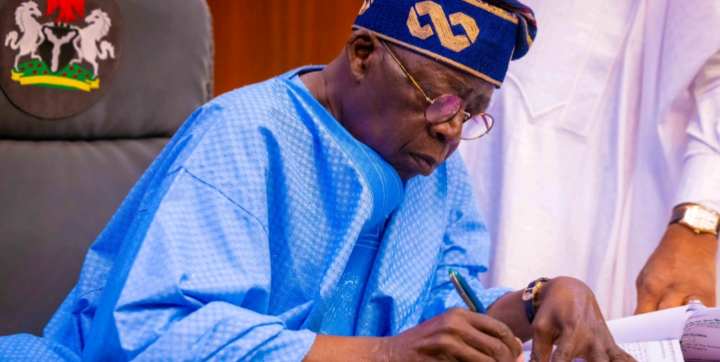

The House of Representatives has advanced President Bola Tinubu’s N58.4 trillion appropriation bill for the 2026 fiscal year through second reading without substantive debate. The proposal was adopted by voice vote after a brief presentation from the Leader of the House. No member publicly questioned its assumptions, spending priorities, or fiscal risks.
For a budget of this magnitude, the absence of scrutiny was striking.
Appropriation bills are the most consequential documents before any legislature. They determine how public funds are raised, allocated, and spent. They shape national priorities and set the direction of economic policy for the year ahead. When such a plan proceeds without interrogation, concerns emerge about the strength of oversight and the seriousness of democratic accountability.
The scale of the proposal alone warrants careful examination. The N58.4 trillion spending plan authorizes withdrawals from the Consolidated Revenue Fund to cover recurrent expenditure, capital projects, statutory transfers, and debt service obligations. It stands among the largest budgets in Nigeria’s history. At that level, even minor inefficiencies translate into billions of naira. Small misjudgments carry system-wide consequences.
Financial adviser Oyetunde Gabriel views the size of the budget as both ambitious and risky. He notes, “A N58.4 trillion budget represents a large fiscal commitment relative to Nigeria’s revenue base, highlighting a heavy reliance on borrowing. Economically, it reflects ambitious spending, but without strong revenue mobilization, it may strain fiscal health, widen deficits, and pressure monetary stability, affecting investor confidence and inflation management.”
His assessment underscores a structural problem. Spending continues to outpace revenue, forcing the government to depend on borrowing to close the gap. This approach expands deficits and places pressure on inflation and exchange rate stability. The larger the commitment, the higher the stakes for fiscal discipline.

The second reading stage exists precisely to test these risks. It is not a procedural formality but a moment for lawmakers to debate the broad principles of a bill. Members are expected to question policy direction, challenge assumptions, and represent constituent concerns. Open debate also signals independence from the executive and reassures citizens that public finances are not being approved automatically.
By advancing the bill without discussion, the House relinquished that opportunity. Scrutiny gave way to consensus. Evaluation was replaced by assent.
Economist Tomilola Favour warns that such an approach weakens governance outcomes. She explains, “Advancing a sizable budget without broad scrutiny risks misalignment with public needs, inefficiencies, and governance gaps. Conversely, it offers opportunities to fast-track priority projects if well-targeted. Transparency, stakeholder input, and phased implementation are critical to mitigate political and fiscal risks while leveraging growth potential.”
Her point is clear. Speed may accelerate implementation, yet it can also amplify mistakes. Without debate and transparency, poorly designed allocations pass unchecked. Oversight functions as quality control. Removing it reduces the likelihood that spending aligns with real economic priorities.
Debt service remains one of the most pressing areas requiring attention. In recent years, a growing share of government revenue has gone toward repaying loans and interest. This trend restricts fiscal flexibility. Funds that could support healthcare, education, infrastructure, or social protection are instead tied to past obligations.
Debt therefore becomes more than an accounting entry. It limits choices.
Gabriel cautions that the current structure is unsustainable. He states, “High recurrent costs and debt servicing limit fiscal flexibility. Over the medium to long term, this structure risks crowding out capital investment, slowing growth, and increasing debt vulnerability. Without structural reforms, including revenue enhancement and expenditure prioritization, sustaining such spending levels may be challenging and could compromise fiscal stability.”
This warning highlights a trade-off embedded in the budget. As debt and administrative costs rise, resources available for development shrink. Growth slows, making future debt even harder to manage. Without reform, the cycle repeats.
Recurrent expenditure presents a similar challenge. Salaries, overhead, and administrative costs consume a large portion of public spending. These obligations keep government running, yet excessive commitments reduce room for productive investment. When recurrent costs dominate, the budget maintains structures rather than builds capacity.
Favour argues for a clearer balance. She notes, “Nigeria should prioritize capital investment over recurrent expenditure where possible, as growth relies on infrastructure, technology, and human capital. Recurrent spending should cover essential services efficiently. A balanced approach ensures short-term stability while fostering long-term productivity, employment creation, and competitiveness in the economy.”
Her emphasis on capital spending reflects a development logic. Infrastructure and human capital generate returns over time. They create jobs, attract private investment, and raise productivity. Without sufficient capital allocation, economic expansion stalls.
Yet Nigeria’s record on capital execution remains weak. Projects are often delayed or abandoned, and funds are released late. Legislative scrutiny could address these issues by demanding realistic planning and measurable outcomes. Without open discussion, underperformance risks becoming routine.
Supporters of rapid passage may argue that early approval enables faster implementation. Speed alone does not guarantee effectiveness. The legislature’s constitutional role is to question, amend, and refine proposals. Oversight protects public resources from waste and policy error. When scrutiny is compressed, checks and balances weaken and fiscal authority concentrates in the executive.
Public trust is also at stake. Citizens expect their representatives to speak on matters affecting taxes, services, and national debt. A silent chamber reinforces perceptions that decisions are predetermined and insulated from public input. Debate provides transparency and legitimacy. Its absence erodes confidence.
As implementation proceeds, outcomes will determine the budget’s credibility. Favour advises that performance indicators should guide assessment. She says, “Citizens and investors should monitor GDP growth, inflation, revenue-to-spending ratios, debt levels, and project completion rates. Employment trends, infrastructure quality, and private sector investment signal the budget’s real impact. Fiscal transparency and accountability mechanisms indicate whether allocations translate into tangible improvements for society and economic stability.”
These metrics offer a practical test of success. They shift attention from promises to measurable results.
Nigeria faces tight revenues, rising debt, persistent inflation, and significant infrastructure gaps. In such conditions, every naira must be justified. A N58.4 trillion budget demands rigorous scrutiny, not procedural haste.
Passing it without debate signals a troubling relaxation of standards at a moment when discipline is most required. Legislative vigilance remains essential. Without it, fiscal governance weakens and public trust declines. Nigeria’s economic stability depends on oversight that is visible, active, and uncompromising.


