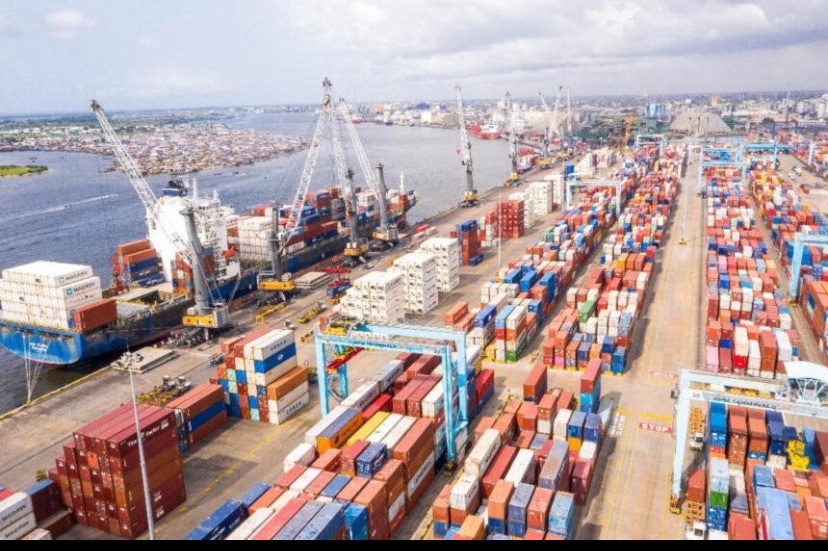

APM Terminals Apapa has partnered with key government agencies and importers to address challenges affecting cargo clearance through Nigeria’s National Single Window (NSW) platform. The move is aimed at improving port operations, reducing delays, and making the import process easier for businesses.
The discussion took place during a Stakeholders and Customer Engagement Forum held in Lagos. Representatives from the National Single Window Project, the Standards Organisation of Nigeria (SON), the National Agency for Food and Drug Administration and Control (NAFDAC), the Nigeria Agricultural Quarantine Service (NAQS), the National Drug Law Enforcement Agency (NDLEA), and the Joint Task Force attended the meeting alongside importers and port users.
The National Single Window is a digital platform introduced by the Federal Government to simplify trade procedures by allowing businesses to complete import and export documentation through one system. Although the platform is still being introduced in phases, users have reported some operational difficulties.
Speaking at the event, the Managing Director of APM Terminals Apapa, Kamal Alhraishat, said the company created the forum to give customers a chance to discuss their concerns directly with government agencies.
He explained that the goal is to identify problems, find practical solutions, and improve the cargo clearance process for everyone involved.
APM Terminals’ Government Relations Manager, Olayinka Akinlade, said many of the complaints are linked to the ongoing transition to the National Single Window. She stressed that regular meetings between stakeholders are necessary to ensure the platform works efficiently.
Officials of the National Single Window admitted that the new system experienced some challenges during its early stages. These included resistance to change, payment-related issues, and users adapting to the digital process.
However, Director of Operations, Peter Ekunkoya, assured stakeholders that the platform has become more stable. He revealed that the integration between the National Single Window and the Nigeria Customs Service’s B’Odogwu platform has improved, leading to fewer customer complaints.
According to him, support requests have dropped significantly, from about 30 percent when the system was first introduced to around 10 percent today. He added that issues involving Harmonised System (HS) Codes, quantity declarations, and data entry errors are gradually being resolved.
Representatives from NAFDAC and SON also confirmed that their systems have now been successfully connected to the National Single Window platform.
NAFDAC official Ayankop Ayankop described the implementation as a learning experience, noting that most of the agency’s earlier technical problems have been addressed.
SON representative Iliya Shall explained that many cargo delays are caused by incorrect documentation, poor understanding of import procedures, and wrong HS Code classifications. He also reminded importers that SON permits are available for both single-use and multiple-use applications, with multiple-use permits remaining valid for one year.
Officials from NAQS and NDLEA also praised the platform, saying its virtual processing system has made regulatory procedures more efficient.
During the interactive session, importers raised concerns about permit costs, overlapping regulations, documentation errors, and delays caused by incorrect HS Code classifications.
Responding to these concerns, National Single Window expert Jude Oboh explained that permit fees are calculated based on invoice values, while larger shipments naturally attract higher charges. He also revealed that efforts are underway to improve the assignment of HS Codes to the appropriate agencies to reduce unnecessary permit requests.
Closing the meeting, APM Terminals Apapa Commercial Manager, Kayode Daniel, assured participants that all issues raised during the forum would be reviewed with the relevant agencies. He said the company remains committed to improving service delivery and supporting faster, more efficient cargo clearance at Nigeria’s ports.