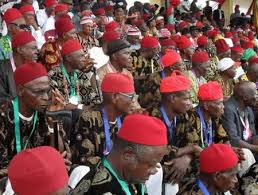

Leaders of the Igbo community in the Abuja Municipal Area Council (AMAC) have officially endorsed the re-election bid of Honourable Christopher Zaaka Maikalangu, the All Progressives Congress (APC) candidate, ahead of the council chairmanship elections. This move, announced at a press conference in Abuja on Thursday, February 19, 2026, comes just 48 hours before the polls scheduled for Saturday, February 21. The leaders also took the opportunity to distance themselves from a previous endorsement of the Social Democratic Party (SDP) candidate, Obinna Simon, labeling it as an unauthorized move that does not represent the broader interests of Ndigbo in the FCT.
The political and economic consequence of this endorsement is a significant consolidation of the non-indigenous vote for the APC in Abuja’s most populous area council. Historically, the Igbo electorate has been a decisive factor in AMAC elections due to their extensive presence in the territory’s commercial hubs. By aligning with Maikalangu, the community is betting on “continuity of stability.” For the APC, this support is vital to countering the strong opposition from parties like the ADC and SDP, as it seeks to maintain control over the capital’s municipal engine.
Analytically, the endorsement is rooted in the administration’s record on Market Regulation and Inclusivity. Spokesmen for the group, Honourable Benson Ovoh and Comrade Ike Duru, cited Maikalangu’s role in resolving decades of uncertainty surrounding market demolitions as a primary reason for their support. By securing market allocations and fostering a “new brotherliness” between the indigenous people and Ndigbo, the administration has successfully de-risked the business environment for thousands of traders who previously operated under the constant threat of urban renewal projects.
The impact on “Social Harmony and Unity” is a vital dimension of this political alliance. The Igbo leaders noted that the Maikalangu administration has provided a “sense of belonging” that has historically been missing in local governance. This “progressive leaning” alliance is seen as an envious model of cooperation between settlers and host communities, focusing on joint economic growth rather than ethnic friction. The community emphasized that their participation is not just about voting, but about “shaping the nature of the local polity” and ensuring that the FCT remains a unified project for all Nigerians.
Furthermore, the rejection of the SDP candidate’s endorsement highlights a strategic rift within the diaspora political leadership. The AMAC Igbo community clarified that endorsements must be based on “tangible service delivery” rather than mere ethnic sentiment. As voters prepare for the Saturday polls, this public stance is intended to provide clear direction to the millions of Igbo residents in AMAC, urging them to prioritize “substance and exemplary leadership” over unvetted political alternatives.
The long-term economic outlook for AMAC hinges on the council’s ability to maintain these “harmonious resolutions” to market and land disputes. As one of the few elections in Nigeria conducted directly by INEC rather than state commissions, the 2026 FCT polls are viewed as a high-stakes rehearsal for the 2027 general elections. For now, the endorsement of Maikalangu by a major ethnic bloc suggests that the incumbent’s “People First” developmental agenda has successfully bridged the gap between the ballot box and the marketplace.