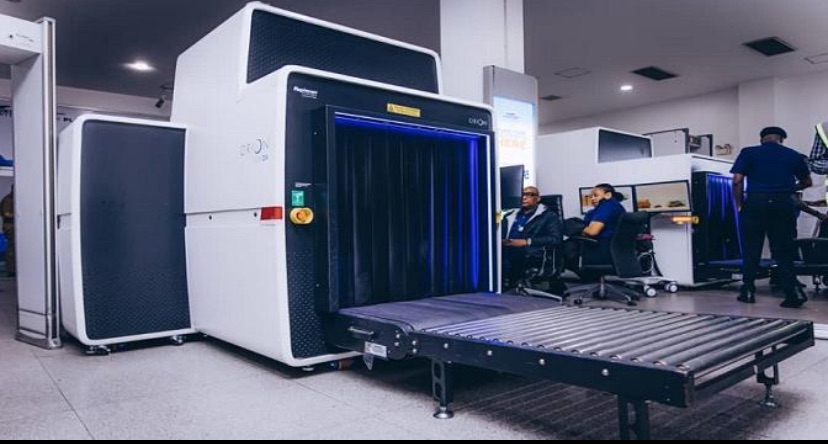

Concerns over airport security and passenger treatment are growing in Nigeria following a series of incidents involving Aviation Security (AVSEC) personnel. While the Federal Airports Authority of Nigeria (FAAN) has promised investigations into several reported cases, many travellers and industry stakeholders say they want to see real action instead of repeated assurances.
The latest controversy happened at Osubi Airport in Delta State, where a disagreement between a female passenger and AVSEC officers during baggage screening quickly gained attention on social media.
In a viral video, the passenger questioned the professionalism of security officers after they stopped her from boarding with canned milk and fish products. According to the officials, the items could leak during the flight and create safety concerns.
The passenger disagreed with the explanation, insisting that the products were properly sealed in metal containers. She also stated that she had travelled with the same items from Abuja to Osubi without facing any restrictions. The situation became more tense when one of the officers asked her to stop recording the encounter, but she refused, attracting the attention of other passengers nearby.
The incident sparked widespread reactions online, with many Nigerians accusing airport officials of applying security rules inconsistently. Several travellers argued that regulations appear to change from one airport to another, making it difficult for passengers to know what is allowed.
FAAN responded by announcing an investigation into the matter. However, many members of the public noted that similar investigations have been announced in the past, but the findings are rarely made public.
Public concerns about aviation security have also increased because of recent corruption-related cases involving airport officials.
Earlier this year, the Independent Corrupt Practices and Other Related Offences Commission (ICPC) disclosed plans to prosecute five security personnel accused of accepting bribes to interfere with a legitimate security operation involving a former state governor at the Nnamdi Azikiwe International Airport in Abuja.
In another high-profile case, the Economic and Financial Crimes Commission (EFCC) arrested an Aviation Security officer, Inspector Ali Baffa, at Mallam Aminu Kano International Airport. The officer was accused of attempting to smuggle 22.2 kilograms of unprocessed gold bars valued at more than ₦4.4 billion out of Nigeria by allegedly hiding them inside his clothing before handing them to passengers travelling abroad.
These incidents have raised fresh concerns about integrity, professionalism and accountability within airport security operations.
Many regular travellers say the biggest challenge is the lack of consistency in how airport rules are enforced. According to passengers, items accepted at one airport are sometimes rejected at another, creating confusion and unnecessary delays.
Some travellers also believe that inconsistent enforcement creates opportunities for intimidation and demands for illegal payments by a few dishonest officials.
Following the Osubi Airport incident, FAAN said its Managing Director and Chief Executive Officer, Mrs. Olubunmi Kuku, had ordered an immediate investigation.
The agency assured the public that any officer found guilty of violating operational procedures or professional standards would face disciplinary action. FAAN also reaffirmed its commitment to safety, security, professionalism, accountability and quality customer service across Nigerian airports.
Despite these assurances, aviation experts believe more needs to be done to restore public trust. They are calling for stricter enforcement of airport regulations, continuous training for security personnel, stronger supervision and, most importantly, the public release of investigation outcomes.
Retired Group Captain John Ojukutu said Nigeria’s aviation sector requires urgent reforms, especially in the recruitment, certification and monitoring of aviation security officers. According to him, improving accountability is essential to protecting the country’s aviation reputation and restoring passenger confidence.
Industry stakeholders agree that passengers will regain trust only when cases of misconduct are handled transparently and those responsible are held accountable.