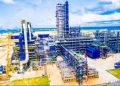

ANOH Gas Processing Company (AGPC) has officially opened two 100,000-barrel condensate buffer tanks at its cutting-edge facility in Assa-North, Ohaji South, Imo State. The tanks, constructed by the wholly Nigerian firm Adano Engineering, were awarded in August 2024 and completed by September 2025 on schedule and without compromising on safety or quality.
These buffer tanks play a critical role in safely storing condensate produced at the ANOH gas plant, enhancing both the plant’s reliability and its processing capacity. In addition to the tanks themselves, the project encompassed piping, structural supports, mechanical, electrical, and instrumentation systems, as well as the procurement of roof plates.
Adano Engineering underscored its commitment to safety and quality: the project recorded zero Lost Time Injuries (LTI), and all welds passed inspection without needing rework. Both tanks were hydrotested and certified “fit for service,” confirming their structural integrity and operating readiness.
At the commissioning ceremony, led by AGPC Managing Director Effiong Okon, he praised the professionalism and high standards upheld by Adano Engineering. He remarked, “This project is a strong example of what can be achieved when commitment to quality, safety, and local content come together.” Okon added that this milestone strengthens AGPC’s mission to develop Nigeria’s gas infrastructure, leverage local talent, and deliver long-term value.
The Managing Director of Adano Engineering also expressed gratitude for AGPC’s trust, promising continued collaboration on world-class engineering projects that further national development goals.
This commissioning represents yet another step in AGPC’s ambition to support a cleaner energy future in Nigeria, improve the midstream gas sector, and build resilient infrastructure for long-term growth.
By adding these buffer tanks, AGPC strengthens Nigeria’s midstream gas capacity, which could drive higher condensate throughput and export potential. This infrastructure supports local job creation and increases foreign exchange earnings, factors that help stabilize Nigeria’s oil-and-gas revenues amid global energy shifts.