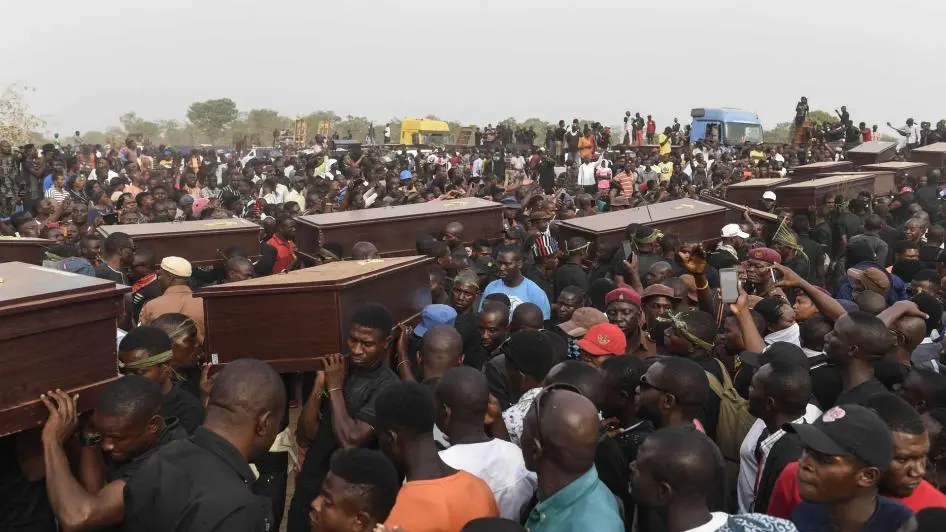

The Christian Association of Nigeria (CAN) has sharply criticized the government’s response to escalating insecurity, demanding an end to the “delay or denial” by security agencies that has allowed violence to devastate communities, especially in the North. The religious body emphasized that the continuing crisis has severe implications extending far beyond human rights and into Nigeria’s fragile economy, particularly crippling its agricultural sector.
Archbishop Daniel Okoh, President of CAN, acknowledged the extensive suffering—including loss of life and the destruction of places of worship—but stressed that the government’s efforts must be “redoubled towards equitable protection for all.” The core concern, he noted, is that the cries for help are “too often met with delay or denial,” leading to protracted instability.
Economic Fallout and Operational Failure
The insecurity, particularly the long-running farmer-herder conflicts in the central North Central region (the Middle Belt), has fundamentally destabilized Nigeria’s agrarian supply chain. The region, often referred to as the nation’s food basket, has seen farming populations displaced or killed, directly limiting planting and harvesting cycles.
Security analysis confirms that the failure to secure these agricultural zones is an operational deficit. David Nwaigwe, a senior analyst with SBM Intelligence, criticized the institutional inability to preemptively address known threats.
“The chronic operational failure to secure these areas directly translates into an economic crisis,” Nwaigwe stated. “When attacks stop farmers from accessing their fields, you don’t just lose lives; you lose harvests, contributing to food inflation and national instability. Our reports on violence in the Middle Belt show that farmer fatalities linked to conflict have surged, leading to the displacement of over 300,000 agrarian workers in the past two years alone, drastically reducing viable farmland.”
The analyst’s comments reinforce CAN’s implicit criticism: the state possesses the intelligence to predict and prevent these attacks, but systemic failures prevent effective deployment and response, leaving agricultural output vulnerable to collapse.
A Call for Courage and Justice
Historically, the Nigerian state has struggled to manage the tension across its ethno-religious fault lines, which often turns competition for resources in the Middle Belt into deadly communal violence. CAN’s persistent advocacy, including engaging international partners and writing to the ICC, is borne out of decades of perceived impunity for perpetrators.
CAN concluded its statement by appealing for transparency and accountability, demanding that perpetrators of violence be brought “swiftly and transparently to justice” to ensure the pain of families is not reduced to “mere statistics.”
Archbishop Okoh called for a national reckoning, asserting that Nigeria’s healing “will not come from denial or blame, but from courage: the courage to face our collective failures, to grieve together, and to rebuild trust within our communities.”