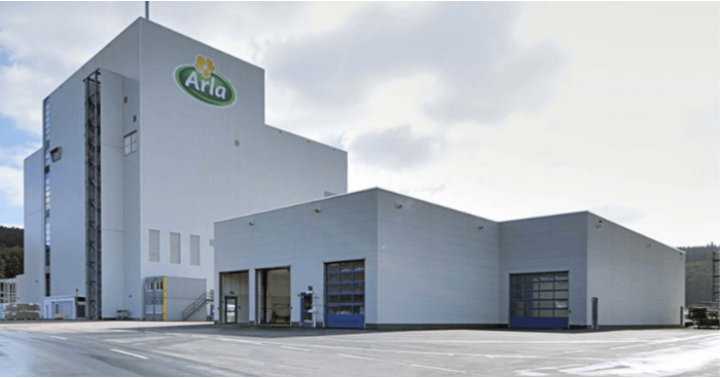

Arla Foods has taken a decisive step in strengthening Nigeria’s dairy sector with the launch of a locally made yoghurt brand and expanded manufacturing capacity. In a significant shift away from reliance on imported dairy products, the company commissioned a new production facility in Kaduna State to produce yoghurt using fresh milk sourced within the country. This development marks a transition from importing dairy inputs to processing and manufacturing finished products on Nigerian soil, aligning closely with long-standing industry goals to deepen backward integration and improve local value addition.
The new yoghurt, branded “Cool Cow Yoghurt,” is produced entirely from fresh milk obtained from the Arla-Dano Farm, a state-of-the-art dairy operation in Damau, Kaduna. Made with 100 percent fresh milk, this product aims to offer Nigerian consumers a high-quality, nutritive option in both sweetened and unsweetened formats, and it is available in 300 ml and 470 ml bottles. According to marketing leadership at Arla Foods Nigeria, this launch reflects a strategic commitment to local production and enhancing consumer access to nutritious dairy options.
Firm leadership has stressed that the introduction of a locally made yoghurt is not merely a product launch but a strategic investment in the broader dairy value chain. In the words of Ifunanya Obiakor, head of marketing at Arla Foods Nigeria, “Cool Cow Yoghurt embodies the firm’s belief in the goodness of dairy, quality, made fresh, and crafted to nourish.” She added that the launch represents a meaningful step toward making high-quality, locally produced dairy more accessible across Nigeria.
Nigeria traditionally consumes more dairy than it produces, with a large portion of demand met through imports of milk derivatives and powdered milk. This has exposed dairy manufacturers to external cost pressures, including exchange rate fluctuations and elevated import bills, particularly since recent currency reforms. By sourcing milk locally and processing it domestically, Arla aims to build a more resilient supply chain and reduce dependence on foreign dairy inputs.
The move to local production is also a response to broader economic and policy priorities. The Nigerian government and industry stakeholders have long advocated for strengthened backward integration in agriculture, a strategy designed to boost domestic input supply, reduce import dependency, and generate employment through value chain development. Arla’s investment in Kaduna, including the commissioning of the yoghurt facility, dovetails with those objectives.
Operationally, the Arla-Dano Farm supports this approach by serving as a core source of fresh milk for processing and as a hub for modern dairy practices. The farm has advanced infrastructure for animal care, milk cooling, and productivity enhancement, and represents a model for sustainable dairy production in West Africa. Arla’s broader strategy includes raising local milk production to meet a larger share of domestic demand, targeting a balance between locally sourced milk and imported inputs over the next decade.
Beyond the immediate commercial impact, the introduction of locally produced yoghurt has analytical implications for Nigeria’s dairy sector. It signals that multinational dairy firms see economic potential in domestic processing and are willing to invest in infrastructure that anchors production locally. It also underscores the importance of supply-chain resilience in sectors where import dependence has historically exposed manufacturers to volatility.
In summary, Arla Foods’ launch of Cool Cow Yoghurt and expansion of local dairy operations underscores a firm commitment to transforming Nigeria’s dairy industry by creating locally grounded production capabilities that support nutrition, economic development, and market stability.