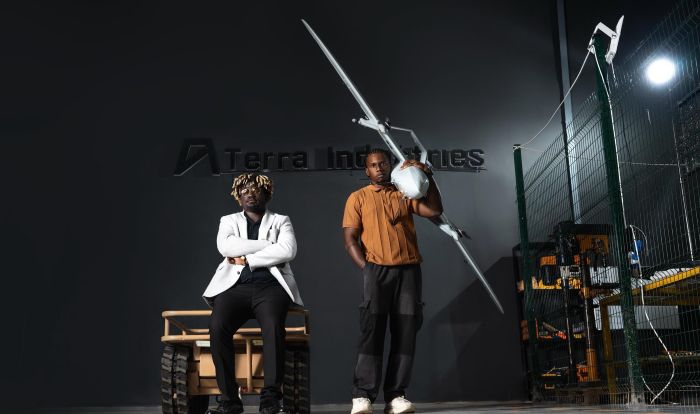

Abuja-based defense technology startup Terra Industries has secured $22 million in a new funding round, marking a significant escalation in venture capital appetite for Africa’s homegrown security infrastructure. This latest capital injection follows a record-breaking $11.75 million seed round just one month prior, underscoring the rapid commercial validation of the firm’s autonomous surveillance and protection systems. For the Nigerian economy, the rise of a “defense-tech prime” represents a strategic pivot toward industrial sovereignty, offering a locally manufactured solution to the insecurity that historically bleeds billions of dollars from the nation’s extractive and energy sectors.
The economic impact of Terra’s growth is most immediately visible in its role as a safeguard for critical national assets. The company currently helps secure infrastructure valued at approximately $11 billion, including the Geometric Power Plant in Aba and several hydropower facilities in Northern Nigeria. By deploying autonomous drones, surveillance towers, and its proprietary ArtemisOS software, Terra mitigates the “insecurity tax”—the elevated operational costs and insurance premiums that deter investment in remote mining and oil regions. As Nigeria aims to diversify its GDP through solid minerals, the ability to “geofence” these resources against insurgent attacks and illegal extraction is a prerequisite for attracting stable, long-term global capital.
Furthermore, Terra Industries is driving a high-value manufacturing renaissance within the Federal Capital Territory. Operating a 15,000-square-foot factory in Abuja, the company prioritizes “sovereign technology,” ensuring that intellectual property and manufacturing jobs remain on Nigerian soil. With approximately 40% of its engineering team composed of former Nigerian military personnel, the startup is facilitating a sophisticated “brain gain” within the domestic tech ecosystem. This model challenges the traditional reliance on expensive foreign defense contracts, which often lead to significant capital flight and data sovereignty concerns.
The $22 million funding round, led by prominent Silicon Valley investors including 8VC, also serves as a powerful endorsement of Nigeria’s “deep tech” capabilities. This influx of foreign exchange, directed toward advanced manufacturing and AI development, provides a much-needed boost to the capital account of the balance of payments. Beyond the immediate fiscal benefits, Terra’s success positions Nigeria as a regional leader in the pan-African defense market. By exporting autonomous systems to allied nations like Ghana, Terra is expanding Nigeria’s non-oil export base and enhancing its regional economic influence through the export of high-tech services.
From a fiscal policy perspective, the emergence of a domestic defense prime offers the Federal Government a more cost-effective procurement alternative. Terra has already demonstrated its competitive edge by winning government contracts over global incumbents, providing faster deployment and localized support. As the government grapples with budget deficits, the transition from importing hardware to supporting a domestic manufacturing hub could lead to substantial long-term savings. Moreover, the deployment of autonomous systems reduces the high recurrent costs associated with large-scale physical security deployments, allowing for a more efficient allocation of the national security budget.
The long-term economic outlook for Nigeria’s defense-tech sector hinges on the sustained integration of these technologies into the broader industrial framework. As Terra Industries expands its manufacturing footprint and grows its AI engineering teams, it sets a precedent for other sectors to adopt vertically integrated, software-driven models. The ability to protect the “industrial future” of the continent through homegrown innovation is not merely a security achievement; it is a foundational economic reform. By securing the physical infrastructure of the 21st-century economy, Terra Industries is helping to build the stable environment necessary for Nigeria to realize its potential as a global industrial powerhouse.