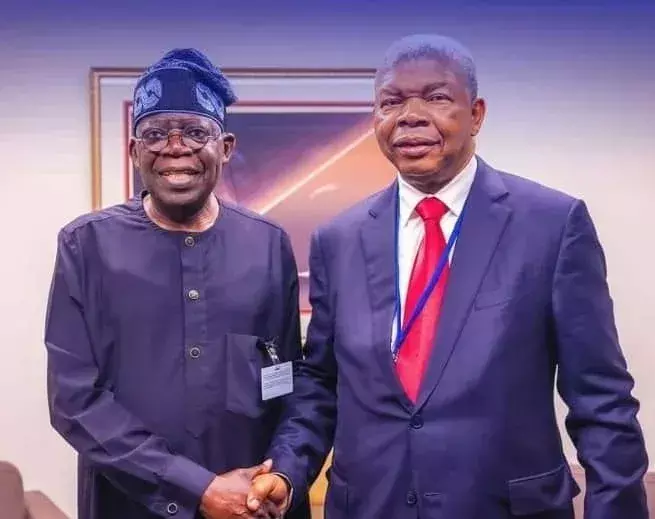

Nigeria and Angola have formalised a bilateral agreement to waive visa requirements for holders of diplomatic and official passports, a strategic move designed to lubricate the machinery of state-to-state economic engagement. The agreement, signed on the margins of the African Union summit in Addis Ababa on 15 February 2026, aims to remove administrative friction from official travel, enabling ministers, negotiators, and government experts to move more freely between Africa’s two largest oil producers. For Nigeria’s economy, this represents a calculated investment in reducing the transaction costs of international cooperation, with potential dividends in energy security, trade diversification, and continental influence.
The pact was signed by Nigeria’s Minister of Foreign Affairs, Yusuf Tuggar, and Angola’s Minister of International Relations, Tete Antonio. In a statement released through ministry spokesperson Kimiebi Ebienfa, Tuggar characterised the agreement as “long overdue” and a “timely step in strengthening bilateral engagement.” He emphasised that the visa exemption would “facilitate smoother official exchanges, deepen institutional cooperation, and create broader opportunities for joint initiatives and dialogue.” Antonio concurred, describing the accord as a “practical and forward-looking milestone” that would “reinvigorate and modernise the long-tested diplomatic partnership by removing administrative barriers.”
The economic logic underpinning this diplomatic instrument is straightforward. Nigeria and Angola together account for a substantial share of sub-Saharan Africa’s oil and gas output, yet their bilateral economic relationship has historically been underdeveloped relative to their individual weight in regional markets. Official visits, technical delegations, and inter-ministerial negotiations are the necessary precursors to major commercial agreements—whether in joint hydrocarbon exploration, liquefied natural gas cooperation, or coordination within the Organisation of Petroleum Exporting Countries (OPEC). Each bureaucratic impediment to such exchanges represents a drag on potential economic synergy.
By exempting diplomats and government officials from visa requirements, both states signal a commitment to regular, high-bandwidth communication between their respective ministries of petroleum, finance, trade, and central banks. This institutional proximity matters. It enables faster response to shared challenges, whether global oil price volatility, pipeline security in the Gulf of Guinea, or negotiating common positions in international energy forums. It also reduces the risk that promising commercial initiatives will stall due to administrative delays in securing travel authorisation for the very officials tasked with advancing them.
The agreement also carries symbolic weight as an assertion of intra-African agency. Tuggar explicitly linked the accord to Nigeria’s historic solidarity with Angola during its anti-colonial and post-independence struggles, invoking the shared history of ideological conflict between UNITA and the MPLA. This framing positions the visa waiver not as a routine administrative update but as a reaffirmation of African capacity to structure its own diplomatic and economic relationships without external mediation. For a continent increasingly focused on implementing the African Continental Free Trade Area (AfCFTA), such bilateral confidence-building measures are essential scaffolding.
From a Nigerian economic perspective, the benefits are likely to accrue gradually but cumulatively. Easier official travel means more frequent joint technical committees, more robust policy coordination, and deeper working relationships between regulatory agencies. Over time, this institutional thickening can translate into concrete commercial outcomes: memoranda of understanding signed and implemented, joint ventures launched, and trade and investment flows accelerated. Angola, with its Portuguese-speaking linkages to broader lusophone African markets, also offers Nigeria a potential gateway for expanding economic influence beyond anglophone West Africa.
The agreement does not, however, address the far more consequential barriers to private sector mobility between the two countries. Business travellers and ordinary citizens remain subject to existing visa regimes. But by prioritising the ease of movement for those who negotiate and oversee economic policy, both governments have signalled that deepening bilateral economic integration is a strategic priority. In the architecture of international commerce, diplomacy is the foundation upon which trade is built. This visa waiver is a modest but meaningful reinforcement of that foundation.