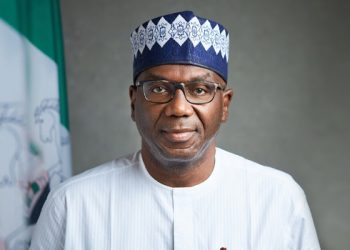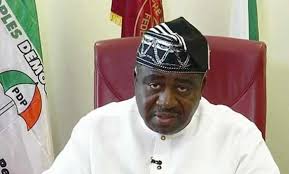

The resignation of Gabriel Suswam, a former Governor of Benue State and erstwhile Senator, from the Peoples Democratic Party (PDP) marks a significant realignment in Nigeria’s North-Central political landscape, with direct implications for regional governance stability. Citing deep-rooted internal conflicts and a collapse of ideological cohesion within the party, Suswam’s departure highlights the fragilities of Nigeria’s opposition structures. For the Nigerian economy, such high-profile political shifts often serve as precursors to administrative friction at the state level, potentially disrupting the continuity of policy implementation and the climate for regional investment.
The economic consequence of political instability in a state like Benue often referred to as the “Food Basket of the Nation” cannot be overstated. Benue is a critical hub for Nigeria’s agricultural value chain, particularly in the production of yams, citrus, and grains. When major political actors like Suswam exit established structures, it often triggers a period of “political intensive care,” as he described it, where governance can take a backseat to partisan maneuvering. For a state already grappling with security challenges and fiscal deficits, a distracted or fragmented political class risks delaying essential interventions in rural infrastructure and agricultural subsidies, which are vital for maintaining national food security and curbing headline inflation.
Analytically, Suswam’s resignation reflects a broader trend of “political de-risking” among Nigeria’s elite. By distancing himself from a party he perceives as lacking internal democracy, Suswam is signaling a lack of confidence in the current opposition framework to serve as a viable platform for constructive policy engagement. From an economic perspective, a weak opposition reduces the level of legislative oversight and fiscal scrutiny necessary for healthy democratic governance. Without robust debate and institutional checks, the risk of sub-optimal budgetary allocations and unchecked public spending at the state level increases, further straining the already limited resources of the Federation Account.
The timing of this resignation, dated February 4, 2026, is particularly noteworthy as Nigeria approaches another electoral cycle. In the Nigerian business environment, political volatility often translates into a “wait-and-see” approach by domestic and foreign investors. When influential figures move between parties or declare independence, it creates uncertainty regarding future regulatory environments and the sanctity of existing government contracts. For the North-Central region, which requires significant private sector capital to modernize its agro-processing capabilities, any perception of prolonged political crisis can deter the very investments needed to drive GDP growth and job creation for its youth population.
Furthermore, the “persistent crisis” within the PDP that Suswam lamented suggests a failure of internal conflict resolution mechanisms. This institutional failure mirrors the challenges faced by many Nigerian public and private organizations in achieving sustainable corporate governance. For the Nigerian economy to thrive, its political institutions must function as stable platforms for the exchange of ideas and the enforcement of discipline. When these platforms become “arenas for prolonged internal conflicts,” they cease to contribute to national development, instead becoming drains on the social and political capital required to implement difficult but necessary economic reforms.
The long-term economic outlook for Benue State and the wider North-Central region depends on how quickly political stability can be restored. The loss of a figure with Suswam’s legislative and executive experience suggests a potential “brain drain” from the opposition, which could lead to a one-party dominance that historically lacks the incentive for transparent fiscal management. To mitigate these risks, the state’s political leadership must ensure that partisan shifts do not interfere with the technical execution of development projects, particularly those funded by multilateral agencies like the World Bank or the African Development Bank, which require a stable administrative environment.
Ultimately, the exit of Gabriel Suswam is a reminder that Nigeria’s economic progress is inextricably linked to its political maturity. While the former governor has expressed hope that his former party will find the courage to resolve its contradictions, the immediate priority for stakeholders must be the protection of the state’s economic interests. Ensuring that the agricultural supply chains remain insulated from political shocks is essential for maintaining the delicate balance of Nigeria’s domestic economy. As the political map continues to shift, the focus must remain on building resilient institutions that can withstand the departure of individuals while continuing to deliver growth and stability for the Nigerian people.