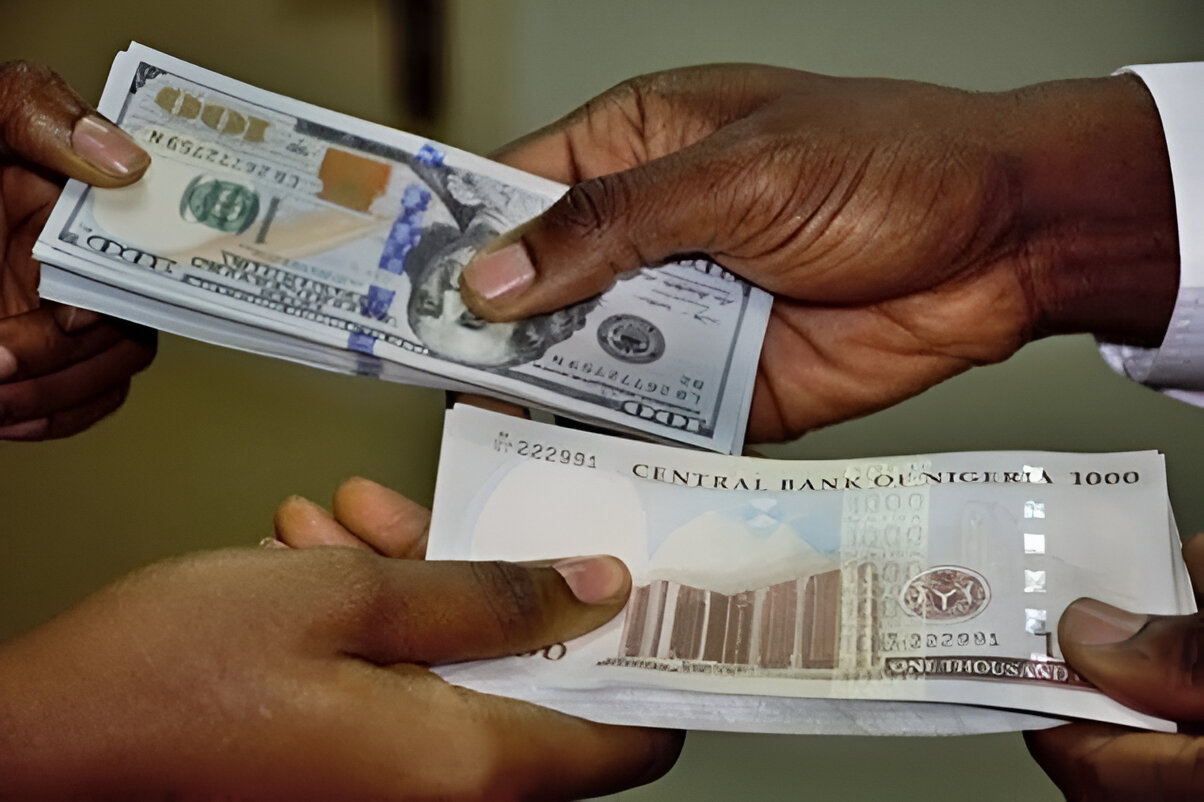

The naira strengthened to a two-year high of about N1,400 to the dollar at the official foreign exchange market on Tuesday, reflecting improved liquidity and growing confidence in Nigeria’s ongoing FX reforms.
Data from the Central Bank of Nigeria showed the local currency closed at N1,400.48 per dollar at the Nigerian Foreign Exchange Market, marking its strongest level since early 2024. The exchange rate represents an 18.6 per cent appreciation from N1,661.12 recorded in December 2024, when the Electronic Foreign Exchange Matching System was introduced. On a day-on-day basis, the naira gained marginally from N1,401.22 traded on Monday.
Analysts say the rally underscores renewed investor confidence in Nigeria’s macroeconomic management, supported by increased foreign exchange inflows and improved transparency in the FX market.
The Chief Executive Officer of the Centre for the Promotion of Private Enterprise, Muda Yusuf, said the appreciation reflects growing confidence in the economy and the policy direction of the government. According to him, foreign capital inflows—particularly through financial markets—have remained steady, even though detailed disaggregation of the inflows remains limited.
The naira also strengthened in the parallel market, gaining N65 to trade around N1,475 per dollar on Tuesday, compared with levels seen two years ago.
Further supporting the currency’s performance, Nigeria’s external reserves rose by $5.77bn, or 14.3 per cent, to $46.06bn as of January 27, 2026, from $40.29bn recorded in December 2024, based on CBN data.
Ayokunle Olubunmi, Head of Financial Institutions Ratings at Agusto & Co., attributed the naira’s improvement to higher remittance inflows, relatively stable oil prices, reduced disruptions to crude oil production, and lower imports of petroleum products.
Yusuf added that beyond portfolio investments, routine economic activities such as exports—particularly non-oil exports—are increasingly contributing to foreign exchange supply. He also cited diaspora remittances, donor inflows, diplomatic-related FX, Eurobond proceeds, and growing earnings from domestic refining and export-oriented industries like fertiliser and urea production.
On sustainability, he said the naira’s gains could be maintained if reforms continue and major external shocks, especially sharp declines in oil prices or output, are avoided.