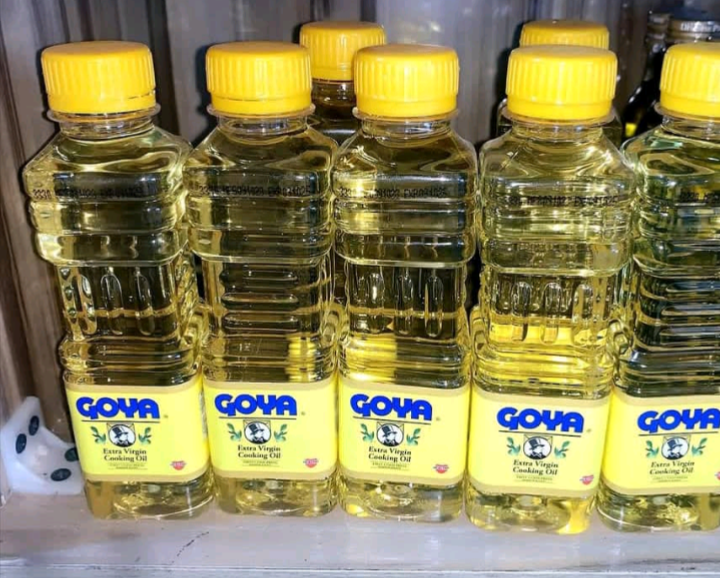

Nigeria’s drug and food regulatory authority has raised the alarm over a growing health threat: counterfeit Goya oil being sold in plastic bottles across parts of Lagos. The National Agency for Food and Drug Administration and Control (NAFDAC) revealed that these illegal products pose serious risks to people’s health and are not permitted for sale or consumption in Nigeria.
During a press briefing at its Investigation and Enforcement Directorate office, NAFDAC officials confirmed that the only genuine Goya oil allowed in the Nigerian market is the imported version sold in original branded bottles through authorised dealers. Any product packaged in PET plastic containers should be treated as fake and harmful.
NAFDAC said it uncovered a large-scale counterfeit production site in the Oke-Arin market in Idumota, Lagos, where criminals mixed burnt palm oil with colouring agents before repackaging it into plastic bottles labelled as Goya oil. This adulterated mixture can endanger consumers who unknowingly use it at home, in food preparation, or during religious gatherings.
“Goya oil sold in plastic bottles is fake. The only approved product is imported in original bottles by authorised dealers,” stated Dr. Martins Iluyomade, NAFDAC’s Director of Investigation and Enforcement, warning Nigerians against the practice.
At the enforcement operation, officials seized palm oil, colouring substances, stoves, and numerous empty plastic bottles used in the illicit repackaging process. These materials were evidence of systematic counterfeiting that can significantly harm unsuspecting buyers.
The agency also sounded a stern warning to religious organisations and community groups: do not sell or use PET-bottled “anointing oil” products at any event or gathering. Those caught facilitating the distribution of such fake goods will be prosecuted under existing public health laws.
Consumers were urged to be vigilant and to report any suspicious products, especially edible oils in unverified containers, to the nearest NAFDAC office for swift action. The agency is intensifying its surveillance operations to prevent fake and unsafe products from reaching Nigerian households.
During the same announcement, NAFDAC revealed the arrest of a suspect, identified as Moses Nelson, in Badagry, who was linked to the distribution of adulterated and counterfeit alcoholic drinks. Authorities recovered fake alcohol products, sachets, and PET-bottled spirits at his residence.
Counterfeiting is not a new challenge in Nigeria. The government and NAFDAC have been cracking down on fake medicines, cosmetics, and food products for several years, with notable seizures and destruction of billions of naira worth of substandard goods across the country.
The surge of counterfeit consumables like fake Goya oil not only threatens public health but also harms legitimate businesses, undermines consumer confidence, and distorts local markets. Increased enforcement boosts regulatory costs and damages supply chain trust, potentially discouraging investment and inflating prices for safe, certified food products in Nigeria.