
Nigeria’s mining sector is taking a leap toward industrialization with the start of operations at a high-purity gold refining plant in Lagos and the imminent launch of a $600 million lithium processing facility in Nasarawa State. These developments are part of the federal government’s broader value-addition strategy designed to change how the country extracts and processes its mineral wealth, moving away from exporting raw materials to capturing more economic value at home.
According to the Minister of Solid Minerals Development, Dr. Dele Alake, the Lagos gold refinery is now fully operational, producing high-purity gold and laying the foundation for a stronger domestic minerals industry. This new refinery is expected to curb illegal gold exports, improve traceability in the value chain, and attract investment in downstream processing.
In addition to Lagos, three more gold refineries are at various stages of development across the country, signaling a sustained push to build internal capacity and expertise that supports broader industrial growth.
Meanwhile, the $600 million lithium processing plant in Nasarawa State is complete and ready for its formal commissioning. Dr. Alake says this facility will support the battery production value chain, including electric vehicles and renewable energy storage systems, sectors that are becoming increasingly important globally as the world pivots to clean energy technologies.
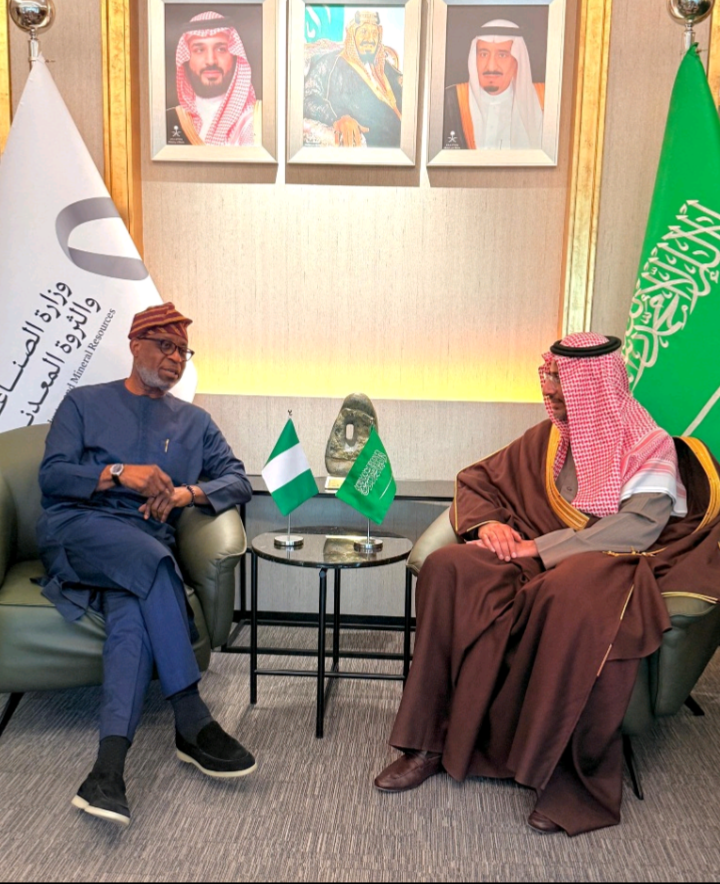
Dr. Alake emphasized that these infrastructure investments are positioning Nigeria as a key minerals supply hub in Africa and a strategic global partner for critical minerals needed for the energy transition. The government also sees this as a chance to deepen international collaboration, particularly with Saudi Arabia, through forums such as the Future Minerals Forum in Riyadh, where discussions focused on expanding cooperation in mineral development, technology transfer, and capacity building.
The minister highlighted that these efforts reflect the success of Nigeria’s value-addition policy, which aims to boost revenue, create jobs, and strengthen competitiveness in the global mining industry.
“Nigeria’s value-addition policy is yielding results, with a high-purity gold refinery now operational in Lagos,” Dr. Alake said, highlighting the government’s commitment to transforming Nigeria’s mining landscape.
“A $600 million lithium processing plant in Nasarawa State was completed and ready for formal inauguration,” he added, underlining the importance of the lithium project in moving the country up the value chain.
These projects could have a meaningful economic impact beyond mining: enhanced processing capacity can stimulate job creation, improve export quality, and attract foreign direct investment, all of which contribute to broader economic diversification and reduced reliance on oil revenues. Estimated mining reforms under the current administration previously helped draw more than $800 million in foreign investment into processing projects, an indication of growing investor confidence in Nigeria’s minerals policies.
Together, the gold refinery and lithium plant showcase Nigeria’s evolving approach to its natural resources, aiming not just to extract but to refine, process, and integrate into global supply chains with higher value outputs. This shift supports sustainable economic expansion, fosters industrial synergies, and helps position the nation as a competitive player in the future of global minerals markets.