


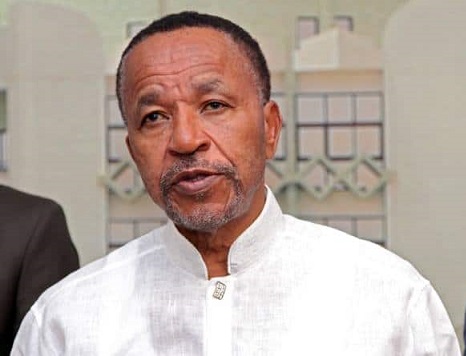

Cameroonian businessman Paul Fokam’s Afriland First Bank has reached a major milestone, reporting total assets of CFA2.032 trillion ($3.6 billion) at the end of 2024. This marks the first time the bank has crossed the CFA2 trillion threshold, cementing its position as a leading financial institution in Central Africa.
The bank’s asset base grew 9.3 percent from the previous year, while net income rose to CFA28.59 billion ($50.75 million) and net banking income reached CFA126.22 billion ($224.07 million), reflecting strong performance across its core operations. Customer confidence also improved, with deposits climbing 10.1 percent to CFA1,562.35 billion ($2.77 billion), even as lending dipped slightly to CFA1,220.03 billion ($2.16 billion) as the bank maintained a cautious approach to credit risk.
Founded in 1987, Afriland First Bank has expanded beyond Cameroon, operating in nine African countries including the Democratic Republic of Congo, Equatorial Guinea, Liberia, South Sudan, and Uganda. The bank runs 87 branches, 218 ATMs, and 386 electronic payment terminals, serving over 705,000 customers. Digital banking has become central to its expansion, improving accessibility in areas where branch coverage is limited.
In 2025, the bank received approval under the CEMAC single-license system to open new branches in Congo, the Central African Republic, and Chad, enabling Afriland to deepen its regional presence and finance industrial projects. The bank has also focused on development finance, partnering with the International Finance Corporation to provide up to $60 million in credit to small and medium-sized enterprises in Cameroon, including women-led businesses.
Afriland has further backed large regional projects, such as a $1.2 billion agricultural initiative between the Central African Republic and India’s Mahasakthi Group to develop 30,000 hectares of sugarcane and cassava, supporting both agriculture and energy production.
Under Paul Fokam’s leadership, Afriland First Bank continues to combine retail and corporate banking growth with regional development initiatives, establishing itself as a powerhouse in Central African finance.


