


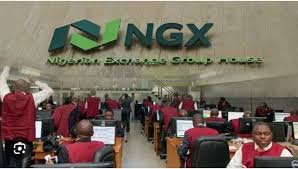

President Bola Ahmed Tinubu has welcomed a landmark achievement for Nigeria’s financial markets as the Nigerian Exchange (NGX) surpassed a ₦100 trillion market capitalisation, calling the milestone a clear sign that economic reforms are beginning to deliver results. The announcement from the State House in Abuja comes after sustained gains on the Nigerian stock market, with its total value rising to about ₦101.8 trillion in early January 2026.
In a statement released by his Special Adviser on Information and Strategy, Bayo Onanuga, President Tinubu described the achievement as the “birth of a new economic reality and rejuvenation” for the country. He said the strong performance of the equities market was an expression of growing investor confidence in the Nigerian economy, both at home and abroad.
The NGX All-Share Index delivered a remarkable return of 51.19 per cent in 2025, outperforming many major global stock indices such as the S&P 500 and the UK’s FTSE 100, according to the president. This marked improvement compared with the 37.65 per cent return recorded in 2024, highlighting the rally in equities despite sluggish markets elsewhere.
President Tinubu said Nigeria is steadily moving from being seen as a “frontier market to be ignored” to an attractive destination where value is being discovered and created. He pointed to impressive performance across sectors, with industrial companies enhancing local supply chains and the banking industry demonstrating resilience and technological innovation.
PresidentTinubu also noted that a pipeline of new listings from indigenous firms in energy, technology, telecommunications and infrastructure sectors is expected to deepen the market further, boost capitalisation, and broaden ownership of the economy. The president’s remarks underscored a broader strategy to use the capital market as a catalyst for sustainable growth and development.
The president linked the stock market’s success to his administration’s ongoing economic reforms, citing tighter monetary policy, the removal of “Ways and Means” financing, and improvements in macroeconomic stability. These measures, he said, have helped ease inflationary pressures and stabilise the Nigerian naira.
Inflation, which reached a 24-month high of 34.8 per cent in December 2024, eased to 14.45 per cent by November 2025. Government projections suggest that inflation could fall below 10 per cent before the end of 2026, which the president said would contribute to improved living standards and stronger economic growth.
Beyond equities, Tinubu highlighted other positive economic indicators. He said Nigeria recorded a current account surplus of $16 billion in 2024, with expectations that it will rise to $18.81 billion in 2026. Nigeria’s foreign exchange reserves have topped $45 billion and are projected to exceed $50 billion in early 2026, giving the Central Bank of Nigeria greater capacity to maintain macroeconomic stability.
The president also pointed to a significant rise in non-oil exports and growth in manufacturing export volumes, reflecting diversification beyond the oil sector. Expanded rail networks, major road projects, and revitalised ports were among infrastructural developments he said would further support economic recovery and expansion.
Speaking on human capital and social progress, President Tinubu highlighted improvements in healthcare delivery, reduced medical tourism costs, and expanded access to education through government-backed loan programmes. These, he said, contribute to broader national resilience and growth.
The president’s statement concluded with a pledge to continue working towards building an egalitarian, transparent and high-growth economy. He urged Nigerians to deepen their participation in the local capital market to sustain momentum and shared prosperity.
Overall, the NGX’s historic crossing of the ₦100 trillion market cap is being celebrated by the government as evidence of growing trust in Nigeria’s economic direction and the effectiveness of reforms, even as efforts continue to broaden investment participation and strengthen financial markets.


