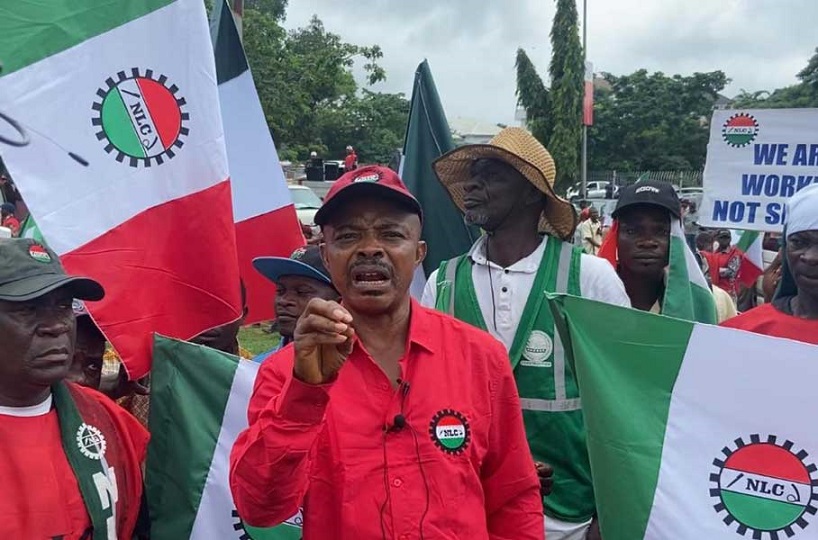

The Nigeria Labour Congress (NLC) has called on the Federal Government to urgently address workers’ wages and review what it described as regressive tax policies, warning that delays and weak compliance could worsen economic hardship for millions of Nigerians.
The appeal was made on Wednesday in Abuja by NLC President, Joe Ajaero, during the 85th birthday celebration and book launch of Organise, Don’t Agonise, the memoir of the union’s founding president, Hassan Summonu, OON. The event, held at the Shehu Musa Yar’Adua Auditorium, drew labour leaders, government officials, family members and members of the media.
Ajaero praised Summonu as a central figure in Nigeria’s labour movement, noting that his philosophy of collective action continues to guide organised labour. He described the memoir’s title as a reminder that workers’ power lies in unity and sustained engagement rather than resignation in the face of hardship.
Speaking on current labour concerns, Ajaero expressed dissatisfaction with the implementation of the new National Minimum Wage, which increased the monthly pay from N30,000 to N70,000 following its signing into law in July 2024. According to him, compliance has been uneven, with several state governments, public institutions and private employers citing financial pressures and inflation as reasons for delay.
He warned that many workers are still earning below the legally approved minimum, adding that the NLC is monitoring compliance and may pursue legal and enforcement actions where violations persist.
The NLC president also criticised recently enacted tax laws, arguing that they place a disproportionate burden on workers and low-income earners. He said labour unions and ordinary taxpayers were largely excluded from consultations, resulting in policies that deepen inequality rather than ease economic pressure.
In addition, Ajaero called for the immediate constitution of the board of the National Pension Commission (PENCOM), cautioning that prolonged delays weaken institutional governance and public trust.
He urged the government to work more closely with organised labour in shaping policies on wages, taxation and social services, stressing that inclusive dialogue is essential for economic stability and social cohesion.