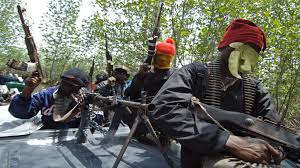

At least nine Nigerian soldiers have been killed and several others injured after their convoy struck a landmine and came under sustained fire in Borno State, in the latest reminder of the enduring insecurity in Nigeria’s north-east and its far-reaching economic consequences.
According to security sources cited by Reuters, the attack occurred on Sunday near Bindundul village, approximately 20 kilometres from Kareto, an area known to be active with fighters of the Islamic State West Africa Province (ISWAP). A military source attached to the Damasak brigade said the soldiers were travelling from Maiduguri, the Borno State capital, to Damasak, the headquarters of Mobbar Local Government Area, when the incident took place at about 4:00 p.m.
Abba Kaka Tuja, a member of the Civilian Joint Task Force who participated in the rescue operation, said the convoy first hit a landmine, which destroyed an armoured vehicle, before militants opened fire on the soldiers. He added that at least five soldiers sustained serious injuries and were evacuated for medical treatment. Military authorities are yet to issue a detailed public statement on the incident.
The attack highlights the persistent threat posed by ISWAP and other insurgent groups operating in Borno and neighbouring states, despite more than a decade of military operations aimed at degrading their capabilities. While Boko Haram and its splinter factions have lost territory since their peak in the mid-2010s, they have increasingly relied on asymmetric tactics such as landmines, ambushes and targeted attacks on military convoys and civilian infrastructure.
Beyond the immediate human toll, the incident carries significant economic implications for both Borno State and Nigeria more broadly. Persistent insecurity continues to constrain economic activity in the north-east, discouraging private investment, disrupting agriculture and trade, and placing sustained pressure on public finances. Borno, once a key agricultural and trading hub linking Nigeria to Chad, Niger and Cameroon, has struggled to regain its economic footing due to ongoing violence and displacement.
Landmine attacks in particular impose hidden but substantial economic costs. They damage expensive military equipment, increase operational risks and raise the overall cost of security operations. Armoured vehicles and logistical assets destroyed in such incidents must be replaced, adding to Nigeria’s already heavy defence expenditure at a time when government revenues are under strain from weak oil production, high debt servicing costs and macroeconomic reforms that have fuelled inflation.
The federal government has consistently allocated a significant share of its budget to defence and security. While these expenditures are often justified by the need to restore stability, they also crowd out spending on critical social and economic sectors such as education, healthcare and infrastructure. For a country grappling with high unemployment, especially among young people, and rising living costs, this trade-off has long-term development implications.
In Borno State, insecurity continues to disrupt farming cycles, limit access to markets and hinder humanitarian and reconstruction efforts. Many communities remain dependent on aid, while businesses face high operating costs due to security risks and poor infrastructure. Cross-border trade, which could otherwise provide a pathway to economic recovery, remains subdued as transport routes are considered unsafe.
The attack also underscores the fragile nature of progress made in resettling internally displaced persons (IDPs). Continued violence raises concerns about the sustainability of return programmes and the ability of local governments to rebuild livelihoods. Without improved security, investments in housing, agriculture and small enterprises risk being undermined, perpetuating a cycle of poverty and dependence.
At the national level, recurring attacks in the north-east contribute to broader investor perceptions of risk in Nigeria. While insecurity is often region-specific, it feeds into a general narrative of instability that can affect foreign direct investment, insurance costs and the overall business climate. This is particularly sensitive at a time when Nigeria is seeking to attract investment to support economic diversification and stabilise its currency.
Analysts note that addressing the economic dimensions of the insurgency requires more than military responses. While improved intelligence, demining efforts and better protection for troops are critical, long-term stability will depend on inclusive development, job creation and effective governance in affected regions. Without tackling the underlying economic grievances and rebuilding trust between communities and the state, security gains may remain fragile.
For now, the deaths of the nine soldiers serve as a stark reminder that the conflict in Nigeria’s north-east is far from over, and that its costs are measured not only in lives lost, but also in the economic opportunities foregone by a region and a country still striving for stability and growth.