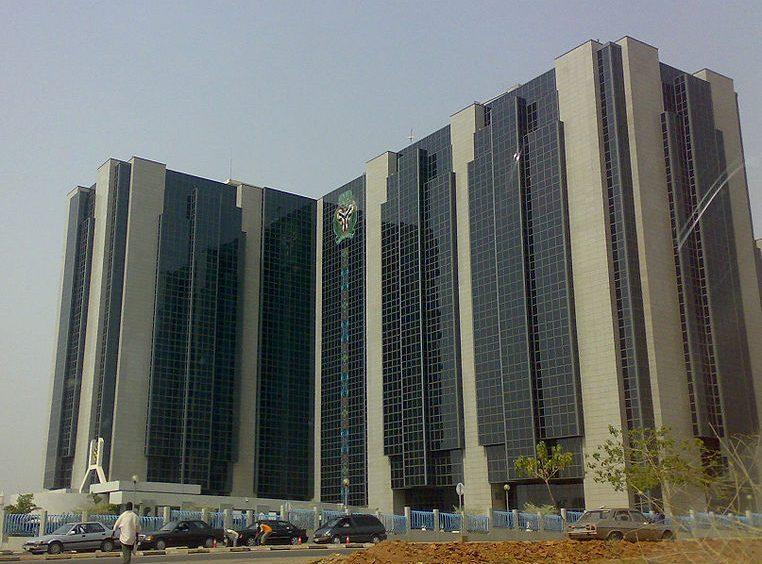

The Central Bank of Nigeria has intensified its use of domestic debt instruments in 2025, issuing a total of N17.59 trillion in primary market securities and settling N14.72 trillion in redemptions between January 2 and November 21.
The transactions, drawn from official market records reviewed by Business Times, show a net liquidity absorption of N2.87 trillion, underscoring a deliberate tightening stance and a broader shift toward market-based deficit funding rather than direct central bank financing.
A Fast Start, Mid-Year Slowdown, Calibrated Finish
The year opened with aggressive issuance activity. In January alone, the CBN raised N1.87 trillion against maturities of N595.78 billion. February and March maintained the same momentum, with issuances of N3.26 trillion and N3.12 trillion. March also saw the largest monthly redemption — N4.08 trillion — tied to instruments issued in late 2024.
By the second quarter, however, the pace moderated. Issuances were N1.54 trillion in April and N1.51 trillion in May.
June saw just N712.02 billion in issuances against N954 billion in maturities, signalling rollover pressure.
A more stable pattern returned in the second half of the year. Between July and October, CBN borrowings ranged from N677.75 billion to N1.85 trillion, while repayments remained elevated, peaking again in October at N1.15 trillion.
From November 1 to 21, issuance and redemptions were almost exactly matched — N1.64 trillion and N1.61 trillion — reflecting a controlled liquidity approach as year-end auctions loom.
Analysts Say Market Financing Signals Policy Maturity
Commenting on the shift, Teslim Shitta-Bey, chief economist at Proshare, said the financing pattern represents a pivot away from the years of heavy reliance on CBN Ways and Means.
“In the past, deficit financing relied heavily on central bank overdrafts — effectively printing money,” he said. “This approach fuelled inflation, which peaked at 38% before retreating.”
He added that the reliance on market-driven issuances marks a healthier discipline:
“Instead of injecting liquidity via direct deficit financing, government now absorbs excess liquidity from institutional investors by offering attractive yields.”
The economist noted, however, that tighter financing conditions could raise borrowing costs and squeeze private-sector access, even though investor appetite remains strong. He pointed to the recent Eurobond issuance, which was oversubscribed by 300 percent, as evidence of revived confidence.
Debt Sustainability Emerges as a Key Concern
Despite the shift toward market financing, analysts warn that the debt trajectory risks becoming unsustainable.
With N17.6 trillion raised already — above the N13 trillion projected for the 2025 budget — fiscal borrowing has outpaced planned levels.
Shitta-Bey cautioned on the structure of spending: “Debt should build capacity. If we continue borrowing just to plug holes, we’re repeating past mistakes.”
Similar concerns were raised at the Q4 2025 Capital Market Academics of Nigeria symposium, where stakeholders warned of parallels with the debt pressures that led to the Paris Club debt relief in 2005. Prof. Wilfred Iyiegbunwe urged strict adherence to the Medium-Term Debt Strategy and a reduction in short-term borrowing and exposure to volatile external credit.
Experts See Strong Liquidity, Limited Risk of Crowding Out
Despite elevated issuance levels, analysts say the private sector is not yet being pushed out of the market. Olubunmi Ayokunle, head of research at Agusto & Co, said oversubscribed auctions and modest net borrowings suggest ample liquidity. “Auctions have remained oversubscribed, and net borrowings are around N3 trillion, lower than in previous high-debt cycles,” he said.
Ayokunle expects an uptick in corporate bond issuance and commercial paper activity in 2026 as funding costs ease and macroeconomic stability improves. He also noted that borrowing volumes are ultimately determined by the Debt Management Office, not the CBN — a sign of improved fiscal coordination.
Market participants expect domestic debt instruments to remain the primary tool for liquidity sterilisation and budget financing into 2026. Investor sentiment also appears resilient, supported by high yields and relative policy continuity.
But analysts remain cautious about spending efficiency. As Shitta-Bey put it: “Borrowing isn’t dangerous — misallocating debt is. What we do with these trillions will determine whether we build resilience or risk a relapse.” While monetary discipline seems to be strengthening, they say the broader fiscal transition is still incomplete.