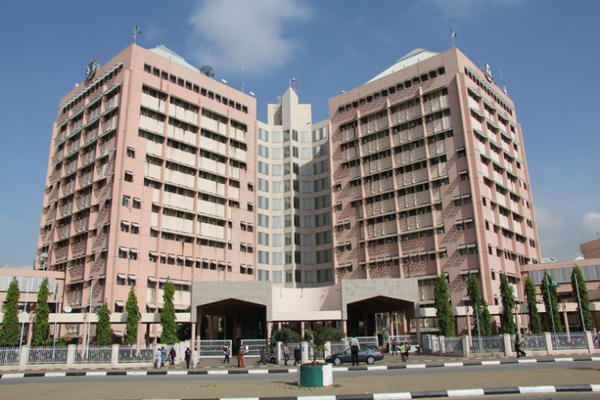

The bustling administrative heartbeat of Nigeria, Abuja, experienced a notably lethargic start to the working week this Monday, as the resumption of official duties was met with a significant apathy from the civil service workforce. Following the extended Yuletide and New Year celebrations, government activities within the Federal Capital Territory (FCT) have been severely hampered by a widespread low turnout of workers, leaving many key offices operating at a skeletal capacity.
The Federal Secretariat, typically a hive of frenetic energy and gridlocked traffic on a Monday morning, presented a starkly contrasting image of tranquility and emptiness. The usual rush of files, the rapid movement of personnel, and the intense hum of bureaucratic machinery were conspicuously absent. Instead, the corridors echoed with a quietness that suggested the holiday spirit had not yet fully dissipated from the minds of many federal employees.
Investigations revealed that commercial and official activities remained sluggish throughout the day. The Federal Government had officially declared Thursday, December 25, and Friday, December 26, 2025, as public holidays for Christmas and Boxing Day, followed by Thursday, January 1, 2026, for the New Year. Despite the official resumption date having arrived, the momentum for a full return to work appeared lacking.
A tour of various Ministries, Departments, and Agencies (MDAs) across the FCT by correspondents painted a uniform picture of absenteeism. As of 9:00 a.m., hours after the official start of the workday, only a fraction of the workforce had clocked in at their duty posts. At major hubs such as the Federal Ministries of Health and Education, the few staff members present were seen settling slowly into their offices. rather than diving into the year’s work, many were observed engaging in light, celebratory discussions, likely exchanging pleasantries about the just-concluded festivities. The intense focus required for governance was temporarily replaced by a relaxed, post-holiday camaraderie.
The situation was mirrored at the Ministry of Justice. Here, activity was largely confined to senior officers who were observed holding brief, informal meetings with the few subordinates who had reported for duty. The usual stream of legal/administrative processing was reduced to a trickle. Similarly, the judicial arm was not spared from this lethargy. At the Federal High Court in Abuja, the typically busy dockets and crowded courtrooms were absent. Activities were described as “low,” with only a handful of courtrooms in session. While some departments within the judiciary recorded a partial resumption, the overall atmosphere was one of a system still waking from a slumber.
Despite the general trend of absenteeism, there were exceptions—dedicated civil servants who prioritized their duties. One such worker, who requested anonymity, spoke to reporters about his motivation for an early return. “I resumed by 8:30 a.m. to ensure continuity in our service delivery,” he stated firmly. “We thank God for a peaceful holiday, and we are now back to our duties.” His presence highlighted the gap left by his missing colleagues. Conversely, another civil servant at the Ministry of Justice offered a glimpse into the mindset of the workforce, noting that the holiday was a vital time to recharge. “I had a good rest and spent time with my family,” the staffer remarked, perhaps explaining the reluctance of others to cut that family time short.
The economic ripple effects were also visible. The “commercial activities” around the secretariat—likely referring to the ecosystem of vendors, transport operators, and business centers that rely on the patronage of civil servants—suffered from the low footfall. Without the workers, the support economy of the Federal Secretariat slows down in tandem.
As the day progressed, it became evident that full administrative velocity would not be achieved immediately. The sluggish return serves as a reminder of the cultural phenomenon where the first working day after a major festive season is often treated as an unofficial extension of the holiday itself. For now, the machinery of the Nigerian government in Abuja grinds forward slowly, waiting for its full workforce to return and breathe life back into the capital’s operations.