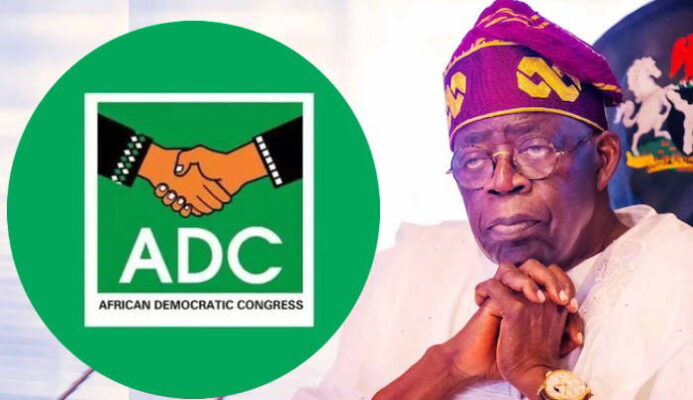

The African Democratic Congress (ADC) has strongly criticised President Bola Ahmed Tinubu for approving the cancellation of a large debt owed to the federal government by the Nigerian National Petroleum Company Limited (NNPCL), calling the action unconstitutional and potentially grounds for impeachment.
According to the ADC, President Tinubu authorised the removal of approximately $1.42 billion and ₦5.57 trillion in legacy debts that NNPCL owed to the Federation Account. These debts stemmed from obligations that had built up over many years to 31 December 2024, including amounts related to production-sharing contracts, domestic supply commitments, royalty payments and other outstanding balances.
The party’s National Publicity Secretary, Mallam Bolaji Abdullahi, said the decision was taken by executive directive without the approval of the National Assembly. The ADC pointed out that about 96 per cent of dollar-denominated debts and 88 per cent of naira-denominated debts were removed from public accounts through the president’s order.
In a statement, the ADC argued that the justification of a “reconciliation of records with regulators” cannot override the clear provisions of the Constitution. It cited Section 162 of the 1999 Constitution (as amended), which states that all revenues due to the Federation, including oil-related revenues, must be paid into the Federation Account and shared among the federal, state and local governments.
The party said the write-off reduces the pool of funds that should be shared with states and local councils under the constitutional revenue-sharing formula. It warned that no president has the authority to cancel revenues or related obligations that legally belong to all tiers of government unless there is clear legislative backing to do so.
The ADC also accused the National Assembly of failing in its duty by not challenging the executive over what it called a significant constitutional breach. The party suggested that the legislature’s silence may amount to “active collusion” or a “wilful surrender” of its constitutional responsibilities.
“The Federation Account is not under the control of the President,” the statement said. “Executive action cannot override the Constitution. Any cancellation that reduces funds due to states and local governments without legislative authority is unconstitutional.”
The ADC said the president has previously violated constitutional provisions and that this latest move should be a strong trigger for impeachment proceedings. It stressed that Nigeria should be governed by the rule of law and that leaders must respect constitutional protections rather than act unilaterally.
Legal and governance experts have noted that the debate over the cancellation reflects broader questions about fiscal accountability and revenue transparency in Nigeria’s oil sector. The federal government has said the debt write-off was part of efforts to reconcile official records and improve financial clarity, but critics say the constitutional and financial implications are far-reaching.
The controversy comes amid wider public scrutiny of how Nigeria’s national oil company accounts for revenue and the role of the executive in managing funds that ultimately affect budgets across all levels of government.