


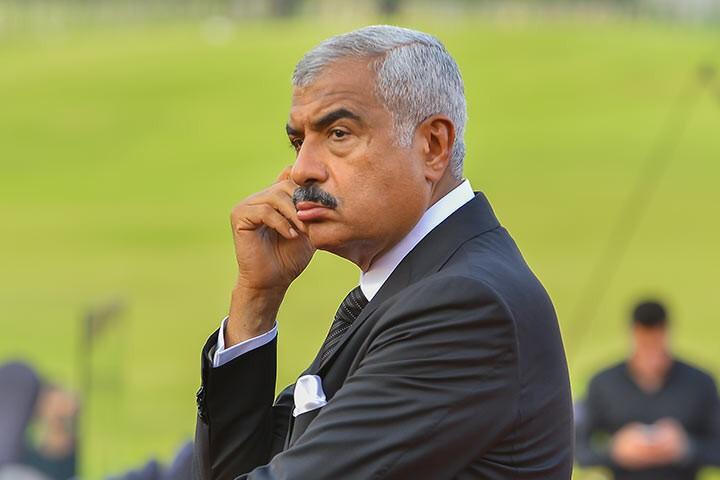

Egyptian billionaire Hisham Talaat Moustafa has pledged to replicate the same construction quality, planning discipline, and service standards that underpin his developments in Egypt as his company embarks on a landmark expansion into Oman, committing more than $5 billion to large-scale real estate projects in the sultanate.
Moustafa, the chief executive officer and managing director of Talaat Moustafa Group Holding (TMG), made the commitment as the company unveiled two flagship developments—Jood and Yamal—along Oman’s coastline. Together, the projects are expected to deliver approximately 15,000 residential units alongside hotels, waterfront attractions, and integrated public amenities, positioning them among the largest foreign-backed real estate investments in Oman in recent years.
Speaking at a high-profile event held under the patronage of Sayyid Theyazin bin Haitham Al Said, Oman’s Minister of Culture, Sports and Youth, Moustafa said the decision to enter the Omani market followed years of extensive research, feasibility studies, and engagement with regulators.
“We do not enter new markets lightly,” Moustafa said. “Every expansion is the result of detailed analysis, long-term planning, and a clear understanding of local regulations and economic priorities. Oman’s clarity of vision and stability give us the confidence to apply the same standards and development philosophy that have guided our success in Egypt.”
The Jood and Yamal projects will span nearly five million square metres and are designed as mixed-use communities that combine residential living, hospitality, retail, leisure, and open public spaces. According to company executives, the developments are closely aligned with Oman Vision 2040, the country’s long-term economic diversification strategy, and are expected to contribute to tourism growth, job creation, and sustainable urban development without compromising livability.
Talaat Moustafa Group brings more than five decades of experience to the Oman venture. Founded in 1974, the Cairo-based developer has built some of Egypt’s largest integrated residential and commercial cities, serving over 1.5 million residents. The company’s model emphasizes master-planned communities with long-term infrastructure provision, professional property management, and integrated services, an approach Moustafa says will be central to its operations in Oman.
In recent years, TMG has increasingly looked beyond Egypt for growth as it seeks to export its development model to new regional markets. Earlier this month, the company formally confirmed details of its Oman expansion, describing it as a strategic entry into the Gulf real estate sector. While construction timelines and sales phases have yet to be disclosed, the group said further announcements will follow once all regulatory approvals are finalized.
Moustafa, who owns a 43.16 percent stake in Talaat Moustafa Group, has overseen its transformation into one of Egypt’s largest publicly listed property developers. The company now commands more than half of the combined market share of Egypt’s top ten developers by sales, with a portfolio that includes residential cities, hotels, shopping districts, and mixed-use urban centers.
The Oman expansion comes even as the group continues to invest heavily in Egypt. In November, Talaat Moustafa revealed it had begun construction on a new Four Seasons hotel complex near the Grand Egyptian Museum in Giza. Covering 350,000 square metres, the project is expected to become one of West Cairo’s most prominent hospitality destinations upon completion.
That development extends TMG’s long-standing partnership with Four Seasons Hotels and Resorts, which began more than two decades ago and already includes luxury properties in Cairo and Alexandria. Additional joint projects are currently underway in Luxor, Madinaty, and along Egypt’s North Coast.
Looking ahead, Talaat Moustafa Group says it intends to replicate its integrated community model across several Middle Eastern markets, with potential projects under consideration in Saudi Arabia, Oman, and Iraq between 2025 and 2030. For Moustafa, the Oman developments represent both a strategic test and a bold statement, demonstrating that the group’s homegrown Egyptian model can travel across borders while meeting international standards and adapting to local expectations


