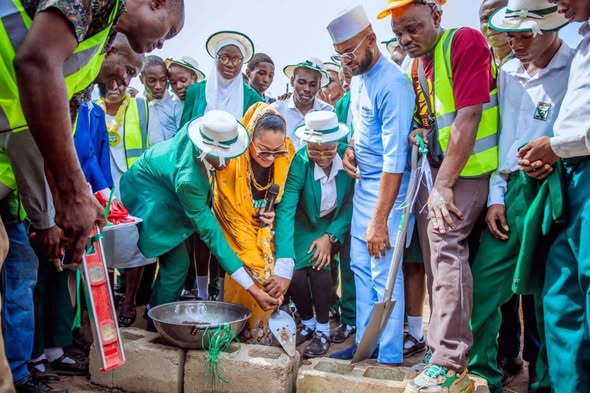

The Federal Government of Nigeria has announced stringent new measures to monitor the implementation of N4.7 trillion allocated for constituency and zonal intervention projects in the 2025 budget. This move, spearheaded by the Ministry of Special Duties and Inter-Governmental Affairs, aims to plug the leakages that have historically turned these initiatives from engines of grassroots development into conduits for corruption.
The announcement came during a high-level stakeholders’ interactive forum in Abuja, where government officials, lawmakers, and representatives from the Independent Corrupt Practices and Other Related Offences Commission (ICPC) gathered to review gaps in project delivery. The Minister of Special Duties, Zephaniah Jisalo, represented by Permanent Secretary Dr. Onwusoro Maduka, disclosed that the ministry had already verified and certified 110 projects in the third quarter of 2025 alone.
The Context: “Dividends of Democracy” or Siphons?
Constituency projects, officially known as Zonal Intervention Projects (ZIPs), were introduced at the dawn of Nigeria’s Fourth Republic in 1999. The core objective was to ensure a fair spread of “federal presence” across the country’s 360 federal constituencies and 109 senatorial districts. In theory, these projects allow legislators to nominate infrastructure needs—such as rural roads, clinics, schools, and water schemes—specific to their communities, which are then executed by Ministries, Departments, and Agencies (MDAs).
However, over the last two decades, the scheme has been marred by controversy. Critics, including civil society organizations like BudgIT and Tracka, have frequently flagged these projects for being corruption-ridden. Common issues include contract inflation, the nomination of “empowerment” schemes (like distributing motorcycles or sewing machines) that are difficult to audit, and the siting of projects on private property. The staggering sum of N4.7 trillion allocated in the 2025 budget highlights the massive scale of potential waste if oversight remains lax.
Impact on the Micro-Economy
The economic implications of these projects are profound for Nigeria’s micro-economy. When properly executed, constituency projects serve as a vital stimulus for rural communities. A well-constructed rural road connects agrarian communities to markets, reducing post-harvest losses and increasing farmer income. Similarly, functional primary healthcare centers reduce the disease burden on the workforce, directly boosting local productivity.
Furthermore, the construction phase of these projects theoretically injects liquidity into the local economy by employing local artisans, masons, and suppliers. This multiplier effect is crucial for alleviating poverty at the grassroots level.
Conversely, the failure of these projects has devastating economic consequences. Abandoned or poorly executed projects represent trapped capital—billions of Naira that yield no economic return. When funds meant for a community borehole are diverted, residents are forced to buy expensive water or suffer waterborne diseases, further draining their limited household income. The prevalence of “soft” projects, such as one-off cash handouts or training with no start-up capital, often fails to create sustainable wealth, offering only a fleeting political advantage rather than long-term economic empowerment.
The New Mandate
To reverse this trend, the Federal Government is enforcing a paradigm shift toward “community ownership.” Minister Jisalo emphasized that beneficiary communities must now be actively involved in the project lifecycle to ensure accountability. This aligns with the “Renewed Hope Agenda” of President Bola Tinubu, which seeks to decentralize development.
The government has also drawn a red line for MDAs and contractors. Jisalo warned that any deviation from extant circulars and guidelines would be met with swift prosecution by the Economic and Financial Crimes Commission (EFCC) and the ICPC. The ICPC’s Constituency and Executive Projects Tracking Initiative (CEPTI) has already been instrumental in recovering billions in diverted funds and forcing contractors back to abandoned sites.
Speaker of the House of Representatives, Tajudeen Abbas, praised the initiative, noting that the legislative and executive arms must work as “partners in progress” to ensure that the N4.7 trillion investment translates into tangible infrastructure rather than statistical mirages.
As the government tightens its noose on project monitoring, the hope is that the massive appropriation will finally spur the micro-economic growth it was designed to foster, turning rural constituencies into vibrant economic hubs rather than graveyards of abandoned projects.