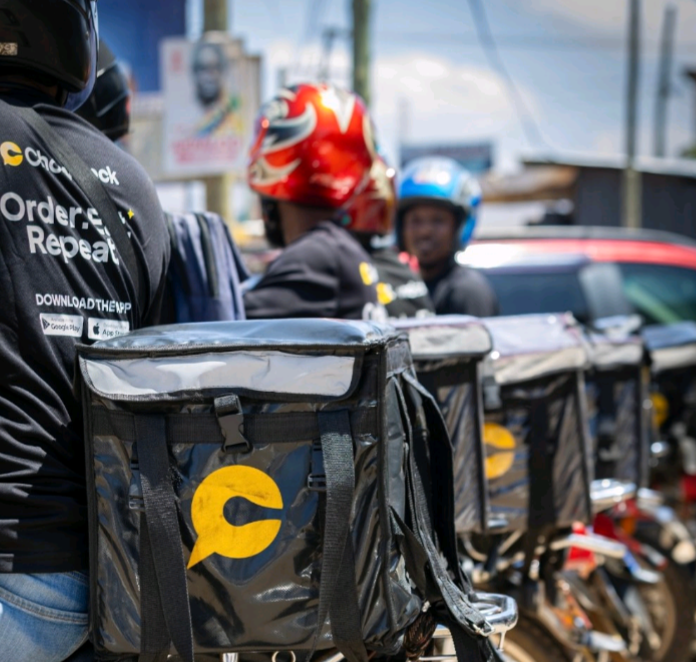

In Nigeria, Black Friday, once a holiday dominated by electronics and fashion has found a surprising new champion: food delivery. This year, the on-demand meals startup Chowdeck turned what used to be a niche offering into a runaway success, transforming weekend cooking habits and spotlighting just how powerful digital convenience has become.
From Friday, November 28 to Monday, December 1, Chowdeck ran a Black Friday campaign across major Nigerian cities such as Lagos, Abuja, and Ibadan. The offer: discounted meals, free-delivery vouchers, and timed “flash deals” unique to each city. By 9:08 p.m. WAT on the first day, the company had already dealt with 51,000 orders, more than double what it achieved during its first Black Friday event in 2024.
When the dust settled, the numbers were impressive: approximately 182,000 orders delivered, generating ₦1.4 billion (~US$975,909) in sales, and riders covering over 727,000 kilometres across Nigeria and Ghana.
This milestone reinforces momentum Chowdeck has been building for months. In October 2025, the platform surpassed 1 million orders in a single month, a leap from the roughly 30,000 daily orders recorded just weeks earlier to more than 40,000 per day.
Chowdeck launched in October 2021 at a time when food-delivery in Nigeria was widely viewed as unprofitable and unsustainable. Competitors, including global players, either scaled back or exited completely. But by focusing on local meals, harnessing efficient logistics, geolocation-based demand batching, and tight rider incentives, Chowdeck built trust in densely populated urban markets.
Two major forces helped propel this shift. First, rising digital access: by 2025, Nigeria had around 107 million internet users, nearly 45 percent of its population. That penetration gives delivery apps the scale needed to reach a large consumer base. Second, investment and infrastructure improvements: Chowdeck raised a US$9 million Series A funding in August 2025, and in the same year acquired a payment/point-of-sale startup, Mira, enabling it to expand beyond meals to groceries and everyday essentials.
If food delivery today seems ordinary, it’s only because the groundwork was laid years ago by changing urban lifestyles, rising fuel and living costs, frequent traffic, unreliable power, and a growing need for convenience. For many city dwellers, cooking is no longer the default; tapping for a hot meal delivered to your door is.
Interestingly, demand for food delivery has surged even as many Nigerians see shrinking purchasing power. That’s no coincidence; what looks like a disconnect is actually a reflection of a larger trend: when time becomes as precious as money, convenience wins. As one industry observer put it, food delivery in Nigeria “became a barometer for digital-ecosystem maturity” in emerging markets.
For local restaurants and small food vendors, the implications are substantial. Through Chowdeck’s network, many have encountered their biggest days of business, especially during promotional windows. This shift is redefining how Nigerians eat and how food businesses operate.
By converting urban demand into scalable e-commerce activity, Chowdeck’s Black Friday surge underscores Nigeria’s broader shift toward a non-oil, digital services-driven economy, helping reduce reliance on extractives, boosting informal-sector incomes (riders, vendors), and expanding tax- and consumption-based revenue streams for the government.