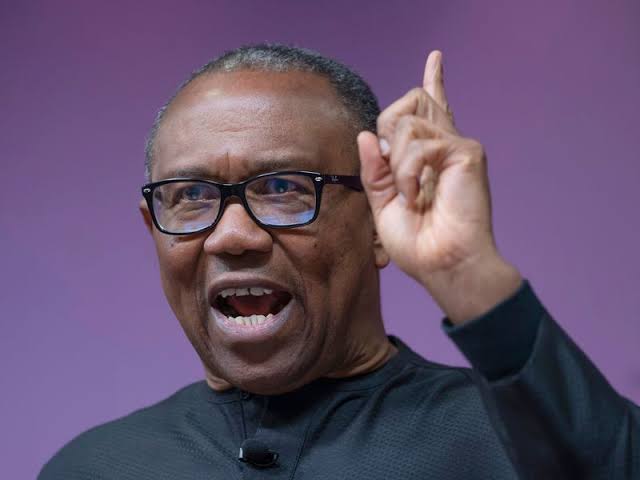

Peter Obi, the Labour Party (LP) presidential candidate in the 2023 Nigerian election, has strongly refuted allegations that he was responsible for inviting former United States President Donald Trump to intervene in Nigeria’s current security crisis.
In a statement released by his spokesperson, Ibrahim Umar, Mr Obi hit back at the Special Adviser to the President on Information and Strategy, Bayo Onanuga, who had claimed the current government “will not forgive Peter Obi for supposedly inviting U.S. President Donald Trump into Nigeria’s situation.”
Mr Umar dismissed the claim, saying, “It is important to note that the circumstances surrounding the involvement of President Trump and the global community in Nigeria’s issues are well-known and have nothing to do with our principal.” He suggested that Mr Onanuga was using the claim to distract the public, adding, “It seems this government cannot escape thoughts of Peter Obi, and we understand why; his message directly addresses the glaring failures of leadership for which this administration is primarily responsible.”
The opposition leader’s camp views the accusation as a “desperate attempt by the government to divert public attention from its shortcomings,” particularly the deepening economic challenges facing the nation.
“The falsehoods about Obi are nothing more than a cynical attempt to distract the public from the government’s evident failures, such as insecurity, the rising cost of living, and various instances of corruption, all taking place amid unprecedented hardship facing the population,” the statement said. They argued that a government lacking a clear plan resorts to fabricating lies about the opposition to shift focus.
Political analysts note that the government’s perceived need for deflection highlights the severe economic consequences of Nigeria’s persistent security challenges. Widespread instability including insurgency, banditry, and kidnappings has been repeatedly cited by economic bodies and investors as a major deterrent to Foreign Direct Investment (FDI).
“Insecurity in key regions disrupts agriculture, increases the cost of doing business, and ultimately causes capital flight,” noted one Lagos-based economic researcher. The continuous diversion of state resources away from critical sectors like health and education and towards counter-insurgency efforts further compromises long-term economic stability. Political disputes, such as the current back-and-forth between the presidency and the opposition, add another layer of uncertainty, further weakening investor confidence in the nation’s fragile economy.
Mr Obi, according to his spokesman, remains unconcerned by the political “mud-slinging,” stating that the former presidential candidate is focused on “acquiring knowledge and touching the lives of the poor who have been abandoned by the government.”
He urged Nigerians to “disregard any fabrications from the Presidential spokesperson concerning Obi and to remain focused on their journey toward a new Nigeria that is indeed possible.”