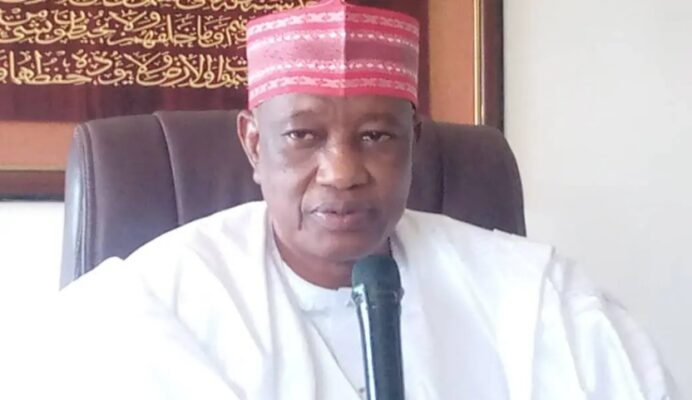

Kano State’s Deputy Governor, Aminu Abdussalam Gwarzo, has issued a powerful call for the Nigerian media to step into a frontline role in tackling the nation’s deep-seated security crisis, warning that the country is currently facing one of its most challenging periods.
Speaking on Tuesday while receiving members of the Nigeria Union of Journalists (NUJ) Correspondents’ Chapel, Gwarzo stressed that Nigeria’s survival increasingly hinges on the media’s vigilance and consistency in highlighting issues that require urgent government attention.
“The media must wake up to be more vigilant and dedicated in appraising the nation’s challenges,” he said. “Nigeria is facing huge problems, and journalists must do more to draw the attention of authorities to mounting insecurity.”
The Deputy Governor expressed deep concern that criminal groups, particularly bandits, are now using sophisticated technology to carry out their attacks, while the government’s response remains sluggish and inadequate.
“Other nations use technology to tackle their security problems. We don’t understand why our government is not doing the same,” Gwarzo stated, adding that bandits have become highly tech-savvy, a pace government agencies are failing to match. He called on the press to pressure officials to face these challenges, noting that widespread fear means citizens are now uncertain of safe travel or what might happen next.
The security crisis also carries a heavy economic toll for the nation, particularly in the northern region. Persistent insecurity, especially banditry, has led to the disruption of agriculture the North’s economic cornerstone by forcing farmers to abandon their fields. This in turn threatens food security, drives up food inflation, and affects raw material supply for industries. Furthermore, the environment of fear discourages domestic and foreign investment, leading to business closures, job losses, and a diversion of government funds away from development projects and towards security operations.
Gwarzo also revealed a deeply worrying development: communities in border states surrounding Kano have been coerced into making informal agreements with bandits. These deals reportedly force villagers not to report the criminals’ movements, a situation the Deputy Governor called “dangerous and unacceptable” as it provides a pathway for attacks on Kano soil.
He concluded that overcoming these challenges is a collective responsibility, with the media being central to the effort, acting as the nation’s watchdog and moral guide.
In response, Murtala Adewale, Chairman of the Correspondents Chapel, promised to maintain a strong and professional working relationship with the state government, emphasising that collaboration not compromise is essential for journalism serving the public interest. Gwarzo commended the chapel for its constructive engagement, reiterating that responsible journalism is vital for building safer communities and a more accountable government.