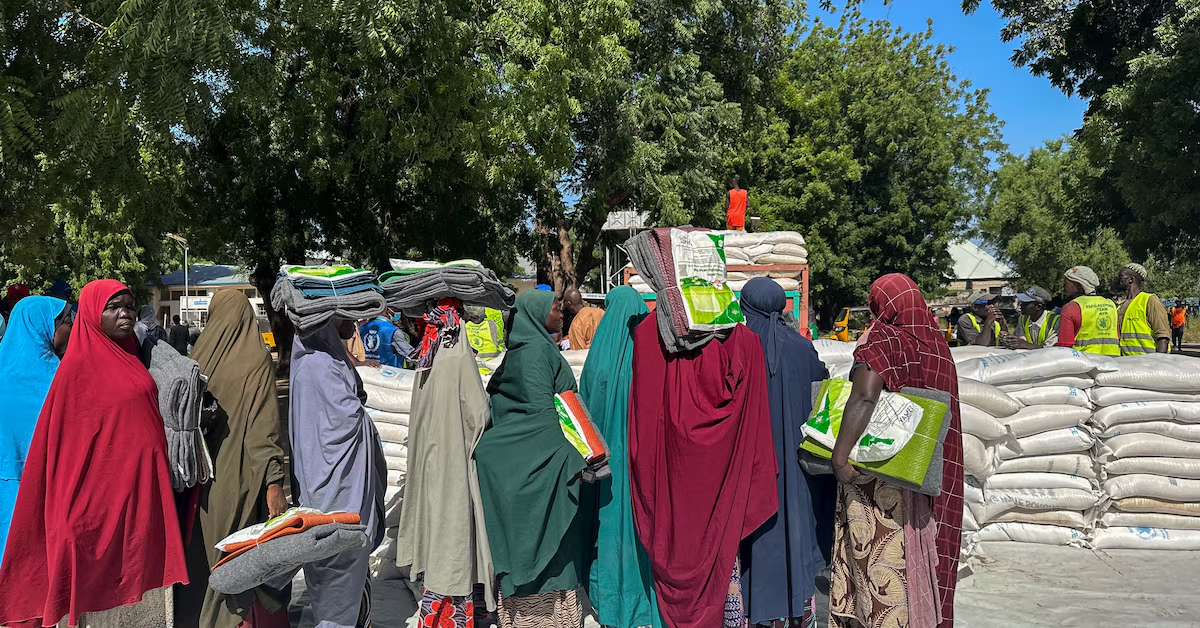

A sharp escalation in militant attacks across northern Nigeria is pushing food insecurity to levels not previously recorded, the United Nations World Food Programme (WFP) said on Tuesday, warning that nearly 35 million people could be at risk of hunger by 2026. The projection, drawn from the latest Cadre Harmonise assessment for West Africa, marks the highest figure since monitoring began and reflects the combined impact of worsening violence, climate pressures and a looming funding collapse.
According to WFP, insecurity has surged significantly in 2025. The group cited intensified assaults by Islamic State West Africa Province and a growing presence of al-Qaeda affiliate Jama’at Nusrat al-Islam wal-Muslimin, which carried out its first attack in Nigeria last month. The expansion of militant activity into previously less-affected regions, including north-west and parts of the north-central zone, has disrupted farming cycles, restricted market access and displaced thousands of rural households.
The humanitarian situation is most severe in the north-east, where more than a decade of conflict has eroded livelihoods and weakened local food systems. WFP estimates that almost 6 million people in Borno, Adamawa and Yobe states currently lack minimum food supplies, leaving them dependent on humanitarian assistance or negative coping strategies such as skipping meals or selling off essential assets. The agency also warned that around 15,000 people in Borno face famine-like conditions, a classification indicating that starvation, destitution and acute malnutrition are imminent without urgent intervention.
Funding constraints are now compounding the crisis. Nearly one million people in Nigeria rely directly on WFP’s food and nutrition assistance, yet the agency’s budget is set to run out in December 2025. Cuts from traditional donors, including reduced support from the United States, have already triggered the closure of several critical programmes. WFP said that without fresh commitments from the international community, it will be forced to halt emergency food distributions and nutrition support by the end of this year, leaving millions of vulnerable people without a safety net.
The economic implications of a worsening hunger crisis are far-reaching. Prolonged food shortages in the north would deepen regional inequalities and strain already fragile markets. Agriculture accounts for a significant share of Nigeria’s employment, and continued disruptions could push food prices even higher, aggravating inflation and eroding household purchasing power nationwide. Urban centres may also feel the impact as displaced families migrate in search of work and assistance, increasing pressure on public services.
Moreover, widespread hunger risks fuelling further insecurity. Analysts warn that food scarcity can strengthen recruitment pipelines for armed groups, particularly among unemployed youth in remote communities where state presence is weak. A failure to stabilise food access may therefore entrench the very conditions that allow militant organisations to expand.
Humanitarian agencies have urged the Nigerian government and international donors to take swift action. They argue that funding for emergency relief must be paired with investments in resilience, including agricultural rehabilitation, improved security for farming communities and support for climate adaptation. Without these measures, WFP says, millions of people could be trapped in a cycle of displacement, hunger and economic decline.
For now, the warning underscores the scale of the challenge ahead. As insecurity rises and resources diminish, Nigeria faces the prospect of its most severe food crisis in modern history unless substantial support is mobilised in the coming months.