



The headline figures emanating from government data and international financial institutions tell a story of a nation on the mend. For eleven consecutive months, Nigeria’s economy has expanded, buoyed by a resurgence in manufacturing, trade, and agriculture. The Purchasing Managers’ Index (PMI) signals robust, broad-based recovery, painting a picture of macroeconomic stability that policymakers are eager to promote.
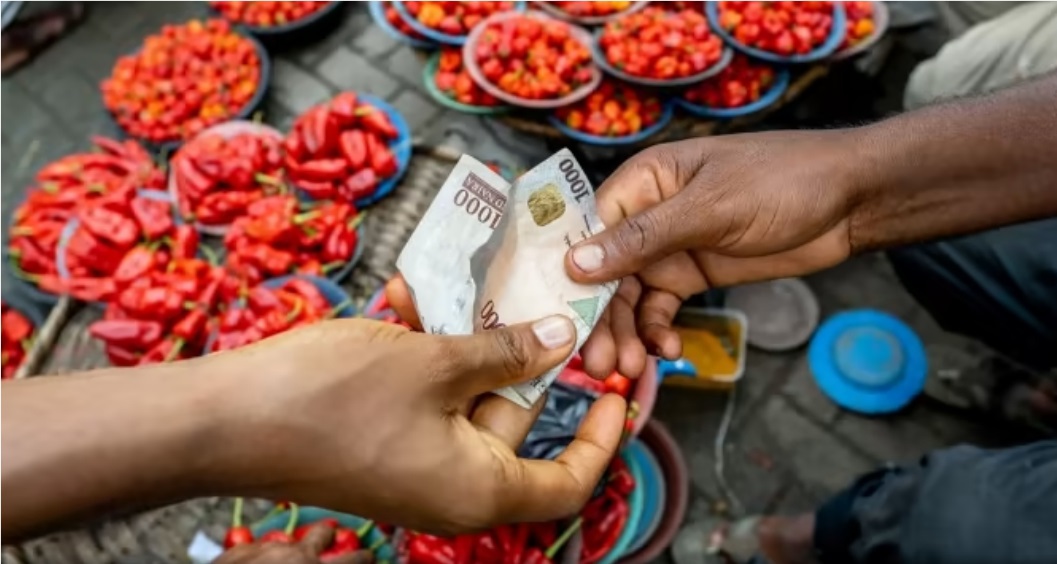
But on the bustling, sun-baked streets of Lagos, in the cramped market stalls of Ketu, and in the anxious conversations of young professionals, this statistical recovery feels like a parallel universe, a technical victory that rings hollow against the stark reality of soaring prices, stagnant wages, and a pervasive sense of financial strain.
A wide-ranging news analysis, drawing on official reports and the lived experiences of everyday Nigerians, reveals a profound and persistent disconnect: the economic growth celebrated in boardrooms and government press releases is failing to translate into tangible improvements in the lives of the majority. The much-touted expansion is, for many, a phenomenon of paper, not pockets.
The Statistical Recovery vs. The Lived Reality
The narrative of recovery is technically sound. After a period of severe economic turbulence, policy reforms, most notably the politically courageous removal of the decades-old gasoline subsidy and the unification of multiple exchange rates, have created fiscal space for the government. These moves were designed to stem rampant arbitrage, attract foreign investment, and put the economy on a more sustainable footing.
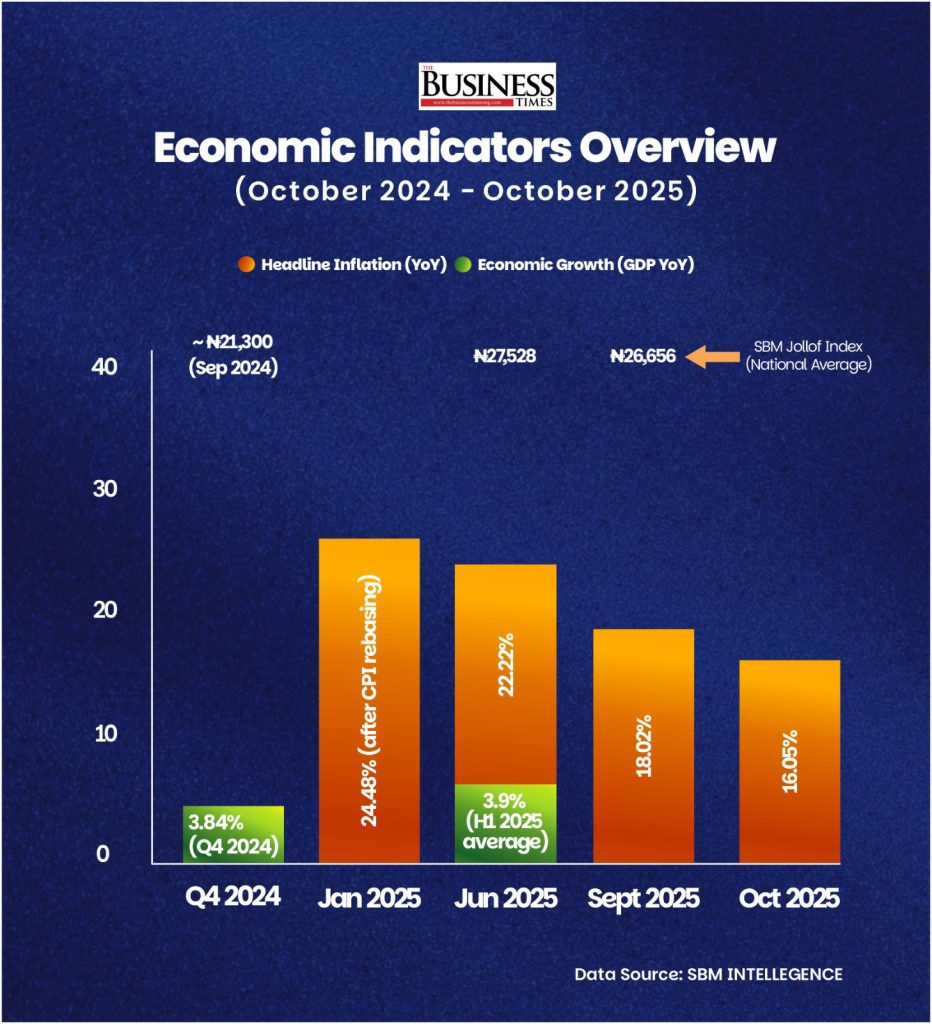
On the surface, they are working. The economy is growing. Yet, this growth is what economists grimly refer to as “jobless.” It is expanding without generating sufficient employment for the millions of young Nigerians entering the workforce each year. Furthermore, it is being brutally offset by one of the highest inflation rates in the world, particularly for food.
“The primary challenge in Nigeria is the persistent disconnect between macroeconomic gains and improved livelihoods,” a recent analysis by SBM Intelligence noted. “While the Gross Domestic Product (GDP) is expanding, the prosperity is not yet trickling down to the majority of the population.”
This trickle-down failure is the core of the national frustration. The economic expansion appears confined to certain sectors, failing to permeate the broader ecosystem where people live and work.
Voices from the Street: ‘Things Are Getting Harder’
The human impact of this disconnect is etched in the weary responses of citizens from all walks of life.
For Mr. Adebayo Ola, the contradiction is simple and stark. “Things are getting harder,” he states flatly. “The growth they talk about doesn’t reflect in daily life.” When asked if he or anyone he knows has benefited from this growth, his answer is a resounding “No.” He hasn’t seen new jobs, better pay, or any real benefit. On the impact of the fuel subsidy removal, he is blunt: “Transport, food, and general living costs went up immediately. My income didn’t increase, so things became tougher.”
This sentiment is echoed by Mrs. Balikis Bayo, a trader in the sprawling Ketu market. For her, the economic data is meaningless when measured against her daily receipts. “Every day is harder than the last,” she laments. “Customers come to my shop, look at prices, and walk away. People are suffering.” She details how the cost of goods from wholesalers keeps rising, and the increased cost of transporting her goods to the market eats further into her meagre profits. “The 11-month economic expansion doesn’t move me,” she says. “It sounds like government propaganda. If the economy is growing, why are we suffering more?”
Christian Onaji, a professional in the tech sector, provides a more detailed account of the squeeze. “I hear the government saying the economy is growing, but in my daily life, things feel tougher. Transport is more expensive, food is more expensive, and even basic bills keep rising.” He highlights the paradox of falling inflation rates amidst persistently high prices. “We hear on TV that food inflation is dropping, then why is food still so expensive?” he asks, a question on the lips of millions. “I’ve had to cut down on some foods I used to buy freely. My salary hasn’t increased, but food prices doubled.”
He offers a poignant perspective on the erosion of purchasing power, a key issue where GDP growth and lived experience violently diverge. “Salary of 400k (N400,000) don’t really take me to month-end,” he explains. “But honestly when did we get here? If you had 400k 10 years ago, you be big man. Things are really messed up.”
Mr. Abdulbassey offers a similarly grim outlook, noting that while the economic inflow is down, the cost of foodstuffs continues to climb and unemployment remains stubbornly high. He, like others, has not benefited from any perceived growth and directly links the fuel subsidy removal to increased hardship.
A Glimmer of Stabilization, But Not Yet Growth
Amidst the chorus of distress, some voices point to a fragile, nascent stability. Ikenna Okonkwo, an associate at SBM Intelligence, offers a more measured, though still cautious, assessment. “It doesn’t feel like the economy is growing yet, but it does feel like things have stabilised after the inflation, driven by cost of petrol and exchange rate collapse of 2023 – 2024,” he observes.
He confirms the widespread struggles with the cost of living and the lack of well-paying jobs but suggests the government has “managed to stop the free fall.” His hope is that this stability can be sustained until the effects “begin to manifest in real, tangible terms.”
However, he puts his finger on a crucial economic nuance that explains the invisibility of the growth. “We are witnessing a 3-4% growth in GDP, that is similar to our population growth rate, so it cancels out,” he explains. “What will actually be felt is growth rates in the 7% region. There is still a lot to be done before we get there.” This analysis underscores why an expanding economy can still feel stagnant for the average person: the pie is growing, but the number of people needing a slice is growing at nearly the same rate.
The Path Forward: From Policy to People
The consensus from the streets and the experts is clear: for economic growth to be meaningful, it must move from abstract policy to concrete welfare. The current reforms, however necessary for long-term health, have inflicted short-term pain without a visible, compensatory safety net or a surge in job-creating investment.
The urgent priorities, as outlined in policy circles and demanded by citizens, are threefold.
First, taming food inflation is non-negotiable. For the over 46% of Nigerians living below the poverty line, who spend up to 70% of their income on food, this is the single most important metric of economic success. As Christian Onaji pleads, “The only advice I have for government is to reduce the cost of food. If people can eat well, at least life is manageable.”
Second, the government must leverage the fiscal space created by its reforms to make transformative investments in public services and infrastructure. Quality spending on power, transportation, healthcare, and education is essential to lower the cost of doing business and improve long-term productivity and well-being.
Finally, enhancing the business environment through deeper structural reforms is critical to stimulating the kind of private-sector-led growth that creates high-quality, sustainable jobs. This is a top demand from the street. “Govt should create jobs and support small businesses,” urges Mrs. Balikis Bayo. Mr. Adebayo Ola concurs, advising the government to “focus on creating real, decent jobs.”
Until these bridges are built, the chasm between macroeconomic data and microeconomic despair will remain. The drum of an eleven-month expansion may beat a steady rhythm in the halls of power, but for the man and woman on the Nigerian street, it is a distant, dissonant sound, drowned out by the immediate, pressing noise of survival. The growth is real on paper, but the test of its authenticity will be when a trader in Ketu no longer watches her customers walk away.


