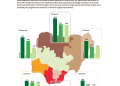

Nigeria’s largest listed corporations are now the primary force powering government revenues, as the most capitalised companies on the Nigerian Exchange, the SWOOTs (Stocks Worth Over One Trillion Naira), remitted a combined N2.55 trillion in Company Income Tax within the first nine months of 2025.
This alone accounts for 92.7% of the Federal Government’s entire N2.75 trillion CIT target for the year, highlighting both a revenue success story and a warning sign for fiscal resilience.
Corporate giants shoulder non-oil revenue agenda
The tax intake marks a 63.74% surge from N1.56 trillion in the same period last year, the strongest performance ever from top-tier corporates.
With non-oil revenue projected to rise to N5.71 trillion in 2025, SWOOTs have effectively become the backbone of Nigeria’s fiscal diversification plan.
Even more revenue is expected once earnings from state enterprises such as NLNG, BOI and DBN are included, suggesting headroom to exceed government projections.
Banks and oil & gas companies accounted for the bulk of the growth, lifted by high interest yields and better crude output:
Top CIT contributors in 9 months of 2025:
- Seplat Energy — N469.33bn (+389.51%)
- GTCO — N247.05bn (+197.11%)
- UBA — N167.14bn (+63.40%)
- Access Holdings — N165.44bn (+188.68%)
- Aradel Holdings — N39.99bn (+159.93%)
- Presco Plc — N32.62bn (+314.59%)
Import-heavy sectors highlight emerging weaknesses
Telecoms, cement and consumer industries strained by naira volatility and high input costs reveal a more fragile underside of the economy:
- MTN Nigeria: CIT crash of −82.98% to N21.55bn
- Dangote Cement: −10.37% to N115.39bn
Analysts say that unless the FX market stabilises and consumer spending recovers, these sectors could weigh down tax momentum going into 2026.
Tax structure: strong top, shaky base
Only 22 companies generated nearly the full-year CIT target — despite more than 1,000 other viable firms operating outside the Exchange.
Tax experts warn that this concentration is unsustainable.
“Nigeria cannot sustain a tax strategy that depends on a few companies… The focus must shift to expanding the compliance net,”
— Dr. David Ogogo, Capital market expert
New tax reforms effective January 1, 2026 aim to close loopholes, widen digital tracking and formalise previously untaxed revenue streams. Measures include:
- Unified tax administration
- Mandatory TIN for all taxable entities
- Expansion to digital income
- 4% Development Levy on corporate profits
- Tax Ombuds Office for dispute resolution
Experts argue that the reforms could push CIT revenue above N4 trillion — if enforcement improves.
Can the giants deliver the full-year target?
Market analysts project that SWOOTs could not only meet but surpass the yearly target — dependent on:
- Naira stability and FX liquidity
- Lower financing and energy costs
- Strong Q4 banking and petroleum profits
- Efficient AI-driven tax enforcement under SRGI
The Strategic Revenue Growth Initiative seeks to lift Nigeria’s tax-to-GDP ratio from 10% to 15% by year-end 2025, and 18% by 2026 — levels still below African peers.