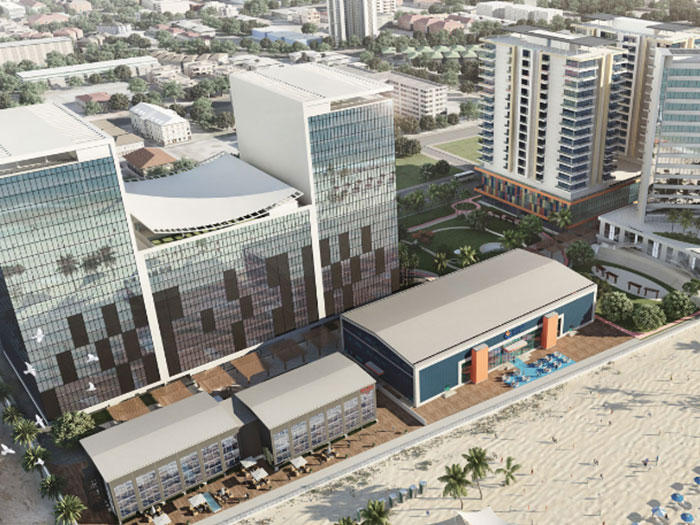

When Landmark Africa announced its ambitious Waterview Apartments project in 2019, it presented the development as a turning point for Lagos real estate. Buyers were shown polished brochures featuring a striking waterfront tower overlooking the Atlantic. The promise was of modern luxury living, smart-home technology and a seamless connection to the wider Landmark leisure ecosystem. Delivery was confidently projected for 2025, and hundreds of Nigerians, many investing their hard-earned savings, rushed to secure units in what appeared to be a reliable and forward-looking investment.
Several years later, the reality is rather different. The Waterview Apartments have stalled, completion dates have shifted without formal explanation, conflicting information has continued to surface and many buyers who once believed the project represented stability now speak of frustration, uncertainty and a deep sense of betrayal. What looked like an exciting opportunity has instead become a troubling illustration of deeper problems within Nigeria’s real estate sector. Weak regulation, poor financial transparency, overblown marketing and developers operating with minimal accountability have combined to create an environment where ordinary buyers are exposed to significant risk.
From the beginning, there were hints that the project’s foundations were not as solid as advertised. Landmark’s original materials described a 28-storey tower containing more than 300 premium apartments. Other official channels later stated that the building would have 20 floors with fewer units, and that completion might be pushed towards 2027. Buyers began to question why something as basic as the building’s height appeared to change, but clear answers were rarely provided. As updates dwindled and construction slowed, concerns naturally increased.
In 2024, the situation became even more complicated when Lagos State demolished parts of Landmark’s beachfront to make way for the Lagos–Calabar Coastal Highway. Landmark quickly linked this demolition to delays at Waterview, stating that construction had been paused for over a year due to the disruption. However, many buyers remained unconvinced. The affected beachfront facilities were part of the larger Landmark ecosystem rather than the Waterview plot itself. Investors argue that the project had shown signs of stagnation long before the demolition, and some believe that the highway development offered a convenient explanation for issues that had already been present.
These concerns cannot be separated from the broader weaknesses of Nigeria’s real estate system. The industry remains largely unregulated, and there is no requirement for developers to use escrow accounts to protect buyer funds. As a result, developers can freely mix deposits with their own corporate finances. Regulators such as the Lagos State Real Estate Regulatory Authority (LASRERA) and the Federal Competition and Consumer Protection Commission (FCCPC), which should protect consumers, often function more as administrative bodies than enforcement agencies. Investigations into complaints, sanctions for failing developers and mandatory financial audits are uncommon. In this atmosphere, off-plan developments frequently collapse under the weight of unrealistic promises and inadequate funding.
Several well-known projects have followed this same pattern. Capital City Estate in Abuja, Pearl Garden and Reiz Continental Residences in Lagos all attracted large numbers of buyers before stalling or failing outright. Waterview now appears to be the latest addition to a long list of developments that have left buyers stranded.
The consequences for individuals are severe. Many families invested their entire savings in the hope of securing a long-term home. Young professionals seeking to adopt modern urban housing, committed to the project in good faith. Some buyers took loans with the expectation that they would refinance once their units were delivered. They now find themselves repaying debts for properties that remain incomplete. Others planned relocations or life changes around promised delivery timelines that have not materialised. For these buyers, the financial losses are significant and the emotional impact profound.
The demolition of Landmark’s beachfront also devastated a wider community of workers who depended on the beach economy. Restaurant staff, event organisers, vendors and small business owners lost their livelihoods almost overnight. Their experiences rarely feature in public discussions, yet they reflect the broader human consequences of a system in which large projects proceed without sufficient planning or protection for those who rely on them.
Landmark’s management maintains that it intends to complete the Waterview Apartments and insists that its track record demonstrates its commitment. The company has stated that refunds were offered to dissatisfied buyers, although only a small number have actually received them. Landmark also refers to its substantial investments in its wider business operations and to ongoing discussions with government officials. Yet, reputation and positive public messaging cannot replace transparency. Until independently verified audits, realistic timelines and clear financial disclosures are provided, public scepticism is likely to deepen.
Nigeria’s real estate crisis is not defined by a single project. It is symptomatic of structural failures in governance and oversight. A country facing one of Africa’s highest housing deficits cannot afford a property sector in which consumer protections are weak and accountability is limited. Unless reforms are introduced, buyers will continue to face the same risks and the same disappointments, while trust in the sector erodes further.
The path forward is clear. Nigeria needs laws that require developers to use escrow accounts. Projects should publish quarterly, independently verified audit reports. Regulators must be empowered to suspend or prosecute developers who mismanage funds or repeatedly fail to deliver. Public education on real estate risks, due diligence and contractual safeguards should be prioritised. Without these measures, more buyers will see their hopes slowly unravel.
The Landmark Waterview story is not merely about delay or mismanagement. It is a stark reminder that a market fuelled by ambition but lacking transparency and proper oversight will continue to fail the very people it promises to serve. For now, the unfinished remains of Waterview stand as a warning. In a system where the protection of buyers is an afterthought, even the most impressive dreams can crumble long before the first residents are able to move in.