
Airtel Africa has pledged to provide free internet connectivity to 5,000 schools across the continent by 2027, expanding a $57 million partnership with the United Nations Children’s Fund (UNICEF) aimed at narrowing Africa’s digital education gap and improving access to quality learning.
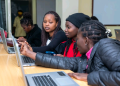
The commitment was announced by Airtel Africa Chief Executive Officer, Sunil Taldar, during a visit to St. Monica’s Girls School in Lusaka, Zambia, one of more than 300 schools already connected under the initiative. The programme is being implemented through the Airtel Africa Foundation in collaboration with UNICEF.
Launched in 2021, the partnership combines financial support with in-kind contributions to strengthen digital education infrastructure across Africa. According to Airtel Africa, the initiative has already connected 3,296 schools in 13 countries, giving more than 2 million students and about 40,000 teachers access to digital learning resources.
The programme has also zero-rated 64 educational platforms, allowing learners and teachers to access approved online educational content without incurring mobile data charges. More than 11 million users have benefited from the free access, helping to reduce one of the biggest barriers to digital education across the continent.
The School Connection programme currently operates in Chad, Congo, the Democratic Republic of Congo, Gabon, Kenya, Madagascar, Malawi, Niger, Nigeria, Rwanda, Tanzania, Uganda and Zambia. Alongside internet connectivity, participating schools receive access to digital curricula developed by UNICEF in partnership with national Ministries of Education.
Speaking during the visit, Taldar said the initiative is designed to improve both access to education and learning outcomes by combining connectivity with teacher development.
He noted that students are accessing curriculum-based educational content through Airtel’s network while teachers receive training to integrate digital tools effectively into classroom instruction.
Education stakeholders say teacher capacity building is critical to ensuring technology investments translate into better academic performance. Zambia’s Director of Secondary Education, Yvonne Mwemba Chuulu, said partnerships between governments and the private sector are essential to expanding blended learning, where traditional classroom teaching is complemented by digital resources.
St. Monica’s Girls School Headmistress, Sr. Matilda Soloko, said students at the school have experienced improved learning opportunities since joining the programme, while UNICEF Zambia Country Representative Dr. Saja Farooq Abdullah described the partnership as an important step toward closing educational inequality and ensuring children can learn regardless of their location.
The initiative reflects a broader push by telecommunications companies to support digital inclusion across Africa. Beyond expanding internet access, programmes such as Airtel Africa’s are increasingly viewed as long-term investments in human capital development, digital literacy and workforce readiness, areas regarded as critical to the continent’s future economic growth.