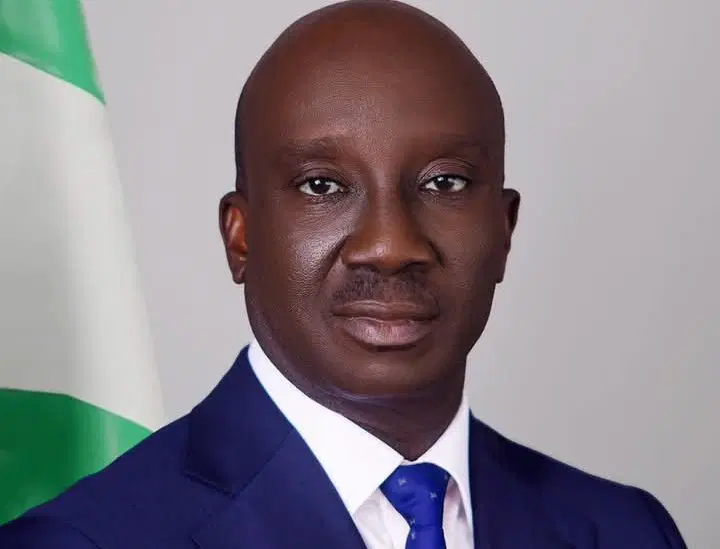

The Edo State Governor, Monday Okpebholo, has revoked the certificate of occupancy granted to the Museum of West African Art (MOWAA), following mounting public criticism and strong opposition from the Oba of Benin, Oba Ewuare II. The decision came in response to widespread outrage over the demolition of the historic Central Hospital in Benin City, which had been earmarked for redevelopment into a major cultural complex.
In a revocation order dated 21 October 2025, Governor Okpebholo cited “overriding public interest” and concerns about transparency in the project’s handling. The 6.21-hectare parcel of land, he announced, would be returned to its original purpose as a public health facility. The move came less than 24 hours after protesters loyal to the Benin palace disrupted a MOWAA exhibition attended by several foreign diplomats, including the European Union and German ambassadors.
According to the governor’s media aide, Fred Itua, the state government was unaware that the event was taking place, describing the MOWAA project as one “lacking openness” and “out of touch with public sentiment.” The statement underscored the growing unease between the museum’s promoters and local authorities, particularly amid concerns that the initiative had failed to secure the full consent of the Benin monarchy, a custodian of the kingdom’s cultural heritage.
MOWAA, in its response, denied any attempt to undermine the authority of the Oba or to claim ownership of the Benin bronzes. The institution stated that it remained committed to preserving and celebrating West Africa’s artistic heritage, and expressed hope for renewed dialogue and collaboration with the Edo State Government and the royal palace.
The controversy has raised broader questions about heritage management, transparency in public-private partnerships, and the economic implications of cultural investments in Nigeria. The Museum of West African Art was conceived as part of an ambitious plan to position Benin City as a regional hub for art, culture, and tourism. Supported in part by international donors and foreign governments, the project aimed to complement ongoing global efforts to repatriate looted Benin artefacts, particularly the famed Benin Bronzes, which were taken during the 1897 British invasion.
Economically, the museum had been expected to attract tourism and foreign exchange, creating jobs and stimulating ancillary sectors such as hospitality, transport, and creative industries. According to early projections, MOWAA could have drawn thousands of visitors annually, generating revenue for local businesses and contributing to Edo State’s internally generated income. The revocation, however, casts uncertainty over these prospects, potentially deterring future investors wary of political or cultural controversies.
The demolition of the Central Hospital, which dated back to the colonial era, had already provoked emotional reactions among residents. For many, the hospital symbolised a piece of Benin’s modern history and a vital part of its social infrastructure. Its replacement with a museum project, perceived as elite-driven and lacking in public consultation, deepened resentment. The revocation, therefore, is being seen by some as a political move by the governor to align with popular sentiment and the authority of the Oba, whose influence remains central to the state’s cultural and social fabric.
Observers also point to the diplomatic dimension of the crisis. The presence of foreign ambassadors at the disrupted exhibition underscores the extent of international involvement in Nigeria’s cultural heritage initiatives. The fallout may strain relations with partners such as Germany, which has been at the forefront of artefact repatriation efforts and had pledged technical and financial support for MOWAA. A breakdown in trust could slow ongoing discussions about restitution, preservation, and capacity building in the cultural sector.
Beyond the cultural and diplomatic implications, the revocation also carries economic and governance lessons. It highlights the tension between heritage preservation and urban redevelopment, as well as the need for transparent, inclusive planning in projects involving public land. Analysts argue that while the protection of cultural identity is essential, governments must balance it with development goals, ensuring that such initiatives genuinely benefit local communities.
The reallocation of the land to public health use also speaks to Nigeria’s broader policy priorities. The country continues to grapple with a weak healthcare system, and the symbolic decision to restore the Central Hospital site to medical purposes may resonate positively with citizens demanding better access to quality healthcare. Yet, questions remain about whether the government will follow through with concrete investments or if the announcement is primarily a political gesture.
In the end, the revocation of MOWAA’s land underscores the complexities of cultural diplomacy, economic development, and traditional authority in Nigeria. What began as a vision to celebrate West African art has evolved into a test case for how governments, traditional institutions, and international partners navigate shared heritage, community trust, and competing visions of progress. For Edo State, the coming months will reveal whether the governor’s decision restores public confidence or dampens the state’s ambitions to become a continental centre for cultural and creative enterprise.