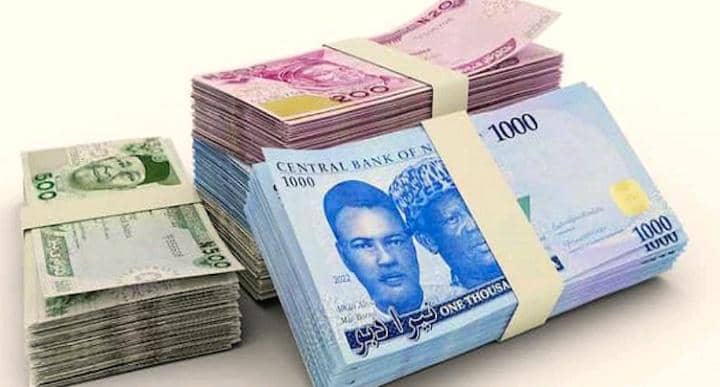

In the first nine months of 2025, Nigeria’s leading banks: Access Corporation, United Bank for Africa (UBA), Zenith Bank, First HoldCo and Guaranty Trust Holdings Company (GTCO), collectively pulled in approximately N4.8 trillion in interest income from investment securities and treasury-bill holdings. Their combined investment in government securities and treasury bills reached about N49.15 trillion, marking a 16.5% increase from N42.20 trillion at end-December 2024.
Access Corporation led the pack with N15.25 trillion invested, followed by UBA with N13.59 trillion, Zenith at N9.05 trillion, First HoldCo at N6.35 trillion and GTCO at N4.91 trillion.Their returns for the nine‐month period were impressive: Access earned N1.30 trillion, Zenith N1.14 trillion, UBA N1.03 trillion, First HoldCo N720.15 billion and GTCO N570.23 billion.
Analysts point out that these banks are favouring sovereign debt instruments and placements with the Central Bank of Nigeria (CBN) instead of expanding riskier private–sector lending. Indeed, while some banks slightly expanded their loans to customers (aggregate loans and advances reached around N42.26 trillion – up 7.27% from N39.4 trillion in 2024) their investment portfolios in securities rose much faster to N49.152 trillion – highlighting a clear preference for predictable returns.
However, this trend raises a critical question about the broader economy: by choosing low‐risk sovereign instruments over lending to private firms, banks may be sidelining growth-oriented lending and stifling private investment, which could slow economic dynamism. The shift may reflect banks’ heightened caution amid uncertainty, but at the same time it underscores a tension between stable bank income and the need for productive credit.
On the regulatory front, the CBN plans to migrate all fixed‐income trading and settlement operations from the FMDQ Securities Exchange (currently regulated by the Securities and Exchange Commission) to its own Real-Time Gross Settlement (“RTGS”) and S4 system. This consolidation, expected to begin in November 2025, would make the CBN both operator and regulator of the fixed‐income market, a move that could reshape market dynamics significantly.
This surge in bank incomes from government securities reflects Nigeria’s high interest‐rate environment and cautious lending stance, but it also highlights a structural challenge: while banks boost profits, fewer funds reach private businesses, potentially curbing job creation and economic diversification in Nigeria’s recovery.