The Bank of Ghana has significantly increased its gold reserves to 38.04 tonnes as of 31 October 2025, a 35% rise from 28.1 tonnes recorded a year earlier, according to new data released by the Central Bank on 5 November. The sharp growth underscores the success of the Domestic Gold Purchase Programme (DGPP), launched in June 2021 to diversify Ghana’s foreign reserves and reduce dependence on the US dollar.
Between January and October 2025 alone, the Central Bank added 7.51 tonnes of gold to its holdings, with some months registering growth rates exceeding 4%. This sustained accumulation marks one of the most rapid expansions of gold reserves in the region, positioning Ghana among West Africa’s strongest holders of the precious metal.
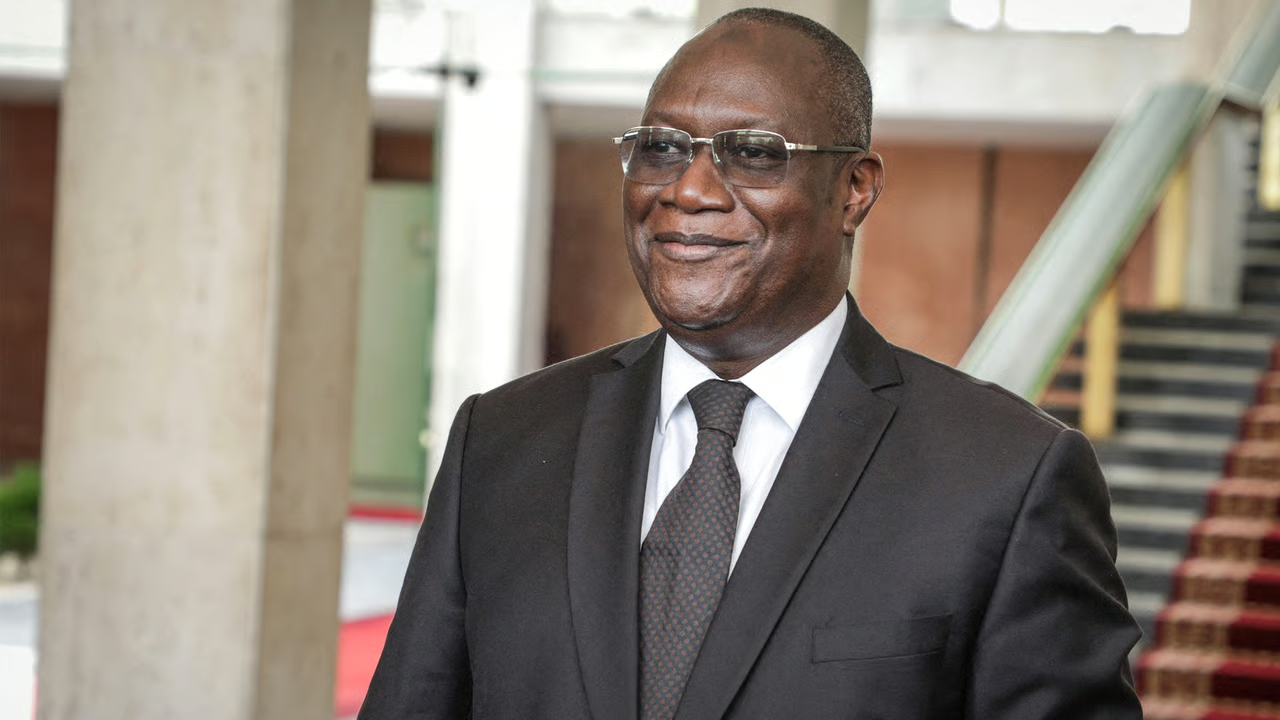
Governor Dr Johnson Asiama said the programme was part of a broader strategy to strengthen the country’s external position, build monetary resilience, and protect the cedi against volatility in global currency markets. “The Domestic Gold Purchase Programme continues to deliver on its objectives,” Asiama said. “By building up our gold reserves, we are diversifying the composition of our external assets, reducing exposure to dollar fluctuations, and enhancing our capacity to defend the cedi when necessary.”
Ghana’s gold reserve accumulation comes amid heightened global demand for the precious metal, driven by uncertainty in global financial markets, interest rate adjustments by major central banks, and geopolitical tensions. Many emerging economies have been boosting their gold holdings as a hedge against currency depreciation and to strengthen confidence in their financial systems.
Analysts note that the Bank of Ghana’s strategy offers both economic and symbolic benefits. By converting part of its foreign exchange earnings into domestically sourced gold, the Central Bank reduces the need to draw on its dollar reserves for interventions in the foreign exchange market. This not only helps stabilise the cedi but also supports local mining companies and refineries, creating a virtuous cycle between monetary policy and domestic production.
The DGPP works by allowing the Bank of Ghana to purchase gold directly from licensed small-scale and large-scale producers, refining it domestically before adding it to the national reserves. The initiative is seen as a key policy innovation that links the country’s vast natural resources to its monetary stability goals. By retaining a larger share of value from gold production within the country, Ghana has improved its balance of payments and enhanced the credibility of its reserve management strategy.
Economically, the increase in reserves strengthens Ghana’s ability to respond to external shocks. With inflationary pressures moderating and investor sentiment gradually improving, the higher reserve position is expected to provide a stronger buffer against capital outflows and speculative attacks on the cedi. Analysts argue that this enhanced reserve cushion could also lower borrowing costs by signalling improved creditworthiness to international markets.
The Bank of Ghana’s success contrasts with the experiences of some African peers that continue to rely heavily on dollar reserves amid fluctuating commodity prices and high external debt. With 38 tonnes of gold now in its vaults, Ghana stands ahead of several regional economies in reserve diversification.
Looking ahead, the Central Bank is expected to continue its gold accumulation strategy, though at a more measured pace, as it seeks to balance liquidity needs with long-term asset diversification. Officials have hinted at plans to expand partnerships with private refiners and international buyers to improve transparency and sustainability in the gold supply chain.
The sustained rise in gold reserves also aligns with Ghana’s broader economic strategy to strengthen its financial autonomy and stabilise its currency through resource-based policies. If maintained, the approach could reduce the country’s exposure to external vulnerabilities, improve investor confidence, and contribute to a more stable macroeconomic environment, a crucial factor as Ghana continues its post-crisis recovery and fiscal consolidation efforts.