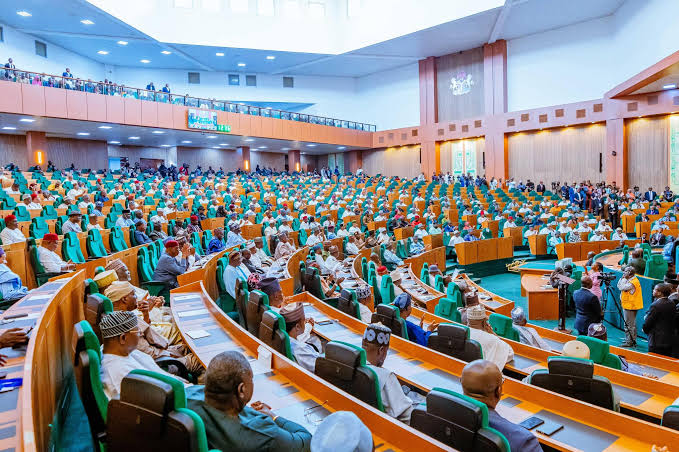

The Nigerian Senate has called on the Federal Government to renegotiate its aviation agreement with China to secure direct flight rights for Nigerian airlines, while rejecting calls to revive the country’s defunct national carrier, Nigeria Air.
The lawmakers want the government to review the Bilateral Air Services Agreement (BASA) between both countries to address what they described as an imbalance in international flight operations. Under the proposed arrangement, Nigerian airlines would be able to operate direct commercial flights to China, just as Chinese carriers currently fly directly to Nigeria.
The resolution followed a motion sponsored by Senator Tahir Monguno, the Senate Chief Whip representing Borno North, who argued that the existing agreement was not delivering sufficient benefits to Nigeria. Monguno said direct air connectivity would reduce travel time, improve trade activities, strengthen supply chains and limit foreign exchange outflows associated with international travel. He also pointed to the growing population of Nigerians living in China and Chinese nationals residing in Nigeria as evidence of the demand for stronger air links. He put the number of Nigerians in China at more than one million, while estimating the Chinese population in Nigeria at over 500,000.
According to him, enforcing the agreement would position the Murtala Muhammed International Airport in Lagos and the Nnamdi Azikiwe International Airport in Abuja as important aviation gateways connecting West and Central Africa to East Asia. The proposed arrangement could also improve opportunities for Nigerian businesses, particularly small and medium sized enterprises involved in international trade. Monguno maintained that direct flights would support non oil exports, improve the movement of agricultural products and generate additional revenue for Nigerian airports. He identified the Ministry of Aviation and Aerospace Development, the Nigerian Civil Aviation Authority, the Central Bank of Nigeria and the Nigeria Customs Service as key institutions whose involvement would be required to implement the agreement.
Contributing to the debate, Senator Abdul Ningi, representing Bauchi Central, questioned the benefits Nigeria receives from its economic relationship with China. Ningi argued that Nigeria should not continue granting Chinese airlines access to its aviation market without securing similar opportunities for domestic carriers.
Senate President Godswill Akpabio also criticised the existing arrangement, warning that Nigeria might need to reconsider the privileges granted to Chinese airlines if Nigerian carriers continued to face restrictions. He said Nigerian businesspeople travelling to China often had to connect through other countries, including Kenya and Ethiopia, while Chinese passengers could fly directly into Nigeria. Akpabio called for a review of the agreement to ensure that both countries enjoy equal opportunities in international air transportation.
Nigeria Air revival rejected
The debate also turned to Nigeria’s efforts to establish a national carrier after Senator Ned Nwoko, representing Delta North, called for the revival of the country’s defunct airline. However, Akpabio questioned the practicality of bringing back an airline that had been out of operation for decades.
“We can’t revive what is already dead. Did Nigerian Airways ever work?” he asked.
The Senate President recalled that Nigeria once operated a fleet of nearly 40 aircraft but now struggles to provide aircraft for certain domestic needs. He nevertheless acknowledged the importance of having a Nigerian owned airline and urged the Federal Government to explore establishing a viable national carrier rather than attempting to revive an unsuccessful operation.
The Nigeria Air project, unveiled in May 2023 under the administration of former President Muhammadu Buhari, had been expected to establish a new national airline. However, it became controversial over allegations surrounding its ownership structure and the circumstances of its launch. The Economic and Financial Crimes Commission has also prosecuted former Aviation Minister Hadi Sirika and other defendants over alleged contract fraud connected to the project. The allegations remain subject to judicial determination.
Next steps
Following the deliberations, the Senate urged the Ministry of Aviation and Aerospace Development to renegotiate the commercial terms and operational arrangements of the Nigeria China aviation agreement. It also called on the Ministry of Foreign Affairs to begin diplomatic discussions with Chinese authorities on easier business visa arrangements for Nigerian traders and reciprocal airport slot allocations.
The lawmakers further directed the Senate Committees on Aviation and Foreign Affairs to monitor compliance with the resolutions and report back within four weeks. The decision places renewed attention on Nigeria’s ability to secure economic benefits from its international aviation agreements.
However, securing direct flight rights will require more than diplomatic negotiations. Nigerian airlines must also demonstrate the financial strength, aircraft capacity and operational readiness needed to sustain long distance international routes. For the Federal Government, the challenge will be to translate the Senate’s resolution into a workable agreement that improves access for local carriers, supports international trade and strengthens Nigeria’s position in regional and global aviation.