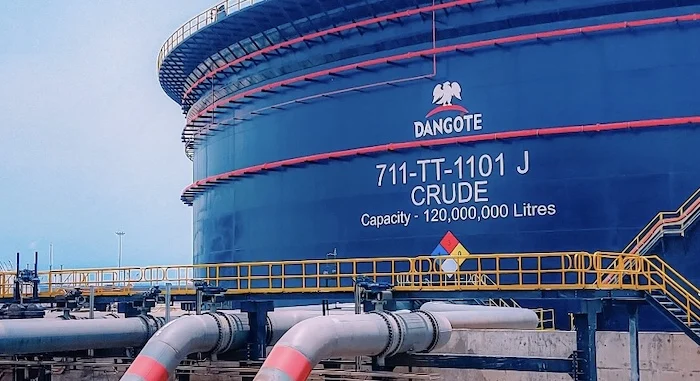

Dangote Petroleum Refinery has reduced its petrol gantry price by ₦55 per litre to ₦1,210, triggering fresh price cuts across Nigeria’s downstream petroleum market, as the Nigerian National Petroleum Company (NNPC) Limited also reduced its pump price by ₦10.
The reduction, announced by consortium marketers linked to the refinery, represents a 4.35% decline from the previous price of ₦1,265 per litre.
Legit.ng reported today Monday, November 2, 2026, that the adjustment followed a decline in the European gasoline benchmark, known as EBOB, which influences the refinery’s petrol pricing, alongside improved product availability and narrowing price margins.
The development has intensified competition among fuel suppliers, with independent depot operators reviewing their wholesale prices downwards to remain competitive.
NNPC subsequently reduced its petrol retail price from ₦1,365 to ₦1,355 per litre, representing a ₦10 adjustment. The move reverses its previous increase and brings the state-owned oil company’s latest pump price in line with the wider downward movement in the market.
Legit.ng reported the NNPC adjustment today, attributing the development to increased competition following the reductions by Dangote-linked marketers and independent depot operators.
In Lagos, several independent depot operators also reduced their petrol prices. African Terminal, Integrated, Rainoil, Ardova and NIPCO quoted ₦1,260 per litre, while Aiteo offered the product at ₦1,255.
The six quotations averaged approximately ₦1,259.17 per litre, down from about ₦1,300 recorded on Thursday, October 29, according to Petroleumprice.ng data reported by Legit.ng.
The price adjustments were not limited to Lagos. Data published by Aboki Forex today showed that depot prices also declined in Warri, Port Harcourt and Calabar between October 26 and October 30, reflecting increased competition among wholesale suppliers.
For motorists, however, lower gantry and depot prices do not guarantee immediate reductions at every filling station. Retailers must consider transportation expenses, distribution margins and existing inventories purchased at higher prices before adjusting their pump prices.
The latest developments nevertheless offer the possibility of some relief for households, transport operators and businesses that have faced rising fuel costs.
With Dangote Refinery increasingly influencing domestic wholesale pricing, the ability of independent suppliers to remain competitive will depend partly on their sourcing costs and the refinery’s subsequent pricing decisions.