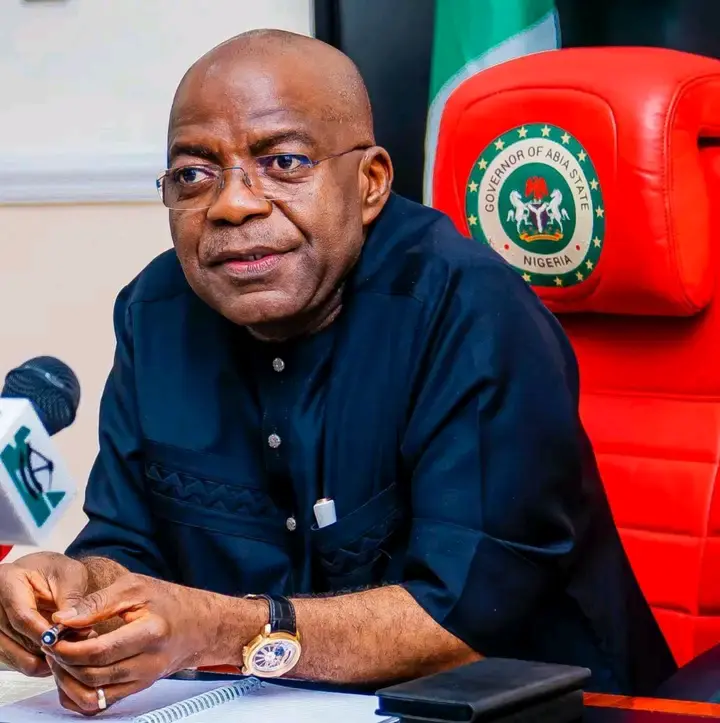

Governor Alex Otti has commissioned a series of infrastructure projects at Abia State University, signalling a targeted push to resolve long standing power and facility gaps within the institution.
Central to the intervention is the upgrade of a power station from 2.5MVA to 5MVA, a move designed to stabilise electricity supply across the campus. The project was unveiled during activities marking the university’s combined convocation ceremonies in Uturu.
The governor framed the development as both a delivery on prior commitments and a foundation for broader reforms. According to him, “This is a promise fulfilled. The last time I came here, I gave instructions that, whatever it takes, we must connect Abia State University to the grid, until the time we will take them off the grid.”
Beyond electricity, the administration commissioned three rehabilitated hostels, Blocks A, B and C, aimed at improving student accommodation. It also flagged off new projects, including a 5,000 bed capacity hostel scheme split between male and female students, alongside new buildings for the Faculties of Agriculture and Law.
An internal 1.8 kilometre road project within the campus was equally launched, addressing mobility constraints and supporting academic operations. These interventions collectively reflect a coordinated attempt to upgrade both living and learning conditions.
Otti stressed that the projects align with a broader policy focus on fixing structural deficits in the education sector. He also reiterated a consolidation strategy for the university’s campuses, arguing for centralisation in Uturu to improve efficiency and resource use.
“I want to reiterate that it makes more sense for all the campuses to be here in Uturu. It is important that everybody is in Uturu, except Abia State University Teaching Hospital, Aba,” he said.
Institutional stakeholders acknowledged the impact of the interventions. Vice Chancellor Ndukwe Okeudo noted that the projects would ease accommodation pressure and strengthen academic capacity, while student representatives pointed to expected improvements in welfare and campus experience.
Looking ahead, the governor outlined plans for a more robust energy solution. He disclosed that a dedicated power line with an estimated capacity of 15 megawatts is under consideration. The system is expected to run initially on gas turbines, with a gradual transition to renewable energy sources.
“I think the capacity of that line is about 15 megawatts. So, I believe that work will start on that very soon. It is going to be a gas turbine, but with improvement and upgrading to renewable energy in due course. That’s a longer-term project,” Otti added.
The university upgrades are part of a wider infrastructure agenda by the Abia State government, which includes industrial and energy investments aimed at supporting economic growth. Recent projects in Aba and ongoing development plans suggest a strategy anchored on power supply, industrialisation and public asset optimisation.
In sum, the ABSU interventions combine immediate fixes with forward looking capacity expansion. While execution remains key, the current projects indicate a structured attempt to address infrastructure bottlenecks in one of the state’s major public institutions.