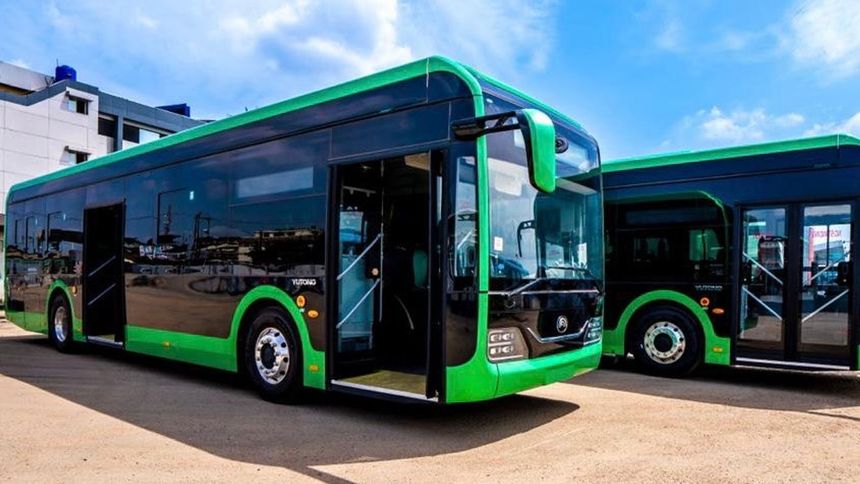

The Federal Government has handed over five electric buses to transport operators in Kano State as part of efforts to reduce transportation costs and promote cleaner energy across the country.
The buses were provided through the Presidential Initiative on Compressed Natural Gas and Electric Vehicles (Pi CNG and EV), which is targeting a 40 per cent reduction in transport fares for commuters. The development was disclosed by the initiative and reported by the News Agency of Nigeria (NAN) on Saturday, October 31, 2026. Each of the five buses has a seating capacity of 20 passengers. They were handed over to two transport companies, Camel Mobility and Kano Metropolitan Transport Company, for deployment across the state.
Speaking at the handover ceremony in Kano, Ahmed Katuka, Manager of Assets at Pi CNG and EV, said the buses were expected to reduce commuter fares by at least 40 per cent compared with the cost of conventional transportation. He described the intervention as part of the Federal Government’s efforts to expand cleaner energy alternatives and make public transportation more affordable. According to Katuka, the new buses will complement the existing fleet of 14 seater and high capacity buses previously deployed to Kano under the initiative.
He added that the introduction of electric vehicles would also help reduce carbon emissions, improve passenger safety and comfort, and encourage private sector investment in cleaner transportation. However, transport operators say the success of the initiative will depend partly on the availability of supporting infrastructure.
Ahmed Garba Ahmed, Chief Operating Officer of Camel Mobility, welcomed the development and pledged that his company would put the buses into operation to improve transportation for residents. He also called on the Kano State Government to provide dedicated transport corridors, designated bus stops, adequate security and a suitable operating environment to support electric bus services.
Similarly, Ahmad Rufai Yusuf, Manager of the Kano Division of Kano Metropolitan Transport Company, said electric buses would reduce the cost of running transport services by lowering operators’ dependence on fuel. He noted that the savings could eventually translate into cheaper fares for passengers. The development comes amid broader efforts by Nigerian states to move public transportation away from diesel and petrol powered vehicles.
In Lagos, the Lagos Metropolitan Area Transport Authority (LAMATA) began restricting the introduction of new diesel buses into its regulated public transport system in January 2026. New buses entering the system are expected to run on compressed natural gas or electricity, while existing diesel buses are to be gradually replaced.
At the national level, the Federal Government is targeting the conversion of one million commercial petrol vehicles to compressed natural gas by 2027. It also plans to expand the country’s CNG refuelling network to 1,000 stations. Data published by the initiative showed that about 120,000 vehicles had been converted, while the programme had attracted more than $2.5 billion in investment. The government is also pushing for wider adoption of alternative fuels among commercial transport operators, with the aim of reducing operating expenses and improving mobility.
For Kano commuters, however, the immediate concern will be whether the promised 40 per cent fare reduction becomes a reality once the buses begin operating.