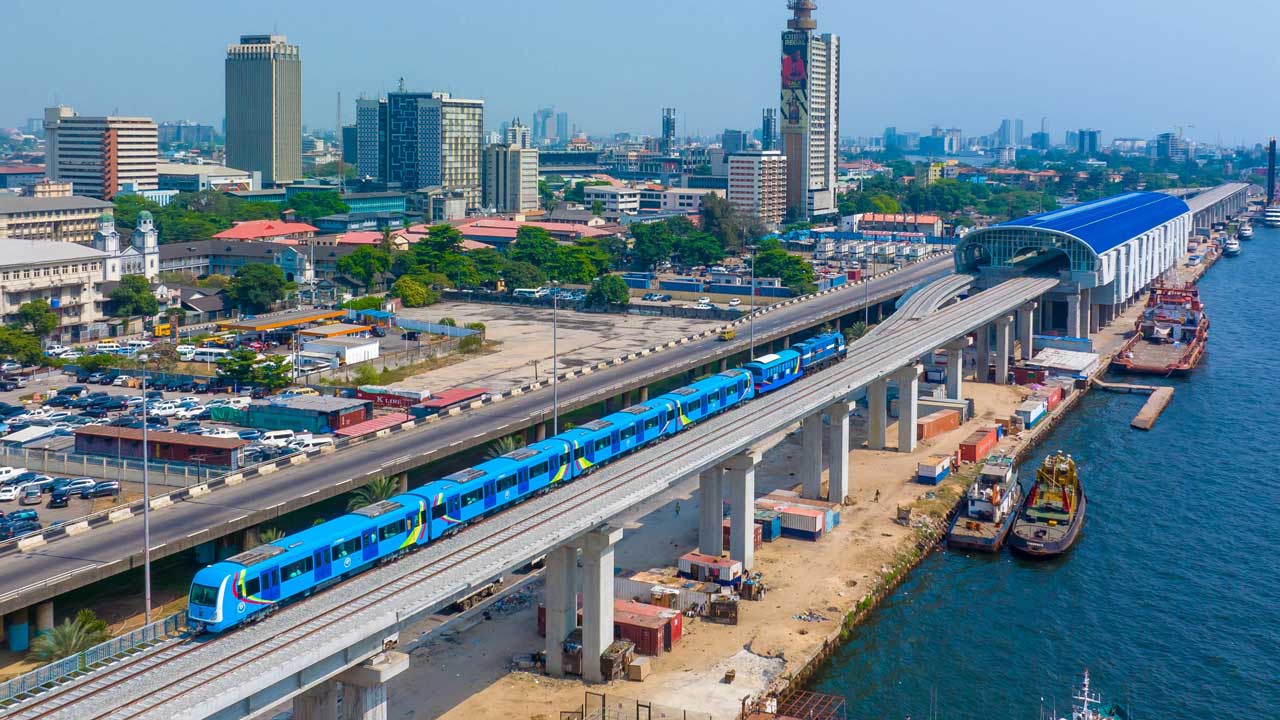

Lagos’ Blue and Red rail lines are yet to make a significant impact on the city’s wider traffic congestion, as low service frequency, limited route coverage and weak connections with other public transport systems continue to restrict their reach.
Transport researcher Tonami Playman said the state’s rail network needs more frequent train services and better integration with buses and informal transport operators to attract more commuters and reduce pressure on Lagos roads.
In an interview published by Nairametrics on Wednesday, October 28, 2026, Playman argued that the Blue Line’s limited coverage and relatively low frequency were preventing it from delivering its full potential as a mass transit system.
He said rail services would need to operate at a minimum of 10 to 12 trains per hour to become a more practical alternative for a larger share of commuters.
The Blue Line currently connects Marina on Lagos Island with Mile 2 on the mainland. Although the route provides passengers with an alternative to road travel along the corridor, its limited reach means it cannot directly serve commuters travelling to many other parts of the state.
The Lagos Metropolitan Area Transport Authority (LAMATA) increased the Blue Line’s scheduled operations from 90 to 94 daily trips in June 2026, with weekday and Saturday services starting at 6 a.m. The authority said the adjustment was intended to improve passenger convenience and reduce waiting times.
LAMATA also reported on September 5, 2026, that the Blue Line had transported more than nine million passengers since commercial operations began on September 4, 2023.
Despite the growing patronage, Playman argued that the service would need a substantial increase in frequency and wider coverage to make a more significant contribution to reducing road congestion.
The Red Line faces similar operational concerns. According to Playman, its service frequency remains too low to make it a convenient option for a large number of daily commuters.
He argued that measuring the Red Line’s operations in trains per day, rather than providing frequent services throughout the day, limits its usefulness as an urban mass transit system.
Beyond the number of trains, the integration of rail services with buses and other transport options remains important to improving public transport in Lagos.
Many commuters depend on several modes of transport to complete a journey, including walking, buses and commercial minibuses popularly known as danfos. Without reliable connections between these services and railway stations, passengers may still face delays and additional transport costs before reaching their final destinations.
Playman said the rail network needed to be supported by reorganised bus routes that complement train services, allowing passengers to transfer between transport modes more easily.
He also questioned the effectiveness of expanding rail infrastructure without providing enough trains to maintain service frequency.
According to him, extending the Blue Line beyond Mile 2 would require additional rolling stock if the government intended to maintain or improve existing service intervals.
The Lagos State Government plans to extend the Blue Line to FESTAC, Alakija and Trade Fair. The expansion is expected to widen the line’s reach and serve more commuters, although its impact will depend partly on the availability of trains and the frequency of operations.
Passenger figures also illustrate the difference between rail and bus usage in Lagos.
Afolabi Olamide, co-founder and chief executive officer of Touch and Pay Technologies, which operates the Cowry fare payment platform, told Nairametrics that regulated buses record more than five million passenger trips monthly, compared with approximately 500,000 on the Blue Line and 100,000 on the Red Line.
The figures suggest that buses continue to account for a much larger share of recorded passenger journeys, although the numbers alone do not establish how much traffic the rail lines have reduced.
For Lagos, where commuters contend with congestion across major roads, the challenge is to make rail transport more accessible, frequent and convenient.
Expanding routes, increasing train availability and coordinating rail services with buses and other public transport options could help attract more passengers.
However, Playman’s assessment suggests that infrastructure expansion alone will not be enough. The effectiveness of the state’s rail investment will also depend on whether services can operate frequently and connect seamlessly with the wider transport network.