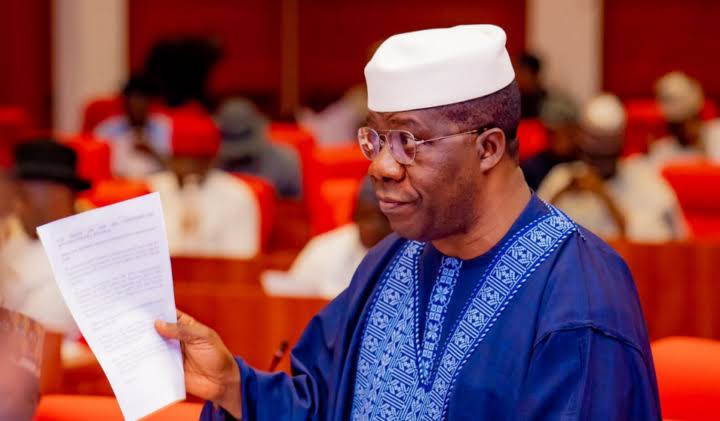

The National Assembly has set December 2026 as its deadline to complete the remaining legislative process for establishing state police in Nigeria, following approval of the proposed constitutional amendment by at least 30 state Houses of Assembly.
Senate Leader Opeyemi Bamidele disclosed this today Thursday, October 29, 2026, saying the required constitutional threshold had been met and the National Assembly was preparing to complete the outstanding stages before transmitting the bill to President Bola Tinubu for assent.
Bamidele spoke while delivering a lecture titled Improving the Efficiency and Effectiveness of Governance through Proactive Lawmaking to participants of Senior Executive Course 48 at the National Institute for Policy and Strategic Studies in Kuru, Plateau State.
According to a report by Premium Times published today October 29, Bamidele said the National Assembly had received formal reports from the state legislatures and intended to conclude the remaining stages on or before December 2026.
“We are pleased to inform our constituents across the federation that state police have moved from rhetoric to reality,” he said.
Section 9(2) of the 1999 Constitution requires approval from at least two-thirds of the 36 state Houses of Assembly for a constitutional alteration, representing a minimum of 24 states.
The approval by at least 30 state assemblies therefore exceeds the required threshold, clearing a major hurdle in efforts to decentralise Nigeria’s policing system.
Bamidele said the National Assembly would collate and consider the resolutions transmitted by the state legislatures before both chambers pass the required resolution by a simple majority.
The proposed constitutional amendment would then be transmitted to President Tinubu for assent after the remaining legislative requirements have been completed.
The development follows an announcement by the Presidential Working Group on the National Policing Bill on October 23, 2026, that the amendment had secured the required backing of at least 24 state assemblies.
The group, chaired by the President’s Chief of Staff, Femi Gbajabiamila, said the constitutional threshold had been met and that the amendment could proceed to the National Assembly for the next stage.
The proposed reform seeks to establish state police services alongside the existing federal police structure, bringing policing responsibilities closer to communities and allowing security agencies to respond more directly to local threats.
Under the proposed framework outlined in reports on the amendment, state governors would appoint commissioners of state police, subject to confirmation by their respective state Houses of Assembly. The governors would also have authority over state police operations concerning security challenges within their jurisdictions.
The Inspector-General of Police would continue to head the federal police, while state police commissioners would oversee their respective state services.
The proposal is intended to improve local intelligence gathering, strengthen community engagement and enable police officers to respond more effectively to security threats based on their knowledge of local languages, terrain and communities.
However, concerns remain about the potential misuse of state police by governors and other political office holders, particularly against political opponents. The proposed framework is expected to operate with constitutional safeguards and oversight mechanisms.
The proposed arrangement also distinguishes state police services from existing local security outfits. Under the reported framework, outfits such as Amotekun, Ebube Agu and Hisbah would not automatically become state police services or acquire police powers under the amendment.
Bamidele described the progress as a major milestone after more than 15 years of efforts to establish state police through constitutional reform.
Although the state assemblies have crossed the required approval threshold, state police will not become operational solely because of those approvals. The remaining constitutional process and the development of the necessary legal and administrative framework must be completed before the new system can be implemented.