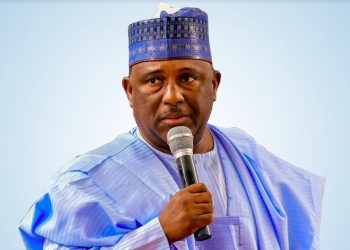

The Vice-Chancellor of the University of Benin, Professor Edoba Omoregie (SAN), has described Nigeria’s student loan scheme as one of the country’s most significant public policy initiatives since independence, arguing that its interest-free structure makes it more student-friendly than similar schemes in the United States and the United Kingdom.
Omoregie, however, said he was unimpressed by the level of interest shown in accessing the Nigerian Education Loan Fund (NELFUND), despite the benefits available to eligible students.
In an interview reported by The PUNCH on Monday, October 26, 2026, the vice-chancellor described the scheme as “manna from heaven” and said it was “almost like a grant” because of its repayment conditions.
He praised the scheme’s application process, the moratorium before repayment and the proportion of beneficiaries’ earnings required for repayment, saying these features reduced the immediate financial pressure on students.
“Unlike many of the student loans that you have in America, UK and all that which makes them sceptical, this one is an interest free loan,” Omoregie said.
He added that the scheme was more like an education grant because beneficiaries would not be required to repay the money in a lump sum once they started working.
Under NELFUND’s published repayment rules, beneficiaries are expected to begin repayment two years after completing the National Youth Service Corps programme. For employed beneficiaries, 10% of their monthly salary is deducted at source by their employers, while self-employed beneficiaries are required to remit 10% of their monthly profit to the fund.
The fund also allows beneficiaries who remain unemployed after the applicable period to notify it through a sworn court affidavit every three months while they remain unable to secure employment, according to its official frequently asked questions.
NELFUND provides interest-free loans to eligible Nigerian students for institutional charges and, where requested and approved, upkeep expenses. Institutional payments are made directly to the beneficiary’s school, while upkeep allowances are paid to students.
Omoregie also commended President Bola Tinubu for signing the initial student loan legislation introduced under former President Muhammadu Buhari and subsequently supporting a revised framework intended to address shortcomings in the earlier version.
He said the earlier proposal included restrictions and requirements, such as guarantees, that were removed or revised in the process of developing the current scheme.
Despite his praise, the vice-chancellor’s concern about student participation raises questions about how effectively the scheme’s benefits are reaching its intended beneficiaries.
His comparison with the US and UK systems reflects his assessment of their respective loan structures, particularly interest charges and repayment arrangements. It does not constitute an independent assessment ranking the three systems across eligibility, access, repayment outcomes or the wider cost of higher education.
For Nigeria, the scheme’s longer-term impact will depend not only on its repayment terms but also on students’ awareness of the fund, their ability to apply and the programme’s implementation.