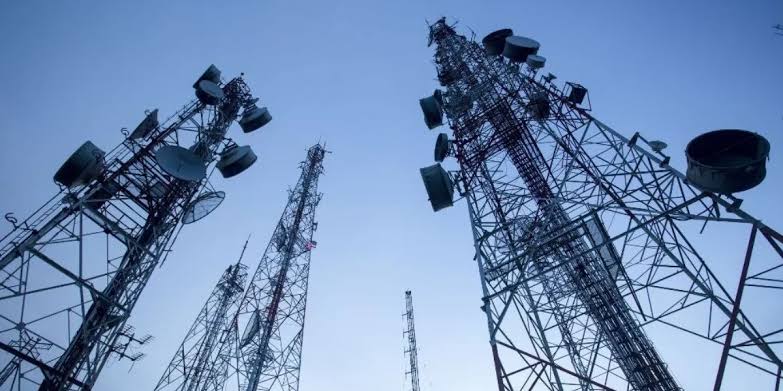

The Federal Government has begun rolling out 3,700 telecommunications towers nationwide, targeting nearly 20 million Nigerians without adequate telephone and internet access, with the first site commissioned in Bende Local Government Area of Abia State on Friday, October 16, 2026.
Minister of Communications, Innovation and Digital Economy, Dr Bosun Tijani, commissioned the facility along the Umuahia–Ohafia Road under the Nigeria Universal Communication Access Project (NUCAP), a programme designed to extend connectivity to unserved and underserved communities.
According to reports published by Voice of Nigeria and Vanguard on October 16, the Bende installation marks the first site commissioned under the nationwide rollout.
Tijani said the government planned to deploy 3,700 towers to bring about 20 million Nigerians into the digital economy, stressing that geographical location should not prevent people from accessing economic opportunities.
“Through NUCAP, we are delivering 3,700 telecommunications towers across Nigeria. Today, we are commissioning the first of these sites here,” Vanguard quoted the minister as saying on October 16.
The minister linked the programme to President Bola Tinubu’s ambition to build a $1 trillion economy, arguing that reliable connectivity could help rural residents participate more fully in commercial and digital activities.
Improved network coverage is expected to help farmers contact buyers, enable traders to complete electronic payments and allow families to make calls during emergencies. It could also expand access to online education, digital financial services and other internet-based opportunities.
The project is being implemented by the Federal Ministry of Communications, Innovation and Digital Economy, with infrastructure deployment involving Global Independent Connect Limited (GICL), a subsidiary of IHS Towers.
A report by THISDAY on October 17 said the programme is funded through the Universal Service Provision Fund (USPF) and includes public Wi-Fi and Smart Village solutions. The initial phase covers seven locations across Abia, Delta, Enugu, Plateau, Katsina and Ogun states.
Deputy Speaker of the House of Representatives Benjamin Kalu, who represents Bende Federal Constituency, disclosed during the commissioning that 16 additional locations in the constituency had been identified for connectivity interventions.
According to Vanguard’s October 16 report, Kalu called for further action to extend coverage to communities still experiencing network gaps. He also urged traditional rulers and community leaders to protect the infrastructure against vandalism.
Tijani said the government intended to extend connectivity to every community in Bende before Christmas. The wider programme is also targeting at least 200 active sites by December, with each tower designed to serve communities of about 5,000 to 10,000 people, according to BusinessDay’s September 14 report.
However, the impact of the rollout will depend on more than tower installation. Reliable electricity, effective maintenance, network activation and affordable services will be essential to ensure that residents benefit from improved connectivity.
The programme is intended to address the commercial challenges that have discouraged telecom operators from investing in some rural areas, including low population density and difficult terrain. Its delivery will determine how quickly underserved communities gain practical access to mobile and internet services.