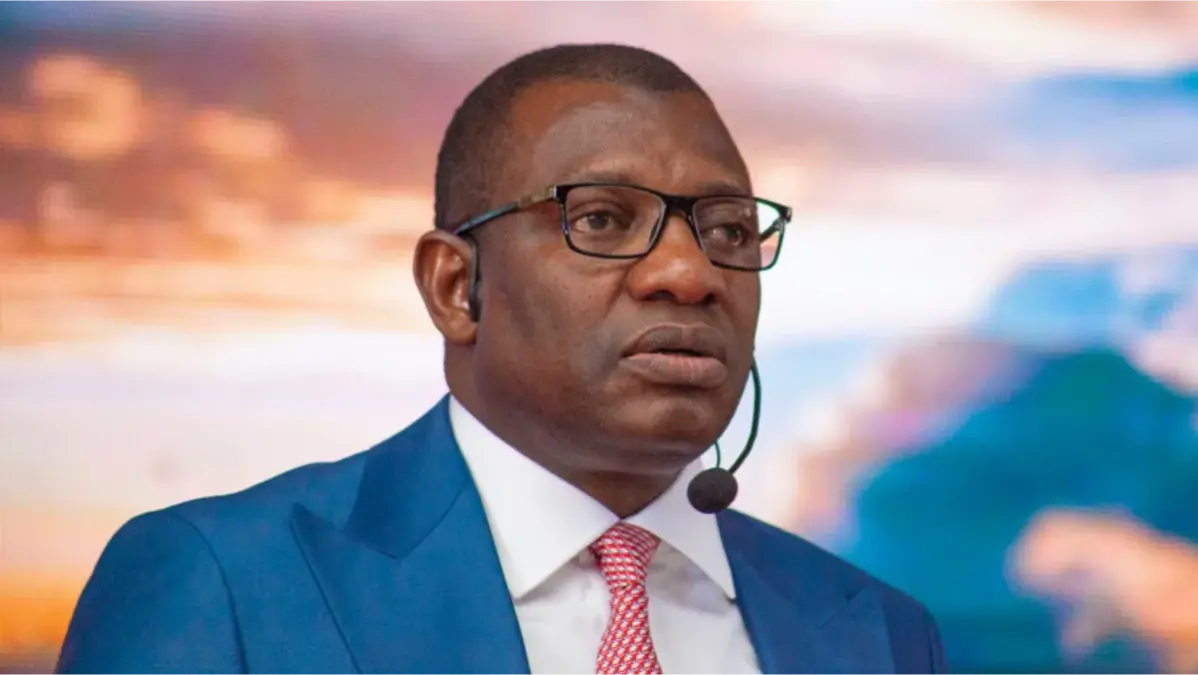

Nigeria’s mineral wealth will remain largely theoretical unless the country can convert geological potential into bankable projects capable of attracting private capital, Bala Wunti, Chief Executive Officer of the World Energy Council Nigeria, has said.
Wunti made the point during the “Rare Currency: Critical Minerals in a Shifting Global Economy” session at the 2026 Concordia Annual Summit in New York, which ran from September 20 to 23, 2026. Concordia listed Wunti among the speakers alongside Alix Steel, Steven Fox and Scott Monteith.
According to Wunti, Nigeria’s challenge is not simply the presence of mineral deposits but the quality of geological information and the development of projects that investors can properly assess and finance.
“We had geological indications, not proven reserves supported by JORC-compliant data. We also had good policies, but not clearly defined projects. US investors invest in projects, not potential,” he said during the session.
Nigeria is widely reported to have about 44 mineral types, while the government has been seeking to attract international capital into critical minerals including lithium, gold, copper and rare earth elements. The Ministry of Solid Minerals Development and other sector stakeholders have increasingly focused on improving geological data and developing projects that can support investment decisions.
Wunti identified six conditions he considers necessary for mobilising private capital into Nigeria’s mining sector: reliable geological data, clearly defined projects, enabling infrastructure, predictable regulation, credible developers and viable routes to market.
He said government’s responsibility should be to make projects investable rather than use policy intervention to make economically unviable projects appear profitable.
The discussion also touched on the changing role of the United States in critical-mineral markets. A US$110-per-kilogram price floor has been associated with neodymium-praseodymium (NdPr), a pair of rare-earth elements used in permanent magnets, under a US government support arrangement with MP Materials. Reuters reported in February 2026 that NdPr prices had risen above the threshold, meaning the US government would not need to subsidise MP Materials’ output while prices remained above that level.
Wunti argued that mechanisms such as price benchmarks could help narrow the gap between policy commitments and commercial decisions, although the development of viable projects would still depend on geological certainty, infrastructure, regulation and market access.
He pointed to the Nigerian Solid Minerals Company as part of the institutional effort to turn mineral potential into investable opportunities. The company was established to accelerate development of Nigeria’s mineral resources and attract private-sector participation. A 2026 sector report said the company had moved into active market engagement, although its first commercial joint venture was still expected at mid-year.
Wunti also warned against repeating Nigeria’s experience in the oil industry by exporting raw resources without developing sufficient domestic value chains.
“For half a century, Nigeria exported crude oil and imported refined petroleum products. That created poverty rather than prosperity. We learned the hard way,” he said, arguing that mineral development should incorporate domestic processing and value addition.
Wunti’s remarks underline the commercial test facing Nigeria’s critical-minerals strategy: turning geological potential into verified resources, defined projects and investment structures that can withstand international due diligence.
The World Energy Council Nigeria identifies Wunti as its inaugural CEO and says the organisation is focused on connecting government, industry, investors, academia and other stakeholders around Nigeria’s energy and investment priorities.