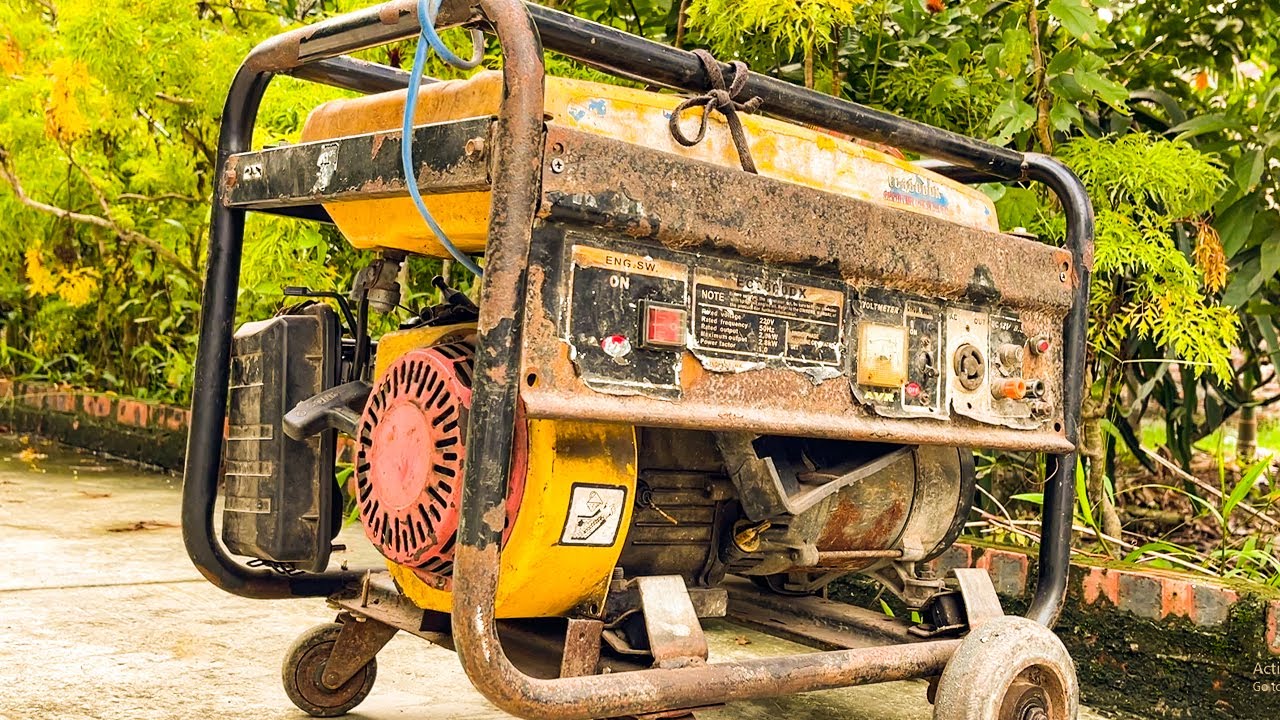

The sign outside Kunle’s workshop still reads “Generator Repair” Inside, the tools remain ready for work, but the business is no longer what it used to be.
For years, generator repair was Kunle’s main source of income. He built his trade around the petrol-powered machines that kept homes, shops and small businesses running when electricity from the grid was unavailable.
Now, he has a full-time factory job.
“It was my main job before,” Kunle said. “But for now it’s a side hustle. I work as a factory worker full time now.”
He still returns to the workshop after work and on weekends. Generator repairs continue to come, but they no longer provide enough work for him to depend on the trade as his main occupation.
Part of the change is the rising cost of running the machines themselves. For some generator owners, the problem is no longer simply whether a generator can be repaired, but whether they can afford to keep putting petrol into it.
Some households have reduced their generator use, while others have stopped using their machines altogether because of fuel costs. A generator that once provided several hours of electricity can become an expensive option when its running cost competes with other household expenses.
In some parts of Lagos, another factor is also reducing the need for generators: more reliable electricity supply.
Under Nigeria’s service-based tariff system, Band A feeders are expected to provide a minimum of 20 hours of electricity daily, according to the Nigerian Electricity Regulatory Commission. Ikeja Electric says customers on its Band A feeders can receive between 20 and 24 hours of supply.
For households actually receiving that level of supply, the generator can become almost redundant. Ikeja Electric’s own customer feedback includes a resident of Ogudu who said generator use had fallen to zero after improved electricity supply, while other reports have documented Lagos residents describing similar reductions in generator use after moving to Band A.
That does not mean generators have disappeared from Lagos, or from Nigeria. Band A performance has also been uneven, with the regulator ordering compensation for some customers affected by supply shortfalls in 2026.
But for a generator repairer, every household that no longer needs to run its machine regularly represents fewer hours of engine wear, fewer breakdowns and potentially fewer repair jobs.
The pressure is occurring alongside the gradual spread of alternative power sources.
Solar power has expanded through standalone systems and mini-grids. The World Bank said in a June 30, 2024 report that Nigeria’s electrification efforts had supported 125 mini-grids and the sale of more than one million solar home systems, providing electricity access to more than 5.5 million Nigerians.
Nigeria’s Distributed Access through Renewable Energy Scale-Up programme is also designed to expand distributed renewable energy. The World Bank said the programme is expected to provide more than 17.5 million Nigerians with new or improved electricity access and replace more than 280,000 petrol and diesel generators.
For generator repairers, the result is a changing market. Some households are moving towards solar and batteries. Some are simply using their generators less because petrol has become too expensive. And in areas where electricity supply has become more reliable, particularly on qualifying Band A feeders, some households may have little reason to start their generators at all.
For Kunle, the effect is personal. The workshop remains part of his life, but the factory now provides the dependable income. Generator repair has become something he does when customers need him rather than the occupation that carries his livelihood.
His experience illustrates a less visible side of Nigeria’s changing power market. As households find different ways to keep the lights on or spend less money doing so, the businesses built around petrol-powered generators must also adjust.
For Kunle, that adjustment has already begun.
He has kept the workshop open and continues to repair generators when they arrive. But the days when the repair bench alone could provide his full income have given way to a new reality, one job pays the bills, while the old trade remains on the side.