


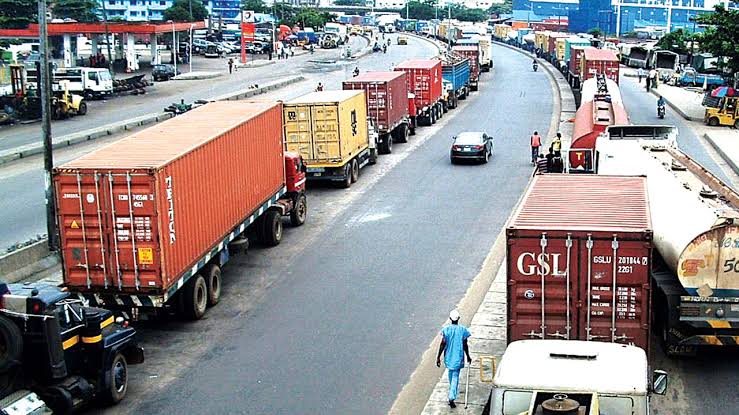

Nigeria’s newly registered union for wharf truck owners is stepping into a port-access system where complaints about extortion, illegal checkpoints and delays have persisted despite repeated government enforcement efforts.
The Amalgamated Union of Wharf Truck Owners of Nigeria inaugurated its national officers in Lagos on September 2, 2026, with Labour and Employment Minister Muhammad Maigari Dingyadi urging the union to embrace dialogue and constructive engagement when dealing with government, employers and other stakeholders.
The timing is significant. In May 2026, the Presidential Enabling Business Environment Council (PEBEC) carried out an enforcement operation along the Apapa port corridor, dismantling illegal checkpoints and warning against extortion. Reports subsequently said some of the alleged extortion points returned after the operation.
The problem has since attracted further government intervention.
On June 23, 2026, the Nigerian Ports Authority, Nigeria Police Force and Lagos State Government agreed to establish a joint task force to tackle alleged extortion and illegal checkpoints along the Apapa and Tin Can port corridors.
By July 21, 2026, PEBEC said repeated enforcement operations had struggled to produce prosecutions because officials allegedly operating illegal checkpoints were rarely caught with sufficient evidence. The council announced plans to provide body cameras to truckers and freight forwarders to help document alleged extortion and support prosecution.
Industry estimates illustrate the potential scale of the problem. A June investigation by Shipping Position Daily reported allegations of more than 34 checkpoints along the Apapa and Tin Can corridors and estimated annual losses of more than ₦85 billion to extortion. The figure was an industry estimate reported by the publication, not an independently audited government figure.
For the new union, the challenge therefore extends beyond representation.
National President Adeyemi Bamidele said the union’s registration on July 27, 2026, formally recognised wharf truck owners as a collective body within Nigeria’s industrial and economic system. He called for greater consultation with government and other stakeholders and pledged that the union would resist injustice, touting and extortion while respecting the law.
Dingyadi, represented at the inauguration by the ministry’s Director of Trade Union and Industrial Relations, Amos Falonipe, urged the union to operate within Nigerian labour laws and maintain peaceful relations with stakeholders.
The real test will now be whether the new union can turn that dialogue into measurable improvements for its members.
For truck owners, that would mean fewer unofficial payments, more predictable access to the ports and faster cargo evacuation. For government and other port stakeholders, it would mean demonstrating that enforcement can produce lasting results rather than temporary relief.
The union now has a recognised platform to represent its members. Its bigger challenge is whether that platform can help break a cycle of complaints, enforcement and renewed allegations of extortion that has continued to affect Nigeria’s busiest port corridors.


